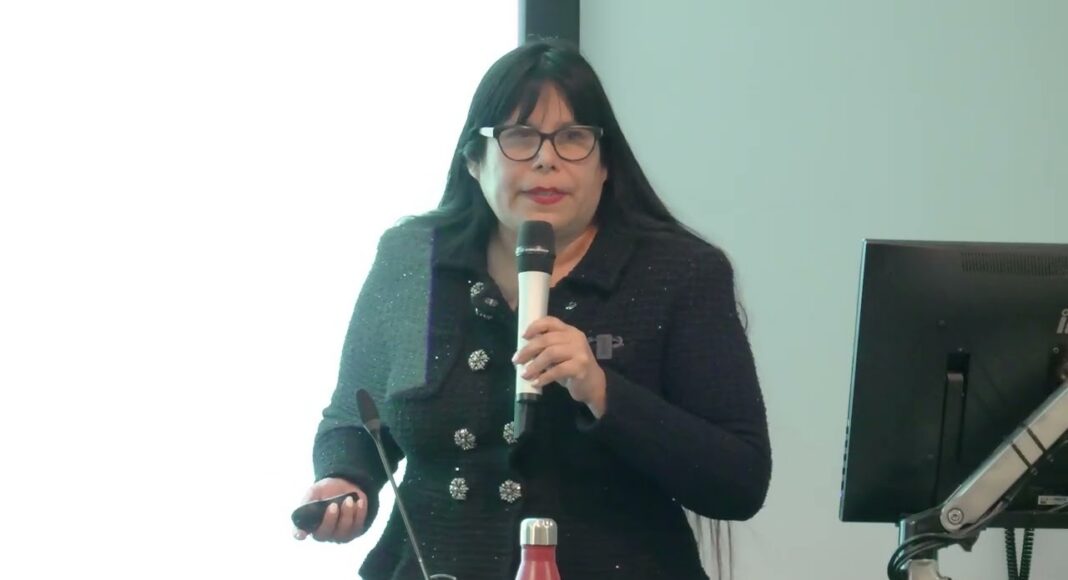
STOP PRESS: Mónica Feria Tinta will be speaking in London on 17 November, at the launch of LAB’s new book Disputed Territories, the Rights of Nature and the Indigneous Worlds of the Western Amazon, by Jan Schulz.
Mónica Feria Tinta is a specialist in public international law and international arbitration, based at Twenty Essex Chambers in London. She has defended Indigenous communities from the extractive industries in Latin America and around the world, winning numerous awards in the UK for her legal work, including that of ‘Woman of the Year’ at the Women & Diversity in Law Awards 2025, which recognises exceptional achievement by women in the legal profession.
Can a planet have legal rights? Could they be defended in a court of law? And who or what are we referring to when we refer to the right to life? These are the questions UK barrister Mónica Feria Tinta asked herself when she found herself defending Indigenous communities from the extractive industries in Latin America and around the world, engaging in litigation against governments responsible for deforestation, contamination of water sources, and damage to the health of local populations, flora and fauna, resulting from oil drilling and mining.
Feria Tinta was interviewed by LAB’s Linda EtchartPrior prior to delivering a guest lecture, Does Nature Have Rights? Latin America’s Contribution to Radically Rethinking the Notion of Rights for Reading University’s Latin America and Caribbean Network (RLAC)earlier this year.
Starting her practice as a barrister in the UK in 2014, Mónica Feria Tinta became a consultant on how the Paris Agreement on climate change of 2015 could be enforced by the law. At times defying advice from the legal experts around her, Feria Tinta has succeeded, since the time of the Paris Agreement, in contributing to bringing climate change into the international legal sphere, winning the case of the Torres Strait Islanders against the Australian government for its lack of action in addressing climate degradation. She delivered a landmark Advisory Opinion in Hamburg in 2023 on the protection of the oceans and marine species.
Her pursuit of justice has taken her to Myanmar and West Timor, and back to her home continent of Latin America, where she has taken on, and won, environmental cases on behalf of Indigenous communities in Colombia, Ecuador, Guatemala, and Mexico.
Feria Tinta has embarked upon cases against governments who have allowed mining and oil companies, and builders of dams, to pursue their versions of ‘development’ – by which they mean ‘modernization’, that is, the extraction of minerals, or the control of water, which create wealth for some, but which at the same time often bring sickness, immiseration, and displacement, to those who live on the margins of extraction. Moreover, mining, oil drilling and dam construction cause irreversible harm to the fauna and flora that make up the ecosystems that sustain both the Indigenous peoples directly affected, in the short term and, over time, the rest of the planet.
Defending local communities in Latin America against the extractive industries
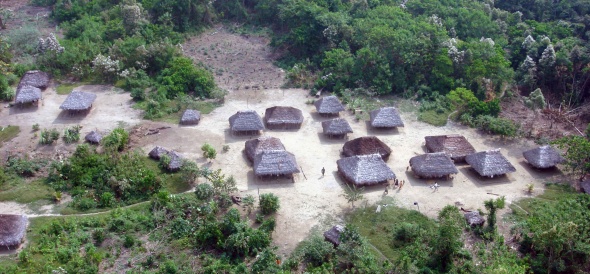
Among the many local communities that Feria Tinta has defended are the Indigenous people living in voluntary isolation in the Nahual Nanti Reserve in her native Peru, who are under threat from the Camisea gas fields; the Ch’orti’ people of Guatemala, struggling to regain their ancestral lands; and the Wayúu people challenging the Cerrejón coal mine in La Guajira in northern Colombia.
Companies incorporated in Switzerland, the UK, and Australia—Glencore, Anglo-American, and BHP Billiton – were responsible for contamination of land and water, as well as causing respiratory complications for 336,000 people, according to Global Witness and the Global Legal Action Network (GLAN). Diverting the Arroyo Bruno – a tributary of the Río Ranchería river – changed the topography of the landscape, depriving local communities of their livelihoods. After Feria Tinta filed a complaint in January 2021, and under pressure from local and international NGOs, Anglo-American and BHP Billiton abandoned their operations, though Glencore have remained.
In the case of the Los Cedros cloud forest in Ecuador 2020-2021, Feria Tinta found herself for the first time defending the earth in the absence of humans. She appeared before the Constitutional Court in Ecuador presenting an amicus brief aimed at protecting the rights of the spectacled bear, monkeys, frogs and funghi, and the forest itself. Feria Tinta argued the case against the goldmining project on the grounds that Article 71 of the Ecuadorian Constitution of 2008 – the architect of which was Alberto Acosta, former President of the Constituent Assembly of Ecuador – which prohibited the extinction of species, would be violated. It was the first case in the world, according to Feria Tinta, where a Court had delivered a non-anthropocentric judgment in favour of the Rights of Nature.
Defending Indigenous communities’ rights to their territories and their resources led Mónica Feria Tinta back to her Indigenous roots, to her ancestors in the Peruvian Andes, whose vision of nature and humans’ place within it differs from the Enlightenment paradigm. She began to see the limits of anthropocentric Western law that has prioritised humans over the non-human world. In her interactions with her clients, she understood that humans do not have to own land, but can be guardians of the soil; that the earth and the heavens are in constant communication with each other; that the underworld and the heavens are one, that the sun is part of nature, part of our ecosystem. Humans are stardust, deeply connected to the cosmos.
Supply chains and the responsibility of consumers in the Global North
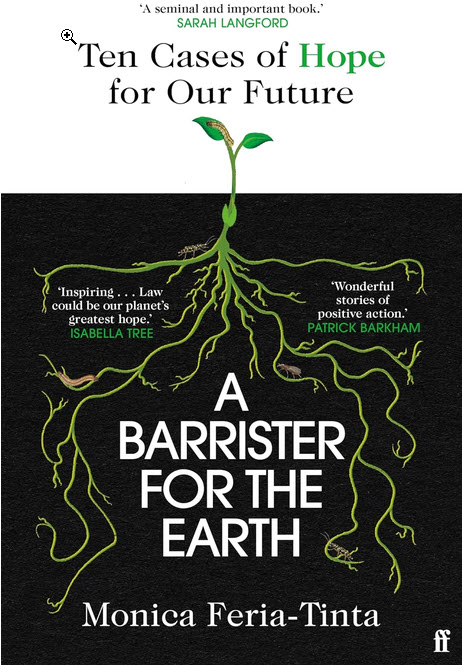
In prosecuting the case of the Cerrejón mine in Colombia, Feria Tinta noted that the coal was destined for the UK and Germany, which meant that the people living in the countries which burned the coal were implicated, and are complicit in, the contamination they cannot see. In her book, Feria Tinta describes how she came to realise that contamination caused by mines in the developing world is not an anomaly, but integral to the economic system of which we are a part.
Questioning the dualism of Western legal systems, Mónica Feria Tinta explains that those who drafted Western laws had unintentionally divided nature from humans, following Aristotle rather than Benedict (Baruch) Spinoza, who understood that all elements in our universe are connected – as did the naturalist and geographer Alexander Von Humboldt, who documented the Americas for European readers, and was one of the first to identify human-induced climate change.
Mónica Feria Tinta’s conclusion is that the value of Indigenous cultures and beliefs have been underestimated by the modern world—that incorporating Indigenous knowledge into our legal systems is our greatest hope in our quest to prevent ourselves from self-destruction. She says her work is just beginning, as she believes that legal protection for essential ecosystems—based on science—is crucial for our survival. To achieve that legal protection, in practice as well as on the statute books, we also need a change of consciousness, to which Monica Feria’s seminal work is an important contribution.