Stanton Geyer

Brazil: The geopolitics of Amazon crime
Militarized drug policies risk deepening the violence facing Amazonian communities. Geographer Aiala Colares traces the connections between drug trafficking, environmental crime, and territorial control, arguing that the ‘war on drugs’ has historically produced more violence than concrete results. Writing in November 2025, he calls for security policies that protect traditional communities and the forest.

Brazil: The living dead
A Facebook advert for an Amazon farm led Subsolo journalist Ruan Martins to Ivanildo Canuto Soares, a convicted murderer with a history of drug trafficking who faked his own death. Mining records showed gold sales attributed to a permit area where satellite images revealed no visible signs of extraction. Martins follows the buyers and refiners into the supply chains reported by major international companies.
Brazil: The Amazon for sale online
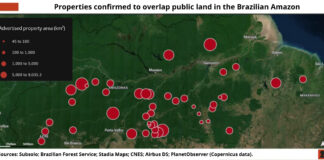
Subsolo journalist Ruan Martins spent six months tracking online adverts offering millions of hectares of forest in Brazil’s Amazon. He spoke to more than 100 brokers and checked property maps, identifying listings that overlapped Indigenous territories and protected areas, including Tenharim land. At the time of publication, Facebook was still hosting the kind of advert it had promised to block in 2021.
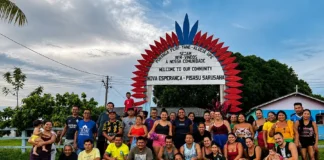
Brazil: When electricity is not enough
Luz para Todos has brought electricity to Indigenous communities in the Amazon. But two Baré communities show why a connection alone cannot deliver energy justice.
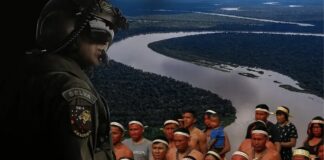
Brazil: The Amazon amid global conflict
Competition for critical minerals and trade routes is drawing the Amazon deeper into global struggles over resources and military power. Writing in March 2026, Bruno Malheiro examines how US imperial ambitions, trade with China, and Brazil’s political choices put Amazonian territories under pressure. He argues that defending the region requires both national sovereignty and the right of Indigenous Peoples and traditional communities to determine the future of their territories.
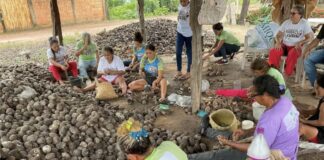
Brazil: Babassu, the mother palm
Babassu nut breakers in Brazil’s Amazon call the palm ‘mother’: it sustains their food, livelihoods, and cultural traditions. Drawing on published research, agronomist Bernardo Tomchinsky examines the knowledge and practices of women in Pará, and their struggle for access to babassu groves, territorial protection, and recognition of their rights.
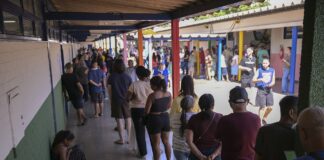
Brazil: Which Lula are some voters rejecting?
Flávio Bolsonaro has finished ahead of Lula in Brazil’s presidential first round. Stanton Geyer examines the grievances driving Lula’s rejection, the political character built around him, and what a Bolsonaro return to power could mean for Brazilian democracy.
Brazil: Militias at the ballot box
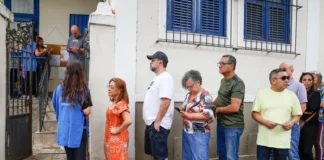
Brazil's 2026 election has exposed the reach of Rio de Janeiro's criminal militias. From electoral intimidation to corrupt police relationships and diverted firearms, these groups exercise power well beyond their neighbourhoods. What would Flávio Bolsonaro's proposed security policies mean for them?

Brazil: the threat to democracy and the Amazon
The first round of Brazil's presidential election on 4 October gave a slim majority to right-wing candidate Flávio Bolsonaro. LAB's Brazil expert Sue Branford examines the disastrous outlook for the country, and especially for the Amazon, if Bolsonaro wins the run-off on 25 October.
Brazil: Fishing for recognition
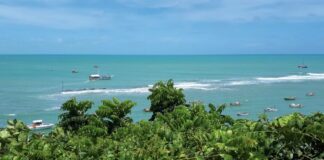
Fishing communities in Brazil are demanding legal recognition of 'marétorios' as Marine Spatial Planning and offshore wind expansion threaten traditional territories and livelihoods in the Amazônia Azul.