Militarized drug policies risk deepening the violence facing Amazonian communities. Geographer Aiala Colares traces the connections between drug trafficking, environmental crime, and territorial control, arguing that the ‘war on drugs’ has historically produced more violence than concrete results. Writing in November 2025, he calls for security policies that protect traditional communities and the forest. This article was translated for LAB by Stanton Geyer. You can read the original, published by Amazônia Latitude in Portuguese, here.
The Amazon faces an extremely complex situation of social and environmental vulnerability. On one side are land grabbers, small-scale miners, loggers, mining companies, and even state agents. On the other are criminal factions linked to national and transnational organized crime. This overlap of illicit and legal interests makes the region a space of intense territorial and economic struggle.
The situation worsens when environmental crimes become interconnected with drug trafficking, increasing the scale of operations, financial power, and control over strategic routes. This process has resulted in the systematic violation of the rights of Indigenous Peoples, Quilombola communities (Afro-Brazilian communities with historical ties to resistance to slavery), riverine communities, and other rural communities. These populations become the principal victims of predatory expansion, the state’s tenuous presence, and the absence of effective policies for territorial protection and governance.
How do criminal factions reach the Amazon? How do they infiltrate traditional populations’ lands? And how do they connect with environmental crimes?
The answers are not straightforward. One key factor was the presence of street gangs and graffiti gangs (pichadores) in the Amazon’s state capitals and some other cities in the 1990s. Each gang had its own defined territory, within which it formed and broke alliances and engaged in open warfare that led to urban conflicts. These gangs, with their anarchist tendencies, often emerged from the punk movement.
In the early twenty-first century, increasing quantities of cocaine in crude paste and powder forms crossed Amazonian borders to supply local markets. This strengthened the drug market, which co-opted the gangs. They then began operating as local factions in neighbourhoods.
As Brazil’s consumer market grew, so did the Amazon’s geostrategic importance to the spatial logistics of organized crime. In 2007, Família do Norte (FDN) emerged in Amazonas. In Pará, an attempt was made to establish Primeiro Comando do Norte (PCN). Those behind these groups understood how important a hub the region was becoming for global drug trafficking.
Rota Caipira and illicit economies
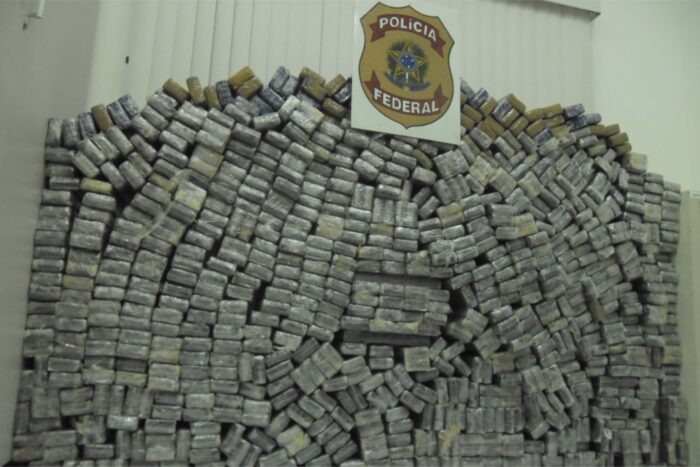
Criminal factions from Brazil’s Southeast soon began establishing alliances and connections with the North, seeking direct access to cocaine at lower prices. This movement is directly related to the rivalry between Comando Vermelho (CV) and Primeiro Comando da Capital (PCC). The latter controls the so-called Rota Caipira, the country’s principal overland cocaine distribution corridor.
Rota Caipira links the borders with Bolivia and Paraguay, where the drug enters the country, to major consumer centres and export ports, particularly São Paulo, Santos, and Rio de Janeiro. Control of the route gave PCC a strategic role in the domestic and international drug trade, forcing CV to seek new avenues for expansion.
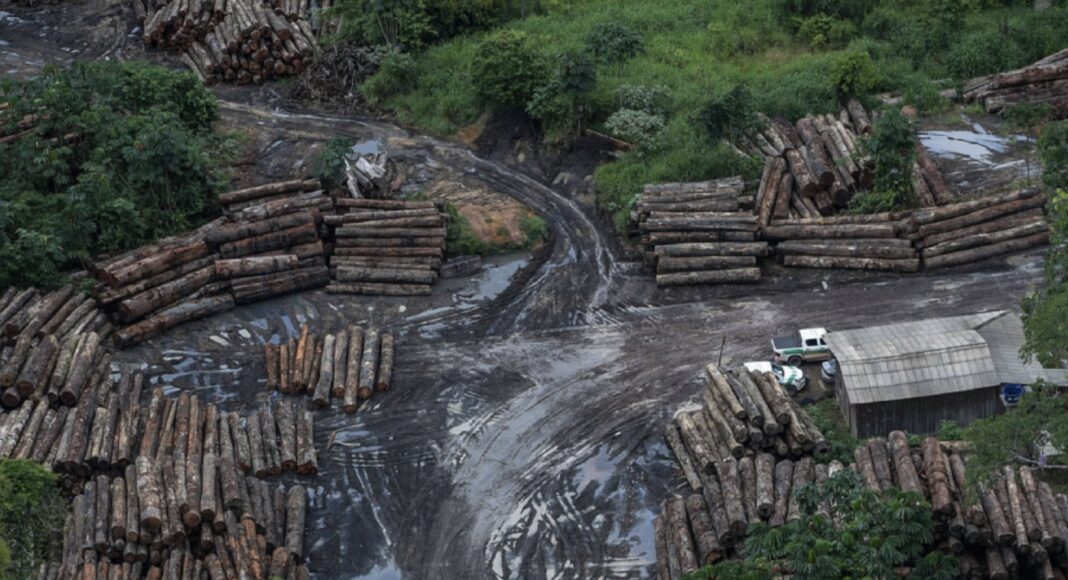
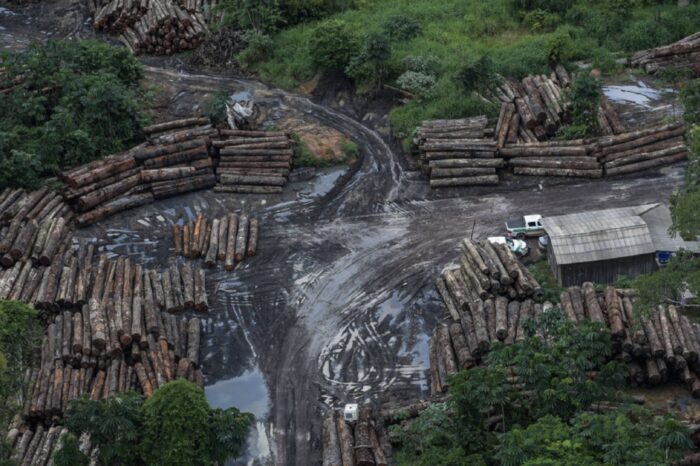
Beyond control of routes, the expansion of drug trafficking required control of territory. This led to collaboration with other illicit economies already established in the forest, like small-scale mining, deforestation, timber smuggling, fraudulent land grabbing, and the provision of logistics, labour, and armed protection to these criminal enterprises.
In this context, Comando Vermelho turned to northern Brazil, where it found favourable conditions to consolidate its presence. The attempt to establish PCN failed after authorities arrested its leaders, but FDN maintained an active alliance with CV. This alliance lasted until 2018, when the groups broke ties, igniting severe urban warfare that also spread into the interior of Amazonas. This conflict ended in the demise of FDN and Comando Vermelho’s dominance in the region.
In Pará, connections between local groups and CV in the Belém Metropolitan Region began developing in 2012. In the years that followed, CV consolidated its dominance there and expanded into inland cities. As in other Amazonian states, the faction is also advancing into rural areas, Indigenous villages, and Quilombola territories. It exploits institutional gaps and the absence of public policies, turning these spaces into zones of criminal influence and logistical activity.
PCC also began expanding into inland areas and advancing into the Amazon, seeking to consolidate its own supply and distribution routes. It allied itself with a local faction in Altamira called Comando Classe A (CCA), which originated within the municipality’s prison system in an attempt to establish local autonomy against groups from the Southeast.
Authorities identified CCA as responsible for the attack on CV prisoners at the Centro de Recuperação Regional de Altamira on 29 July 2019, in which 58 prisoners died. Four further prisoners were killed during transfer afterward, bringing the combined death toll to 62.
The Amazon as a central axis of criminal geopolitics
The Amazon has become the stage for a complex geopolitical struggle and a central axis for the expansion and financing of organized crime. Its vast, porous borders facilitate the entry of weapons and ammunition that supply criminal networks in distant urban centres, including those in Rio de Janeiro’s favelas and hillside communities. This flow strengthens the factions’ arsenal and demonstrates the interconnection between environmental crimes in the North and urban violence elsewhere in the country.
Conflict over territory, land, and subsurface minerals is the central axis around which patterns of violence are structured in the vast Legal Amazon (Amazônia Legal), Brazil’s administrative Amazon region. This is one of the central conclusions of the third edition (2024) of Cartografias da Violência na Amazônia (Cartographies of Violence in the Amazon Rainforest), produced by Instituto Mãe Crioula (IMC) and Fórum Brasileiro de Segurança Pública (Brazilian Public Security Forum).
The study covered 772 municipalities across Acre, Amapá, Amazonas, Mato Grosso, Pará, Rondônia, Roraima, Tocantins, and part of Maranhão. It shows that criminal factions play a central role, not only through drug trafficking but also through their connections with advancing deforestation, other environmental crimes, and land disputes. These factors intertwine and fuel cycles of violence, revealing an overlap between illicit economies, environmental degradation, and territorial disputes and conflict.
In 2023, the region recorded 8,603 violent deaths, including intentional homicides, killings during robberies, deaths resulting from police operations, and the deaths of police officers. This amounted to 32.3 deaths per 100,000 inhabitants, a rate 41.5% higher than the national average of 22.8.
Criminal factions’ activities are geographically structured and strategically oriented, but unevenly distributed across Amazonian municipalities. In some territories, a single organization dominates and controls illicit activities. Where multiple factions are present, struggles for territorial control and transport routes can fuel instability and deadly violence.
Another critical finding is the marked concentration of factions along the borders with the Andean countries of Bolivia, Colombia, and Peru. Municipalities along these borders function as strategic nodes for organized crime, facilitating transnational trafficking in drugs, weapons, and illegal goods, and intensifying the integration of domestic and international criminal markets.
The spatial distribution of factions reflects the severity of criminal infiltration throughout the Legal Amazon. It also shows how the region has become the stage for a complex logistical and territorial web, with direct implications for national security and the capacity to govern the region.
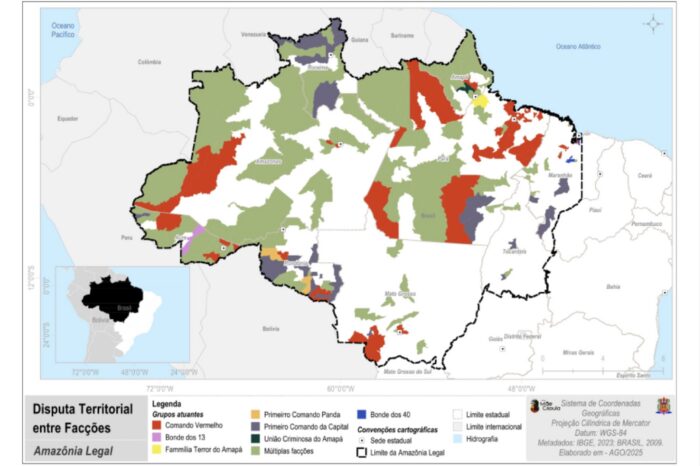
National factions such as CV and PCC operate alongside regional groups, including Bonde dos 13 in Acre, Família Terror in Amapá, and União Criminosa in Amapá. Their presence reveals a fragmented and conflict-ridden landscape. This overlap of actors is not random. It directly reflects the convergence of illicit interests that find fertile ground for expansion in the region.
The intricate river network serves as the logistical backbone for drug trafficking, illegal small-scale mining, and predatory timber extraction. The immense territory and low population density, combined with a historically limited state presence, create a power vacuum that these organizations rapidly fill. Territorial disputes concern not only neighbourhoods or cities, but also strategic routes, entry and exit points along international borders, and areas rich in exploitable natural resources.
The implications extend far beyond public security. National sovereignty is challenged along these permeable borders, where organized crime operates fluidly, destabilising governance and the social order.
Addressing this multidimensional crisis requires integrated policies that combine intelligence and robust police action with sustainable socioeconomic development and effective international cooperation. The stability of the Legal Amazon and the preservation of its social and environmental heritage depend directly on the capacity to reverse criminal hegemony.
The Rio model in the forest
The extension of Comando Vermelho’s own network into the states of the Legal Amazon shows it is the most territorially extensive faction in the region. This takes the form of control over important drug distribution routes, infiltration of traditional communities, and the exertion of violent territorial control, turning extensive areas of the Amazon into strategic landscapes.
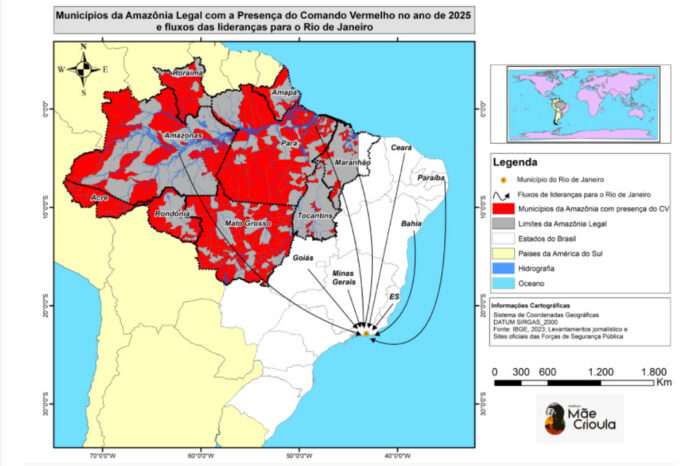
CV’s territorial consolidation and strategic expansion across Amazonas, Pará, Acre, Rondônia, and Mato Grosso indicate a significant presence in areas previously considered peripheral to national drug trafficking.
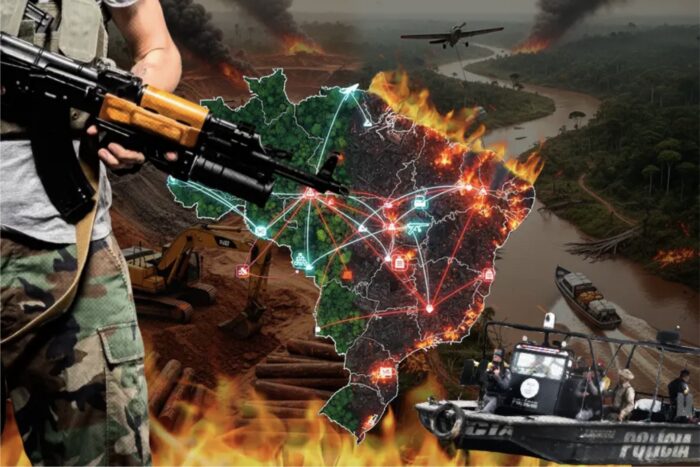
This expansion is associated with the reconfiguration of trafficking routes and the Amazon’s integration into external transnational networks, particularly those involving cocaine from the Andean countries. The flows shown on the map depict leaders moving from the Amazon toward Rio de Janeiro, indicating connections between the CV’s networks in Brazil’s North and Southeast.
Historically, CV consolidated its hegemony in Rio de Janeiro through armed coercion and social networks linked to illicit activity in favelas and formal communities. In recent years, elements of this experience of territorial domination have been reproduced in the Amazon, particularly in border areas. The ‘Rio model’, combining violence, trafficking, and local power relations, is being adapted to a region characterized by vast expanses of forest, rivers serving as logistical routes, and a limited presence of security forces.
The connections between CV’s networks in the Amazon and Rio de Janeiro underline its growing reach further beyond them. Alongside its role in cocaine throughput, the faction has been investigated for involvement in illegal gold extraction in Amazonas and Pará.
Taken together, CV’s territorial presence and its connections with Rio indicate that its expansion in the Legal Amazon is part of a wider network spanning geographic scales. The faction is making the Amazon a key component in its criminal geopolitics, connecting illicit flows from the forest to the coast, and linking urban centres and border areas through power. This process challenges national sovereignty and creates new dilemmas for public security and land management.
The risks of a militarized response
The difficulties faced by the states of the Legal Amazon in combating drug trafficking reflect a structural problem in Brazil, that being the inability to formulate and implement effective public-security policies based on intelligence, prevention, and respect for human rights. Instead, militarist and punitive models are repeatedly applied, underpinned by the so-called ‘war on drugs’, which is presented as an immediate solution but has historically produced more violence than concrete results.
Replicating this security model in the Amazon, drawing on operations such as Operação Contenção (Operation Containment, carried out on 28 October 2025 in the Alemão and Penha complexes in Rio de Janeiro), could pose a grave risk to traditional populations, including Indigenous Peoples, Quilombola communities, and riverine and rural communities.
By importing confrontational urban logics into territories marked by social and environmental diversity and a tenuous state presence, public authorities often criminalize entire communities, intensifying conflicts and weakening local autonomy, including local forms of territorial protection.
The militarized response to drug trafficking in the Amazon thus risks repeating the mistakes seen in Rio’s urban peripheries: high levels of police killings, violations of rights, the destruction of community ties, and the reproduction of conditions from which criminal networks can expand.
It is therefore essential to rethink security policy in the region from an integrated territorial, social, and environmental perspective, capable of combining the fight against organized crime with the protection of traditional populations and forests.
Aiala Colares is a geographer trained at Universidade Federal do Pará (UFPA) and holds a bachelor’s degree in law from Universidade da Amazônia (UNAMA). He holds a doctorate in socioenvironmental development and teaches at Universidade do Estado do Pará (UEPA). He is president of Instituto Mãe Crioula.
Original publication credits: copy-editing and page production, Juliana Carvalho; editorial direction, Marcos Colón.
Translator’s note: This English edition has been translated and edited for LAB, with minor factual updates, clarifications, and additional sources incorporated where necessary. The author’s original reporting, interviews, and analysis have been preserved. The original Portuguese article was published by Amazônia Latitude on 5 November 2025.