Brazil’s Luz para Todos programme has brought electricity to millions, but a connection alone cannot guarantee energy justice. Drawing on interviews with leaders of two Baré Indigenous communities in the Amazon, researcher Elen de Lima examines the gap between household electricity and the reliable power needed to sustain livelihoods, community services, and autonomy. This article was translated for LAB by Stanton Geyer. You can read the original, published by Amazônia Latitude in Portuguese, here.
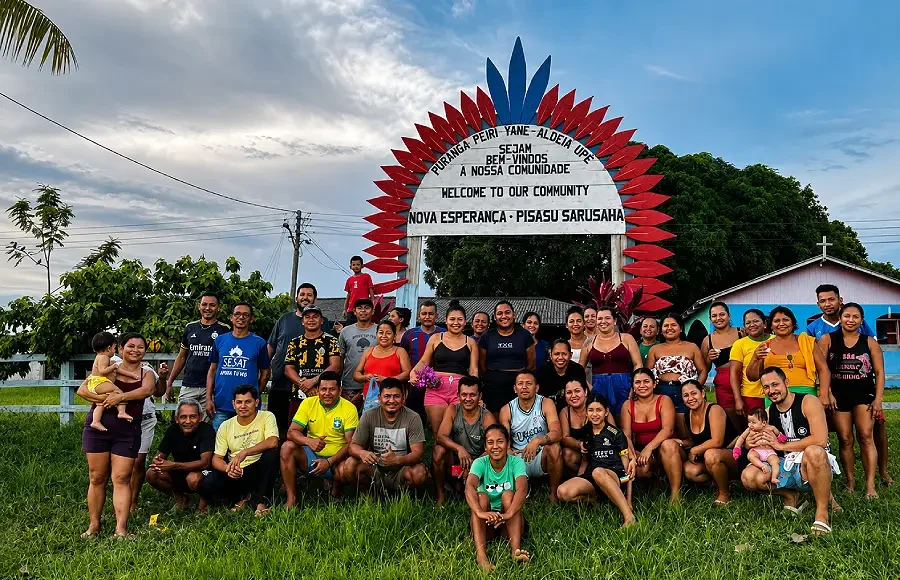
In October 2023, the Terra Preta Indigenous community went without electricity for 15 days.
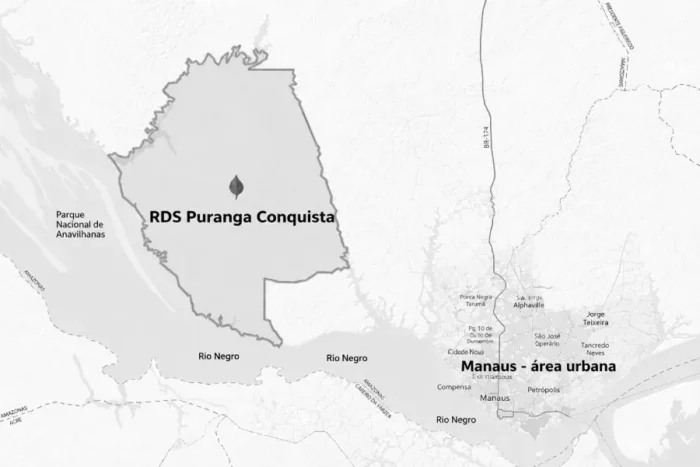
It was not because of unpaid bills or neglect. The grid supplying local homes stopped working. It had been extended from Manaus in 2019 under the Programa Luz para Todos (LPT – Light for All), via the left bank of the Rio Negro to the Reserva de Desenvolvimento Sustentável Puranga Conquista (Puranga Conquista Sustainable Development Reserve).
Strong winds brought trees down onto the overhead power cables. The community’s 51 families were left in the dark inside their homes.
Cacique Clodoaldo Silva Aleixo, Terra Preta’s Indigenous leader, remembers those days well. With neither the grid nor the backup diesel generator available, the Escola Indígena Municipal Arú Waimi, the municipal Indigenous school, became the community’s refuge for power. Families took their food there to keep anything that needed refrigeration from spoiling. One Wednesday evening, residents even gathered at the school, the only place with electricity, to watch Flamengo, the Rio de Janeiro football club beloved by the community.
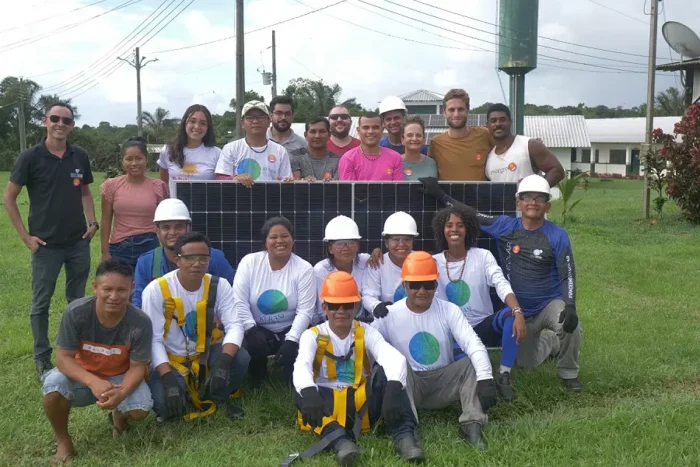
What kept the school running during those 15 days were the photovoltaic panels on its roof, installed by the civil society organization Revolusolar. The author works for the organization, a connection disclosed here in the interests of methodological transparency.
A second solar system with batteries, installed by the organization in 2024, keeps the pump supplying water to homes running when the grid fails, and also sustains basic care at the health post. That energy comes from the sun and stays there, available, whatever happens to the infrastructure connecting Terra Preta to Manaus’s electricity system.
Clodoaldo calls solar power ‘100 per cent energy’. Not because it is perfect. He knows it is not. But because, unlike the power line from the city, it didn’t require the forest to be cleared to reach them. And because, during the 15 days when everything else failed, it held on.
Terra Preta’s residents are among the approximately 17.3 million people served by Luz para Todos between its creation in 2003 and the end of 2023.
It is one of Brazil’s largest policies for universal access to energy, and its reach is real. Electricity arrived at the homes of this Baré community on the Rio Negro through tangible infrastructure – three transformers, branch lines, and household connections – making it possible to use fridges, lights, and basic equipment in families’ everyday lives.
But those 15 days without electricity, and what kept working while the grid was down, raise the questions this article explores: what does it actually mean to have access to energy? And what is still needed for that access to become full autonomy?
Brazil and the just energy transition
In May 2024, the Minister of Mines and Energy, Alexandre Silveira, opened the G20 meetings on energy transitions in Belo Horizonte with a statement that summed up Brazil’s position in the global debate. He presented Brazil as a leader in the energy transition and stressed that this transition must be socially just and inclusive.
The argument had a concrete basis. In 2024, renewable sources like hydropower, wind, solar, and biomass accounted for 88.2 per cent of Brazil’s electricity mix and 50 per cent of its total energy mix, compared with a global share of 14.3 per cent in 2022.
The country has developed expertise in a range of renewable energy technologies, from bioethanol to hydropower. By 2024, 99.8 per cent of Brazilian households had access to electricity, according to the Instituto Brasileiro de Geografia e Estatística (IBGE – Brazilian Institute of Geography and Statistics). Few countries can boast such a combination of achievements.
That same year, the government formalized this position through the Política Nacional de Transição Energética (PNTE – National Energy Transition Policy), established by a resolution published on 28 August 2024. The resolution defines energy transition, a just and inclusive energy transition, energy equity, and energy poverty.
The PNTE represented a significant institutional step. It recognized that the transition is not only technical but also social, and that its benefits need to reach the groups historically most vulnerable to inadequate energy access.
Luz para Todos occupies a central place in Brazil’s narrative. Created in 2003, it inherits a tradition of rural electrification policies dating back to the early decades of the national electricity system, when bringing energy to the countryside was, above all, an agricultural development policy.
Over two decades, the programme extended electricity access to around 17.3 million people by the end of 2023, according to its Operations Manual (2024). It focuses on populations furthest from urban infrastructure, such as family farmers, ribeirinhos (riverine communities), Quilombola communities, and Indigenous Peoples.
In 2020, the Programa Mais Luz para a Amazônia (More Light for the Amazon) extended this reach, prioritizing remote communities in the Amazônia Legal (Legal Amazon) region through individual photovoltaic systems. It recognized that, beyond conventional grids, decentralized generation is the most viable solution and the one with the least impact on the forest. Its existing contracts were incorporated into LPT in 2023.
Brazil therefore has legitimate grounds to claim a leading role in the debate on a just energy transition. And that is precisely why it is worth looking closely at what happens when this discourse meets the reality of the communities that give it substance. What do the Indigenous families reached by the programme say? Is the energy that has arrived sufficient, and sufficient for what?
What energy justice requires
When we talk about access to electricity, the simplest and most familiar image is a switch turning on a light. It is a powerful image, and it is no coincidence that Luz para Todos adopted it from its inception in 2003. Having electricity at home means, first of all, having light. Yet over the two decades since, in Brazil and elsewhere, it has become increasingly clear that having electricity does not necessarily mean having enough of it to meet everyone’s needs or even to fully enjoy the opportunities it should provide.
Energy justice thus became an analytical framework for evaluating energy inclusion policies. Its intellectual roots lie in environmental justice. In 2007, the philosopher David Schlosberg systematized a framework resting on three dimensions of justice – distribution, recognition, and procedure – incorporating the concept of recognition developed by the philosopher Nancy Fraser.
The distributive dimension asks who receives a system’s benefits and bears its costs. Recognition asks which groups are actually taken into account in decisions, while procedure asks how those decisions are made.
In 2013, McCauley and colleagues transplanted this framework into the energy field, establishing the subfield now known as energy justice. Two years later, Kirsten Jenkins and colleagues published a systematic conceptual review, consolidating the three pillars as its central analytical framework and proposing their application across the entire energy chain, from production to consumption.
For Jenkins and colleagues, the three pillars answer three linked questions: what, who, and how, identifying where injustice arises, recognizing whom it affects, and developing processes to remedy it.
Applied to an electrification programme, these questions complement the binary measure of energy access. It is not enough to ask whether electricity has arrived. We must ask who it has reached, how much, how regularly, and whether its recipients had any involvement in decisions about implementing public policy in their territories.
Field experience makes a further distinction particularly concrete: the difference between access and energy sufficiency. Having access means being connected to a source of electricity, be that a grid, a photovoltaic system, or a generator. Energy sufficiency means that this electricity meets the real needs of those receiving it. And those needs are not only domestic.
Domestic energy use covers everyday household needs such as lighting, food refrigeration, ventilation, charging devices, and pumping water. Productive use covers activities that generate income or enable a community to sustain its economy. Examples include processing machinery, commercial freezers, power tools, tourism infrastructure, and equipment for agriculture or fishing.
The distinction is not about the total quantity consumed, but rather function. A domestic fridge and a fish shop’s freezer may consume similar amounts of electricity, but one preserves the family’s food while the other feeds a source of income.
The experience of Amazonian communities makes a third category particularly visible: community or public energy use. Distinct from domestic use, which enables life at home, and productive use, which enables income generation, community use sustains a dignified life in society.
It is public lighting that makes it safe to move around, electricity at the health post that makes basic medical care possible, communal water pumping that brings water to homes, and power for the community centre where collective decisions are made. It is this use of electricity that sustains a community’s social and political fabric.
Most programmes for universal energy access were designed with domestic use as their implicit reference point. The consequence is direct. Communities can be formally served within a programme’s parameters and still remain economically stagnant because the electricity that has arrived cannot support local productive activity. Without guaranteed community or public services, they also lack full access to basic rights such as safety, health, and education. Inclusion is recorded in the statistics. Autonomy is not.
It is precisely in this space, between the recorded access and energy sufficiency in all its dimensions, between the official measure and the concrete experience of those receiving electricity, that the Indigenous communities of Terra Preta and Nova Esperança help us light the way towards a just energy transition in Brazil.
Two cases, two models, one policy
The Puranga Conquista Sustainable Development Reserve occupies part of the left bank of the lower Rio Negro, in Manaus. Within it, Luz para Todos reached two Indigenous communities of the Baré people at different times and through different technologies.
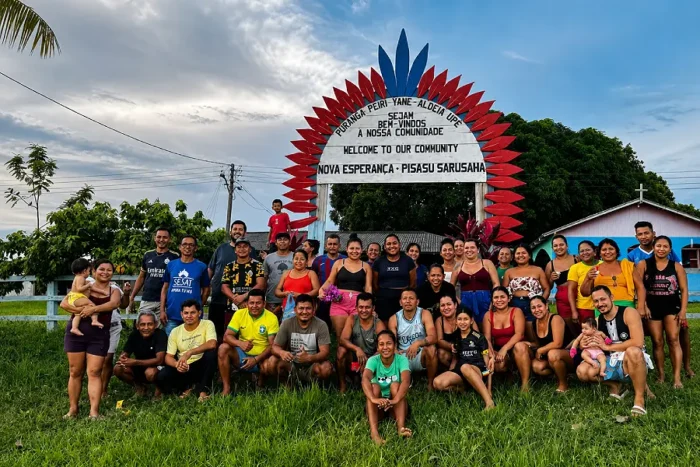
Terra Preta, with 51 families and 196 residents, received electricity in 2019 through an extension of Manaus’s conventional grid, with cables and power lines crossing the river and forest. Nova Esperança, with 53 families and 186 residents, was served in 2023 by Mais Luz para a Amazônia, which prioritized individual photovoltaic systems for remote communities.
The two communities are geographically close, share ethnic ties, and have similar productive activities in handicrafts, family farming, and community-based tourism, but the way electricity reached each produced different experiences.
A note on the researcher’s position is needed here. The interviews underpinning this analysis were conducted in 2025 with Cacique Clodoaldo of Terra Preta and community leader Juliana Garrido da Silva of Nova Esperança. The choice of communities arose from the author’s work for Revolusolar, which installed supplementary photovoltaic systems in Terra Preta and visited Nova Esperança.
This proximity reduced the mistrust that outsider research might arouse and made observations possible that a different methodological approach would not have allowed. It also requires reflexivity. A researcher involved in photovoltaic solutions tends to see both the strengths of solar power and the limitations of LPT more readily, precisely because that is her everyday vantage point. What seems evident from that position may warrant further investigation, so that it does not become a premature conclusion.
Distribution: electricity has arrived, but is it enough?
From the lens of distributive justice, the two communities reveal the same underlying problem through contrasting experiences.
In Terra Preta, electricity arrived through the conventional grid, with three transformers totalling 45 kVA distributed among the homes. The programme fulfilled its promise to bring infrastructure to people’s houses. But the voltage actually delivered fluctuates between 96 and 98 volts, within the critical range set by the federal regulator Agência Nacional de Energia Elétrica (ANEEL) in the electricity sector regulations (PRODIST) for a nominal voltage of 127 volts.
This is not a tolerable variation. Voltages in this range compromise the operation and lifespan of electrical equipment, which helps explain the community’s restricted pattern of use.
Clodoaldo describes the everyday approach with colloquial precision: ‘Turn one on, then turn the other on.’ The fridge and washing machine do not run at the same time. Equipment for processing açaí, cumaru, and cocoa – products the community hopes will become sources of income through partnerships with other organizations – requires power that the current grid cannot provide.
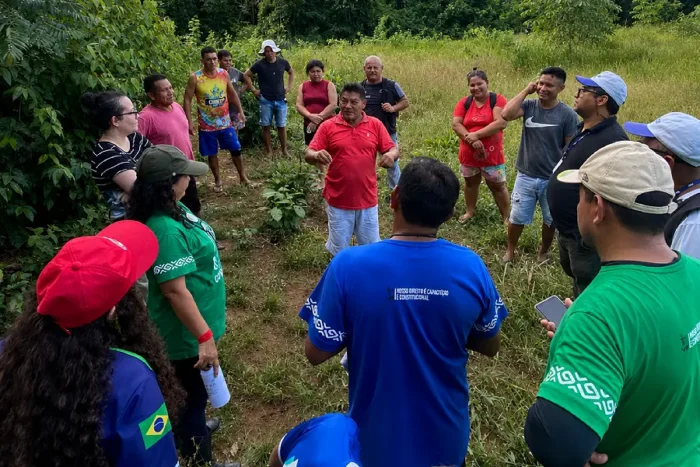
In Nova Esperança, the distribution problem takes a different form. The individual photovoltaic systems installed under Mais Luz para a Amazônia meet basic domestic needs, but they do not cover every family or guarantee 24-hour electricity. The school only has electricity during teaching hours.
Tourism, the community’s central productive activity, requires infrastructure for accommodation and food provision that the current systems cannot support. Nor can the systems be used directly to generate income. Juliana sums it up:
‘Electricity helps us in lots of ways, but we need electricity to work.’
An episode she recounts illustrates the complexity of this limitation. The local electrical utility removed solar systems from a bar and a restaurant in the community, arguing on technical grounds that the installed systems could not support commercial use. The utility’s decision goes beyond insufficient supply: it actively restricts the alternatives the communities could build for themselves.
The weight of this restriction becomes clearer when we consider these communities’ place in the regional economy. Both Terra Preta and Nova Esperança are now at the centre of tourist routes in the Brazilian Amazon, in a region that attracts visitors for its proximity to Manaus and the immersive forest experience it offers.
Much of their energy needs beyond domestic use arise from tourism: accommodating visitors, providing meals, refrigerating food, lighting communal spaces at night, and powering craft workshops.
Community-based tourism, local commerce, and handicrafts are now the main sources of income in territories marked by geographical isolation, accessible only through long river journeys, and economic isolation, with no nearby alternatives for employment or markets.
Growing environmental pressures compound these challenges. Severe droughts in 2023 and 2024 brought the Rio Negro to successive record lows since recordkeeping began in 1902. Such extreme droughts threaten traditional livelihoods, such as fishing and river transport for travel and getting products to market.
As the climate crisis weakens the traditional foundations of the community economy, tourism and other productive activities are becoming mainstays of livelihoods rather than supplementary sources of income. Having enough electricity to sustain them is no longer a question of development, but a question of staying in the territory.
In both communities, LPT’s shortcomings are most apparent in its provision of electricity for essential community services. The programme’s Operations Manual gives priority to schools, health facilities, community wells, and collective spaces. In practice, the programme has not ensured sufficient, reliable electricity for community services in either Terra Preta or Nova Esperança.
Municipal diesel generators and solar systems installed by civil society help keep these services functioning. The directive exists, but it has yet to be implemented in either community.
The two technological models – a centralized grid and decentralized solar power – produce the same result under a binary measure of access: both communities are formally counted as served by the programme. But when the question becomes one of energy sufficiency for productive and community use, both systems fall short, leaving the communities without the full benefits that electricity access should provide.
The electricity supplied is enough to keep the lights on and food refrigerated. But it is insufficient to support income-generating activities or sustain essential community services.
Recognition: whose needs shaped the policy?
Through the lens of recognition, the two communities recount experiences that point to the same gap. The projects’ technical design did not account for their productive activities or specific needs.
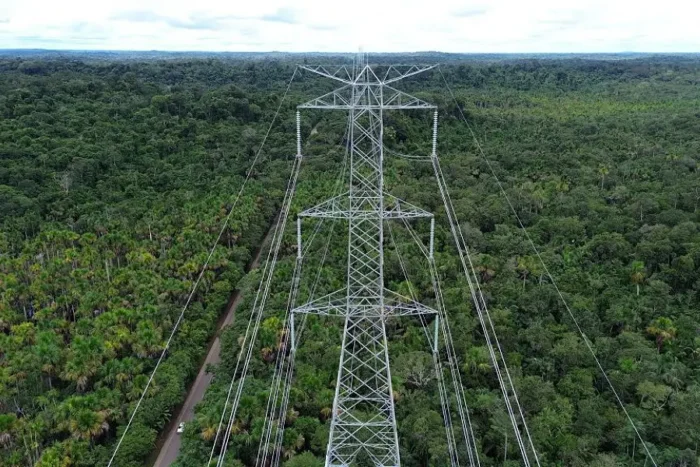
In Terra Preta, an old technical decision would prove problematic years later. The original project provided for underwater cables through the Rio Negro, which would have avoided opening routes and clearing forest. The solution was changed without consulting community leaders, who discovered the change only when the work was being carried out.
The cables were instead routed overhead through stretches of forest and are now affected by strong winds and falling trees, helping explain the 15 days without electricity that opened this article.
Clodoaldo’s frustration is both technical and political. He knows that, had the community been heard, the solution would have been better.
In Nova Esperança, the failure to recognize the community’s needs is reflected in a long history of unmet expectations. Juliana recounts how the community heard about LPT with enthusiasm, and how its arrival was announced in stages. Initially, she says, there was talk of building a power plant at the mouth of the Rio Cuieiras to supply the region. Later, there was talk of a plant in each community.
The leaders were never formally consulted about any of these plans, nor officially informed that the proposals had been changed or abandoned.
What ultimately arrived in 2023 was far more limited, with just three photovoltaic panels, one battery, two light fittings, and two electrical sockets per household. As Juliana puts it, the programme ‘made it as far as the mouth of the Rio Cuieiras, but never reached us’.
Her words capture a broader structural problem. The community figured in the discourse of universal access, it appeared on maps, in statistics, and in the original plan. Yet it was largely absent from the implementation of public policy on the scale initially promised.
Juliana’s account of the programme’s limited reach also raises another issue. At one point, she says, leaders were told that the programme would not reach the community ‘for environmental reasons’, because of concern about the environmental impact of extending networks over the forest. Later, they were told that the funding had reportedly run out, or that the infrastructure would not reach them.
The environmental justification touches on a structural tension that has run through Amazonian politics for decades. Indigenous communities living in territories strategic to forest preservation are caught in a double bind. They are guardians of the biome for the world, yet are deprived of sufficient electricity and other basic rights in the name of that same guardianship.
This is a longstanding paradox in international environmental debate, articulated, among others, by the Catalan economist Joan Martínez-Alier through the notion of ‘environmentalism of the poor’. The thesis holds that the communities that do most to protect nature tend to be precisely those that benefit least materially from that protection.
In the Amazon, this paradox takes concrete form when recognition of Indigenous Peoples as protectors of the forest does not translate, in practice, into a full guarantee of social and economic rights.
Procedure: how decisions were made
The procedural dimension is perhaps the most revealing. Convention 169 of the International Labour Organization (ILO), ratified by Brazil in 2002, guarantees Indigenous and traditional communities the right to free, prior, and informed consultation on projects affecting them. In neither community was this right realized during LPT’s implementation. Clodoaldo is direct about what happened:
‘As for prior consultation on the first project and the second project, there wasn’t any.’
When community leaders were informed, it was about decisions that had already been made. Even then, the plans communicated to them were not always followed, as illustrated by the decision to abandon the proposed underwater cables. Informing a community of a decision is not the same as consulting it. Genuine consultation requires that decisions remain open to change in response to the community’s input.
Institutional accountability also deserves attention. When the system fails, as it did during Terra Preta’s 15 days without electricity, leaders know to turn to the local utility, Amazonas Energia, now Âmbar Energia Amazonas. What beneficiaries were not told during the programme’s implementation was that the electricity sector provides a second level of accountability through the ANEEL complaints channel, available when distributors fail to resolve a problem.
The result is an information imbalance. The communities exercise their rights as consumers using the first-level channels they know, but lack the tools to uphold those rights when that standard of service isn’t met.
In Terra Preta, the community was also responsible for clearing the route along which the grid’s cables now run. There was no financial compensation or formal recognition of this work. The community absorbed the state’s infrastructure costs as though this were a natural part of its relationship with the programme.
The operational autonomy that Clodoaldo celebrates in Revolusolar’s photovoltaic systems calls for a distinction. It can be empowering when it rests on a state that is present, one that fulfils its public service obligations, ensures essential community infrastructure, provides ongoing technical training, and formally recognizes local work in operating the systems.
It can also carry a sense of abandonment when it fills the vacuum left by an absent state, with the community taking on responsibilities that would not originally have fallen to it, without state support or compensation.
The difference between these two forms of autonomy does not lie in the community. It lies in whether these populations have access to an essential public service.
What LPT has achieved, and what comes next
Before considering these gaps further, it is necessary to state clearly what Luz para Todos has delivered. Those gains are real, and ignoring them would be dishonest.
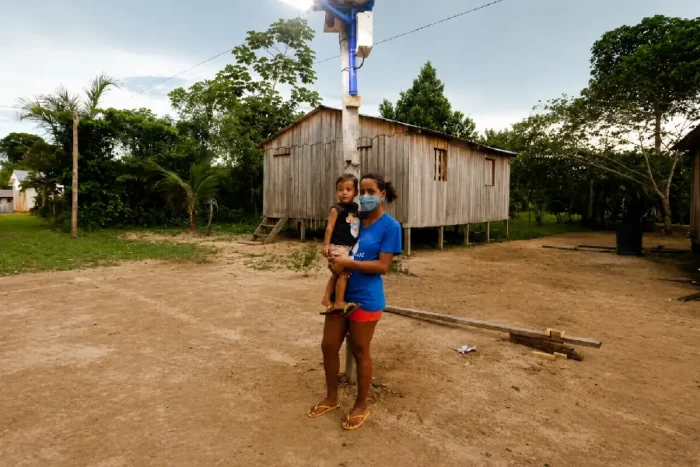
In Terra Preta, the arrival of the electricity grid in 2019 transformed daily life in ways that Cacique Clodoaldo recalls with both clarity and gratitude. Fridges could run continuously. Lights, fans, televisions, and phone chargers became part of families’ everyday routines. In that respect, the programme delivered on its original promise of bringing electricity into the homes of a remote forest community that had long gone without.
In Nova Esperança, Mais Luz para a Amazônia’s photovoltaic systems ensured household lighting and basic domestic refrigeration in a community previously dependent exclusively on diesel and solar systems installed by civil society organizations.
These advances are not trivial. They represent decades of absence reversed by a public policy that, for all its limitations, reached places the market would not. Luz para Todos represents one of the most significant reductions in energy poverty in Brazilian history, and the Indigenous communities of the Puranga Conquista Sustainable Development Reserve are living proof of its reach.
Examined through the three pillars of energy justice, the experiences of these two communities reveal shortcomings that do not contradict the programme’s achievements, but point to where it can go next.
The first gap concerns measurement. LPT measures its success by the number of households connected. This measure, though legitimate, is insufficient to capture communities’ energy realities. The voltage of 96-98 volts delivered in Terra Preta falls within ANEEL’s critical range and makes simultaneous productive use impossible. Indicators of energy sufficiency for all three uses – domestic, community, and productive – would make the programme better able to assess its actual impact.
The Observatório Brasileiro de Erradicação da Pobreza Energética (OBEPE – Brazilian Observatory for the Eradication of Energy Poverty), launched on 15 May 2025 by the Empresa de Pesquisa Energética (EPE – Energy Research Office), in partnership with the Ministério de Minas e Energia (Ministry of Mines and Energy) and the Inter-American Development Bank, offers an opportunity to make this improvement for three reasons.
First, it was designed to monitor access to energy services through integrated indicators encompassing consumption, housing characteristics, and socio-economic, geographical, and environmental data. Second, its indicator framework is being consolidated. This opens a policy window to incorporate the distinction between access and sufficiency, and recognition of the three energy uses, as official measurement parameters.
Third, OBEPE is institutionally linked to the PNTE, meaning that methodological improvements could inform adjustments to LPT and related programmes.
The second gap concerns listening. The technical sizing of the systems installed in both communities did not take account of their specific productive activities. Terra Preta plans to process açaí, cumaru, and cocoa. Nova Esperança has an established focus on tourism. This information was available. All that was needed was to ask. A protocol for participatory mapping of energy needs before the engineering stage would not only produce more appropriate systems, but also help fulfil the consultation requirements of ILO Convention 169.
The third gap concerns participation. Decisions about technology, routing, and system sizing were made without community leaders’ involvement. In Terra Preta, the cable route was changed without informing the community, leaving the grid vulnerable to bad weather events.
The distinction between informing and consulting needs to become part of the programme’s operations. Informing means communicating a decision already made; consulting means giving communities a meaningful opportunity to influence that decision before it is finalized. This distinction is not theoretical. It is reflected in ILO Convention No. 169, which Brazil ratified in 2002 and which guarantees Indigenous peoples the right to consultation on measures that may directly affect them.
LPT’s Operations Manual already calls for dialogue with civil society, but this principle has yet to be translated into specific protocols for projects in Indigenous territories.
The fourth gap concerns continuity. Both Terra Preta’s grid and Nova Esperança’s photovoltaic systems lack structured technical support after installation. In Nova Esperança, there is also no clear timetable for collecting and replacing equipment at the end of its useful life. Residents know the first-level complaints channel, the local utility, but rarely know the second level, ANEEL, for cases in which the distributor’s complaint channels fail to resolve the problem.
A maintenance and equipment-replacement plan, together with basic training in energy consumers’ rights, should be mandatory components of the programme’s implementation in traditional communities.
The fifth gap concerns whether the programme adequately provides for all three uses of energy. LPT was originally conceived to ensure that people had light. Two decades later, the communities it has reached are asking for more: enough energy to work, generate income, and sustain basic community services including schools, health posts, water supply, and public lighting.
These uses are recognized in programme rules. The gap identified here concerns their delivery in the two communities.
This demand is not excessive. It is the logical consequence of the programme’s success. When electricity arrived, communities began to imagine everything they might accomplish with it. LPT’s next step is to keep pace with that imagination.
The sixth gap lies in how technology is chosen. Deciding between an overhead grid extension, underwater cable, individual photovoltaic system, or hybrid system involves a complex socio-environmental calculation.
At a minimum, that calculation should consider the proximity of substations and existing infrastructure; each option’s technical feasibility, direct cost, and cultural costs and impacts; and the impact on the forest along the proposed route, including clearing for power lines.
It should also account for long-term operation and maintenance costs, including technical teams’ river journeys, which depend on diesel and generate environmental externalities rarely included in budgets. And it should consider the community’s capacity to help operate and care for the infrastructure, bearing in mind that these are generation systems far from urban centres.
LPT’s Operations Manual provides for comparative studies of technical and budgetary feasibility when choosing between grid extensions and decentralized systems. It does not make explicit whether these calculations must incorporate consultation with communities about the alternatives, or whether the results must be communicated to beneficiaries in accessible language before a decision is made.
In the two communities studied, none of the leaders had access to such a comparative study or was invited to help prepare or evaluate one.
Formalizing this protocol would turn technology selection, currently an external technical decision, into a joint technical and community decision. It would combine a broad and transparent socio-environmental assessment, accessible communication, effective consultation, and, where the community agrees and it is technically feasible, local training for self-management within clear safety standards.
This is not about decentralizing responsibility for energy, which remains with the state and the utility. It is about recognizing that the best technical choice is also the most socially sustainable, and that, in Amazonian Brazil, this depends on drawing on local knowledge that public policy rarely uses today.
What comes after the light
Far from denying LPT’s real advances, this reading points to where they can lead. Brazil has legitimate credentials to lead the global debate on a just energy transition. Its electricity mix is predominantly renewable, it has experience in making access universal, and it has institutional instruments under development through PNTE and OBEPE, alongside the work of Mais Luz para a Amazônia incorporated into LPT.
What the cases of Terra Preta and Nova Esperança suggest is that the next frontier of this leadership is not technical, but political. It lies in listening to the communities that have given substance to the discourse of universal access.
From an international ecopolitics perspective, the Brazilian case illustrates a tension that is not unique to LPT: the gap between how global energy policies measure access to electricity and the lived experience of communities on the receiving end.
Closing that gap requires not only expanding access but redefining what counts as energy inclusion, integrating the three uses of energy – domestic, community, and productive – with the three pillars of energy justice – distribution, recognition, and procedure. As Clodoaldo and Juliana’s accounts make clear, this redefinition cannot take place without the meaningful involvement of the communities themselves.
‘We need electricity to work, to do all sorts of things.’
Juliana’s words are modest in form but demanding in substance. A just energy transition must answer them not only with kilowatts, but with listening, participation, and recognition. The energy that truly transforms is not just the energy that turns on the lights, but the energy that makes possible what comes after the light.
Elen de Lima is an International Relations graduate (Universidade Federal do Rio de Janeiro – UFRJ) and a researcher on energy justice. She works with Revolusolar, an organization working with solar energy in communities across Brazil.
Original Portuguese edition: revision, editing, and page layout by Juliana Carvalho; direction by Marcos Colón.
Translator’s note: This English edition has been translated and edited for LAB, with minor factual updates, clarifications, and additional sources incorporated where necessary. The author’s original reporting, interviews, and analysis have been preserved. Originally published in Portuguese by Amazônia Latitude on 6 July 2026. Translated and edited for Latin America Bureau by Stanton Geyer.