Folk-singer Victor Jara, murdered by Pinochet’s troops in 1973, had planned to record an album, telling the story of the 1934 massacre of peasants and Indigenous Mapuche and Pehuenche at Ránquil. He never completed the project and in the following decades repression has claimed new victims whenever the interests of large landowners were threatened.
The August 2026 El Sueño Existe festival celebrated the lives of the two people remembered with trees planted in the small Welsh town of Machynlleth (the Festival’s home town) in 2011. One of these, María Arriagada, lived in a tiny Chilean village called Chilpaco and would have met folk singer and Popular Unity campaigner Victor Jara when he went there in 1972.
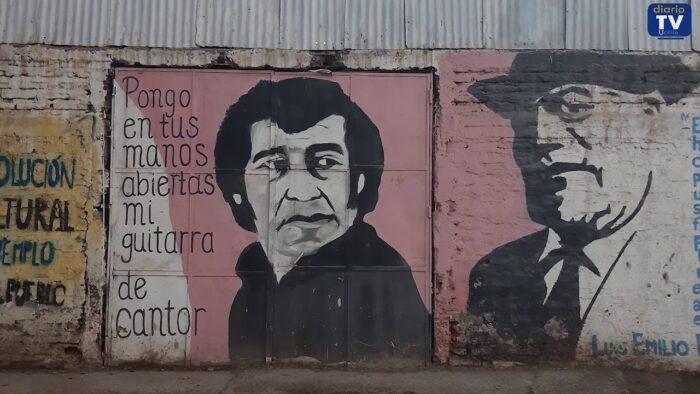
Victor was researching a future project. After his successful album La Población he was asked by a Peasants Confederation to tell their story, including that of the 1934 Ránquil massacre. Like his 1972 album it would be about the struggle for land, but in the remote, mountainous area of Araucania known as the Alto (Upper) Biobio. Much of this area is today part of Lonquimay Commune.
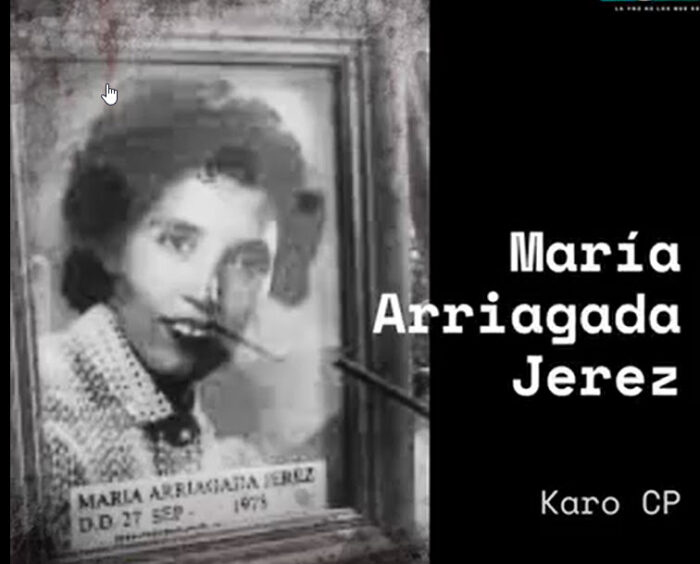
Victor would learn from María and others about the struggle of poor campesinos that culminated in the massacre of 1934, at a time when the break up of latifundios in Chile was being attempted, and those challenging the land-owners had no means of knowing what would happen next.
The Mapuche and Pehuenche in Araucania
When the Mapuche people in Araucania were finally conquered by force in the late 18th century, rich well-connected families were able to acquire by fraud huge estates in places like the Alto Biobio, an area that includes Ránquil and Chilpaco. They then used the inquilino system on the land, leaving peasants as little more than serfs, and could usually rely on the help of armed police to suppress resistance. One wealthy family had its own calabozo (pen) to detain those who disobeyed their masters.
The Pehuenche people who live in the Andes mountain area and speak a language similar to other Mapuche, had also lost control of most of their ancestral lands. They still make up at least half of the population of Alto Biobio.
In the late 1920s the government attempted land reform, allowing the formation of rural unions. The Agricultural Syndicate of Lonquimay proved to be well organized, gaining access to the then President Carlos Ibáñez and eventually persuading his Government to take what was at that time unprecedented action – to expropriate some land and distribute it to campesinos.
When the President was forced to resign in 1931 his reforms stopped and the Syndicate became increasingly radical, leading an uprising in June–July 1934. The rebels were surrounded near the Ránquil estate by a regiment of carabineros, armed police, who opened fire. Around one hundred, although according to one account the true number was much higher, probably 477, because Indigenous people had not been counted, as they were not recorded in the national census.
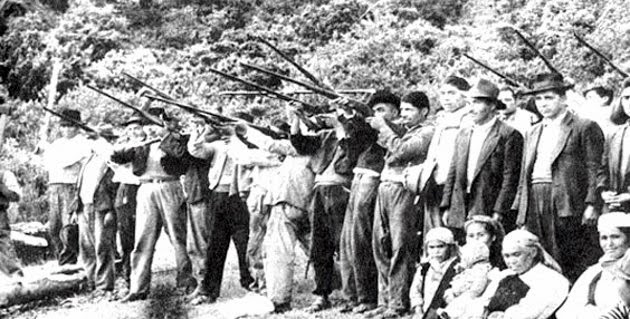
When Victor Jara visited Chilpaco this event was remembered for its violent repression, and very much as a spontaneous peasant action. More recent research has shown that it was an attempt to start a national insurrection, supported by the local (but probably not national) Communist Party, and included indigenous Pehuenche people.
Land reform
Land reform was not attempted again until the 1960s, when rural unions became legal again, including the one that approached Victor. 1967 legislation saw the start of serious though limited land reform, and this was enhanced during the Popular Unity government of 1970–3. Substantial areas of agricultural land in Chile were expropriated and much of it re-distributed.
While all these changes were going on María Arriagada was living in Chilpaco where she was a mother of five, a teacher and a community and Communist Party activist. Keen on music but lacking electricity in the area, she used a battery-operated record player. Victor visited the area in late 1972, according to his wife Joan he found that the original landowners still carried on as before.
By this time some land expropriations had taken place in Lonquimay some of them from long-established owners. And Mapuche attempts to use land reform to regain their ancestral lands found some success when land near Chilpaco was expropriated in 1972.
Along with many other policies, land reform came to an abrupt end in September 1973. That month María Arriagada was arrested, taken away by helicopter, and soon after disappeared. Later it was claimed she had escaped to Argentina, the same explanation used in 1934 to explain the disappearances at that time. Amnesties followed the 1934 massacre and the dictatorship but eventually Maria’s abductors were convicted.
Victor would not complete the project Joan expected would bring out ‘the character of the protagonists, the drama of the struggle, the remote and overpowering landscape in which it took place and the cultural inheritance of those forgotten and persecuted people.’
Within a few years nearly all the land expropriated in Lonquimay area had been returned to its former owners. Though incomplete, agricultural reform had by then largely ended the paternalistic inquilino system. It did not meet the aims of indigenous people. The dictatorship paid little regard to their concerns and added to them by encouraging logging activities that further threatened their ancestral lands.
After the return to democracy after 1990 the construction of a dam across the Upper Biobio River at Ralco brought a new threat, flooding ancestral lands, where during the 1934 uprising a Pehuenche chief had been killed.
Mapuche resistance continues
In the 21st century Mapuche resistance has been divided on tactics. Some would work within the system, like the Syndicate in its early years in the 1920s. A minority are prepared for confrontation, and on occasion violence, as were some in 1934 and between 1967-73, during the land reform period. Large scale logging activities are a particular source of conflict, with thousands of violent incidents recorded in Araucania, though few of them in the Alto Biobio area. As in 1934 and after September 1973, the state response has been brutal.
Recent data shows that Araucania, as well as having many indigenous people, has some of the highest levels of of poverty and households lacking basic amenities in Chile. Both of these indicators are significantly higher still in the Upper Biobio area.

Victor Jara was killed before he could tell the story of Ránquil, but in the Alto Biobio injustice, resistance and repression continue. The cases of hundreds who disappeared in 1934 remain uninvestigated and unpunished; there were many more victims after the 1973 military coup, including María Arriagada.
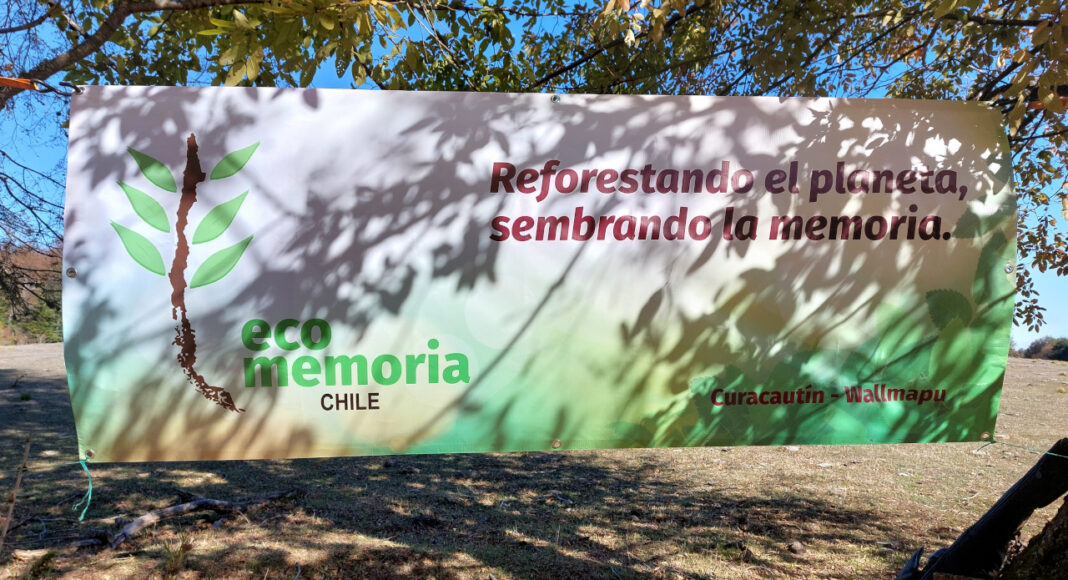
Ecomemoria remembers María Arriagada with a tree in Wales, and now at Curacautin, near Lonquimay, where she and others in 1934 and 1973 were imprisoned, it is establishing a native forest dedicated to the victims of dictatorship.