Zócalo Public Square asked ‘What places are stepping up to replace Washington when it comes to international trade, diplomacy, advancing democracy, climate, and global health?’ LAB Author Marcos Colón asks what it would be like for the Amazon to become a new capital of global climate policy.
Can the Amazon become the new capital of global climate policy? Only if we stop imagining a climate capital as another Washington.
The Amazon is central to the planet’s climatic metabolism, and that ecological centrality gives it unavoidable geopolitical significance. The Amazon can be a capital of climate representation, but in order to become a capital for transformative climate policy its people need to be heard.
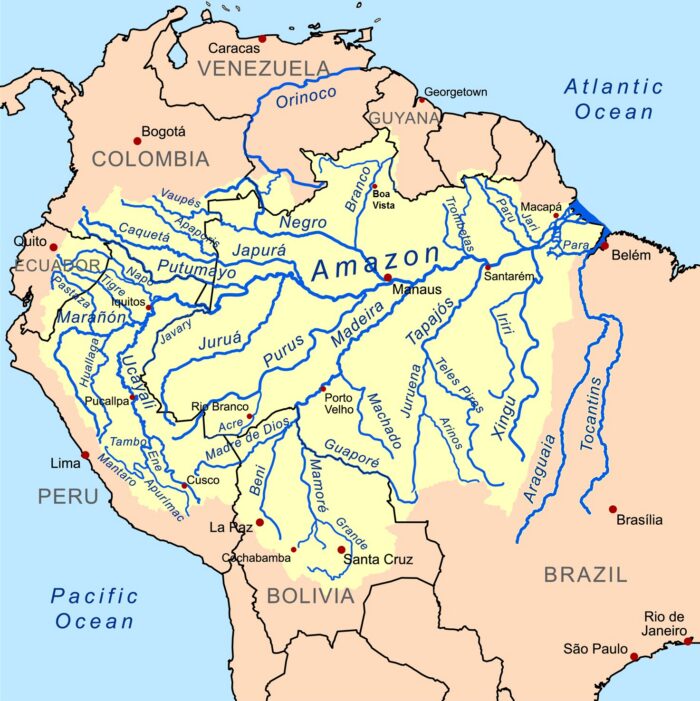
The Pan Amazon is a living system that exceeds national borders, stretching across eight sovereign countries: Bolivia, Brazil, Colombia, Ecuador, Guyana, Peru, Suriname, and Venezuela, as well as French Guiana, an overseas territory of France. Brazil’s Legal Amazon alone covers nearly 60% of the country’s territory. Across the wider region, more than 500 Indigenous peoples live alongside Afro-descendant, riverine, peasant, and other traditional communities. They represent hundreds of ways of inhabiting, sensing, interpreting, and imagining the world, and therefore different understandings of what territory, development, prosperity, and life itself can mean.
The peoples of the Amazon are already practicing another kind of climate diplomacy, one that has no seat at any existing table.
Consider what happened along the Tapajós River in the Brazilian state of Pará. Indigenous peoples from across the region, including Munduruku communities, occupied and blockaded the grain terminal of the U.S. agribusiness corporation Cargill in Santarém. They opposed plans to dredge the river and expand its use for transporting soy and other commodities to global markets, as well as a federal decree opening Amazonian waterways to private concessions. After 33 days of mobilization, the Brazilian government revoked the decree.
This resistance defends a territory and interrupts the material circuits that drive climate collapse—the expansion of monocultures, deforestation, and extraction.
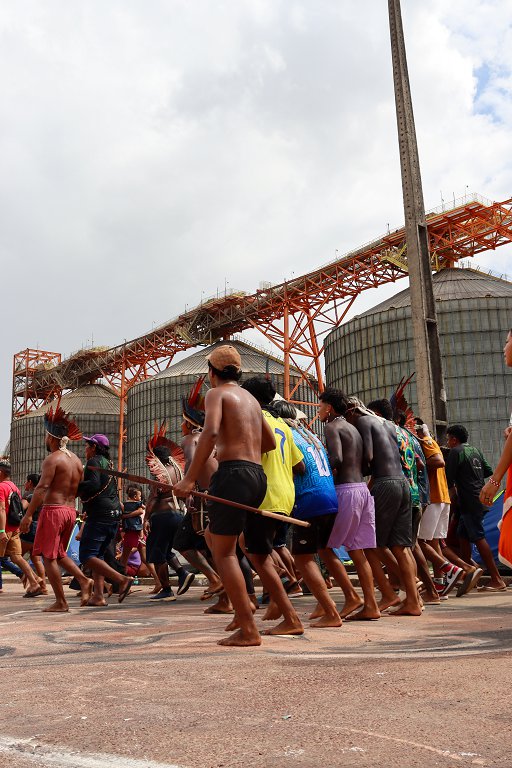
For the Munduruku people, moreover, the Tapajós River, Idixidi, is not simply infrastructure or a natural resource. It is an ancestor and an active participant in a living cosmos shared among people, fish, animals, forests, waters, and other beings. Defending the river therefore means more than conserving nature. It means protecting the relationships and flows through which life itself reproduces.
Seen this way, what happened on the Tapajós is also climate policy, even if it is rarely recognized as such. It asks not simply how much carbon can be reduced but what relationships between economy, territory, and life must be protected for a livable climate to remain possible?
For generations, governments have imagined Pan Amazonian regional integration as the physical and economic connection of the Amazon across national borders through highways, ports, pipelines, dams, waterways, and commodity corridors. Too often, integration has meant connecting territories of extraction to distant markets.
Imagine a climate politics that reversed that geography, where integration begins with rivers and watersheds that connect peoples and ecosystems across national boundaries and forms corridors of cultural and ecological continuity. Forests would not simply become reservoirs of carbon to be priced by global markets, but living territories that make life possible. I call these possibilities Amazonian Utopias: futures imagined from within the forest, grounded in ancestral knowledge and relationships that sustain life rather than turn it into a commodity.
This would mean connecting territories of life: Indigenous lands, Afro-descendant communities, forests, rivers, watersheds, food systems, and the human and more-than-human communities that sustain them.
As U.S. climate leadership retreats, the Amazonian countries do not need to occupy Washington’s vacant chair. Perhaps the next capital of climate policy is not a city or even a country. It is a living, multilingual territory capable of teaching international politics something it has struggled to learn: Governing the climate ultimately means governing our relationships with the systems that make life possible.
Marcos Colón is the Southwest Borderlands Initiative Assistant Professor of Media and Indigenous Communities at Arizona State University’s Walter Cronkite School of Journalism and Mass Communication. He is director of Beyond Fordlândia (2018) and Stepping Softly on the Earth (2022), author of The Amazon in Times of War (La Amazonía en tiempos de guerra, 2025), and organizer of Utopias Amazônicas (2025).
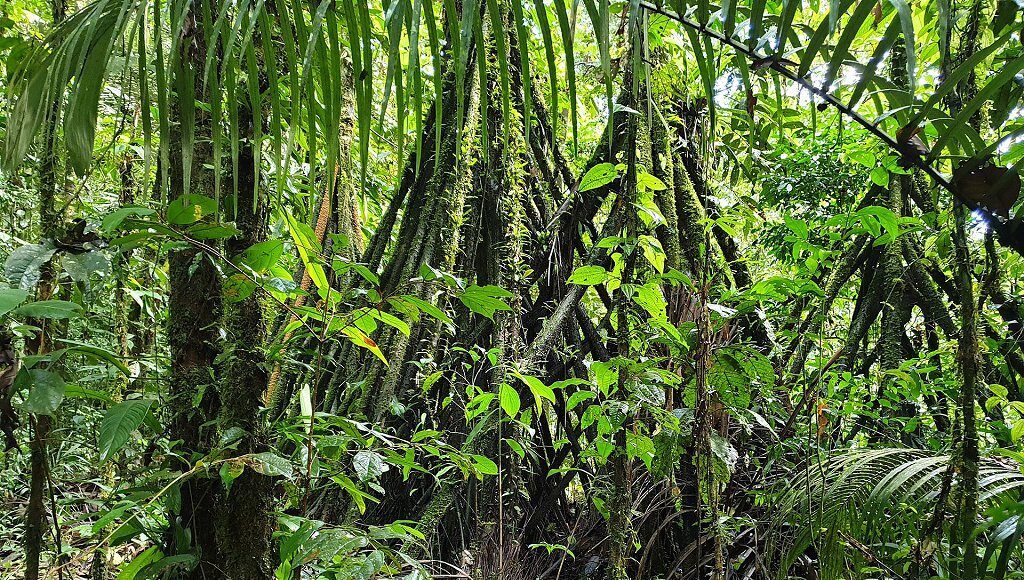
Main image: Walking_tree. Photo: Richard Hardy, CC BY-SA 4-0
This article first appeared in a collection of short essays, What Should Be the Capital of the New World Order? Published by Zócalo Public Square September 15, 2026. Zócalo Public Square is a unit of Arizona State University Media Enterprise that publishes original essays, columns, poems, and artwork at zocalopublicsquare.org