Brazil: When electricity is not enough
Luz para Todos has brought electricity to Indigenous communities in the Amazon. But two Baré communities show why a connection alone cannot deliver energy justice.
Brazil: The Amazon amid global conflict
Competition for critical minerals and trade routes is drawing the Amazon deeper into global struggles over resources and military power. Writing in March 2026, Bruno Malheiro examines how US imperial ambitions, trade with China, and Brazil’s political choices put Amazonian territories under pressure. He argues that defending the region requires both national sovereignty and the right of Indigenous Peoples and traditional communities to determine the future of their territories.
Brazil: Babassu, the mother palm
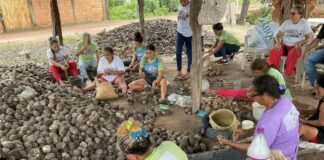
Babassu nut breakers in Brazil’s Amazon call the palm ‘mother’: it sustains their food, livelihoods, and cultural traditions. Drawing on published research, agronomist Bernardo Tomchinsky examines the knowledge and practices of women in Pará, and their struggle for access to babassu groves, territorial protection, and recognition of their rights.
Brazil: the threat to democracy and the Amazon
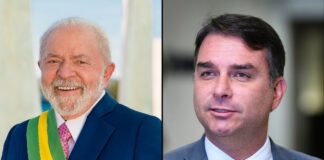
The first round of Brazil's presidential election on 4 October gave a slim majority to right-wing candidate Flávio Bolsonaro. LAB's Brazil expert Sue Branford examines the disastrous outlook for the country, and especially for the Amazon, if Bolsonaro wins the run-off on 25 October.
Heredofascism
When Flávio Bolsonaro proclaims 'The Amazon is Ours', he threatens, if elected in Brazil's 4 October presidental election (or the likely run-off) to condemn Brazil, The Amazon and the world to the continuity of an inheritance from his father Jair's presidency, heredofascism, which threatens the forest, the country and the planet.
The Amazon: a climate capital without a country
Zócalo Public Square asked ‘What places are stepping up to replace Washington when it comes to international trade, diplomacy, advancing democracy, climate, and global health?’ LAB Author Marcos Colón asks what it would be like for the Amazon to become a new capital of global climate policy.
4. Deforestation: size matters
In her the fourth post of the Amazon on the Brink series, LAB author and editor Sue Branford looks at the mounting evidence that the extent of deforestation matters: where it is greater it disrupts the natural water cycle, reducing rainfall and increasing the resulting dieback of trees.
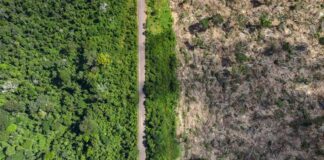
3. Growth is promised, whatever the cost
In her third blog in the Amazon on the Brink series, LAB author and editor Sue Branford looks at the sharpening political divisions which...

The Amazon: ‘Slow-seeing journalism’
Slow-seeing journalism is a different way of experiencing, writing about and reporting on the world. Marcos Colón, author of LAB book The Amazon in...
2. The ‘flying rivers’ could run dry
In the second of her Amazon on the Brink blogs, LAB author and editor Sue Branford looks at the climate science and relays the warning from veteran climatologist James Hanson about the dangers of a ‘super El Niño’, and the consequences for the rainforest. Fires, though often set deliberately, are now a greater danger than deforestation.