
Do you enjoy reading LAB articles?
Sadly, the best things in life are not always for free. LAB needs your help to survive
Other news
Brazil: The geopolitics of Amazon crime
Militarized drug policies risk deepening the violence facing Amazonian communities. Geographer Aiala Colares traces the connections between drug trafficking, environmental crime, and territorial control, arguing that the ‘war on drugs’ has historically produced more violence than concrete results. Writing in November 2025, he calls for security policies that protect traditional communities and the forest.
Brazil: The living dead
A Facebook advert for an Amazon farm led Subsolo journalist Ruan Martins to Ivanildo Canuto Soares, a convicted murderer with a history of drug trafficking who faked his own death. Mining records showed gold sales attributed to a permit area where satellite images revealed no visible signs of extraction. Martins follows the buyers and refiners into the supply chains reported by major international companies.
Brazil: The Amazon for sale online
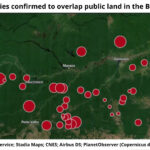
Subsolo journalist Ruan Martins spent six months tracking online adverts offering millions of hectares of forest in Brazil’s Amazon. He spoke to more than 100 brokers and checked property maps, identifying listings that overlapped Indigenous territories and protected areas, including Tenharim land. At the time of publication, Facebook was still hosting the kind of advert it had promised to block in 2021.
Decolonizing art – Unmaking to Make
The editors hope that the collection of essays Unmaking to Make will be ‘a starting point and place of encounter’ for artistic responses to colonial legacy. Reviewer Harriet Gilbert Savage says, 'I hope that it elicits responses of agreement and resistance that are both practical and creative. I hope that they are unique and diverse and abundant.'
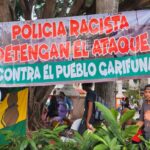
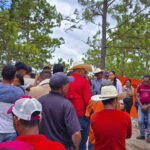
Honduras: Garifuna denounce crimes against humanity
In July 2026, Honduran police evicted the Garifuna community of San Juan, Tela, from land protected by rulings of the Inter-American Court of Human Rights. It was the first eviction under a new law promoting agribusiness.
Brazil: Justice at last for Mariana.
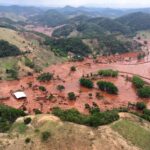
The verdict of a federal court in Belo Horizonte, capital of Brazil's largest mining province, Minas Gerais, finally brought some justice to the victims of one of Brazil's worst mining disasters. In November 2015 a tailings dam at the Fundão iron ore mine near Mariana collapsed, killing 19 people and devastating downstream communities, farms and fisheries. A similar collapse at Brumadinho, three years later, killed 272 people. At last a court has found some of those directly involved at Mariana guilty, punished and fined one of the companies and sentenced three engineers to prison.
Honduras: new decree weakens Indigenous rights
A new law of June 2026, known as the AgroIndustrial Decree, threatens Indigenous people, especially the Garifuna. Tourism, extractive industries and various forms of intensive agriculture will be given special protection, while the rights of local communities and Indigenous peoples can be ignored or set aside. Garifuna communities in San Andres and at Cayos Cochinos are already feeling the effects and are determined to defend their rights and their land.
Honduras: Maya Chorti defend their rights
A Canadian-owned mining company is moving on Maya Chorti communities in Western Honduras. The community is resisting, and courts have intervened, but the future of Cerro Los Hornillos remains unclear. This is the first of two linked articles by Anna Ortiz on indigenous communities in Honduras defending their rights.
Argentina: water privatization could sink Milei
Milei’s plan to reprivatize Argentina’s largest water company is uniting the country’s fractious trade unions in opposition. Meanwhile inflation remains high, living standards are pinched, and university students are mounting massive demonstrations against cuts in education. The country’s opposition, however, remains divided. With 12 months before the next presidential election, what are Milei’s chances of a second term?
El Salvador: unions versus the new Capitalism
The Bukele administration's planned labour reform will maintain a 44-hour week while compressing it into four days. In a context where the transformation of the economy has recomposed the working class, new challenges emerge for labour organising.
Environmental Defenders
Projects
Decolonizing art – Unmaking to Make
The editors hope that the collection of essays Unmaking to Make will be ‘a starting point and place of encounter’ for artistic responses to colonial legacy. Reviewer Harriet Gilbert Savage says, 'I hope that it elicits responses of agreement and resistance that are both practical and creative. I hope that they are unique and diverse and abundant.'
Review of Sara Torres’ X Is Where I Am
A writer navigating her mother's death while falling into a new love affair. Sara Torres's autofiction questions how we mourn and love.
Film: why the focus on the dictatorship period?
As far-right governments ramp up denialist narrative, film directors in Argentina, Chile and Brazil often set their stories in the period of the dictatorships
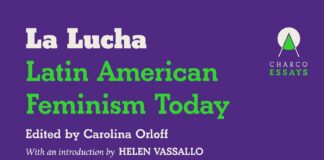
La Lucha: Latin American Feminism Today
What does it truly mean to be a feminist? La Lucha is more than just a recounting of suffering at the hands of misogyny. It is a pledge to fight, an act of struggle in the long and varied feminist canon that continues to flourish across the world and that is so often under attack.
A tumultuous plunge through repressions
Apparitions can be read as many things: a tribute to women’s sexual emancipation; a cautionary tale of the disintegration of patriarchal family structures; even a meditation on the brutality of the Catholic Church and its frenzied devotees.
Brazil’s landless: Pathways to Utopia
Sue Branford reviews Alex Ungrateeb Flynn's book Pathways to Utopia - Time and Transformation in the Landless Workers' Movement of Brazil.
Can the Rights of Nature protect Indigenous territories in Latin America?
Join us to discuss the Rights of Nature in Latin America with Jan Schulz, author of LAB's new book 'Disputed Territories', and "Barrister for...
The Congress of the Disappeared: An exploration of a nation’s ghosts
'What The Congress of the Disappeared ultimately shows us is that Brazil is a nation that has never truly reconciled with its past. Now...
Book Launch: The Congress of the Disappeared by Bernardo Kucinski 7...
Join LAB, Brazil Matters, and Amnesty International UK Latin America coordinators for the launch of Bernardo Kucinski's novella 'The Congress of the Disappeared', translated...
Listening to Women Resisting Violence
On International Women's Day, LAB and King’s College London release a bonus episode of our podcast, Women Resisting Violence, discussing the power of podcasting for social change with leading audio producers from Latin America and representatives from the fearless women’s organisations featured in the podcast.
Veronica Gago on feminist power
Jelke Boesten, leader of the Gender Studies Network at King’s College London and a researcher on the Women Resisting Violence project, joins Veronica Gago of Argentina's #NiUnaMenos to discuss how to bring feminist activism into the everyday.
Step Up Migrant Women
This week's episode focuses on migrant women in the UK with insecure immigration status who are experiencing domestic abuse.
Ka’apor and Quilombola Communities in Brazil
Documentary film: We Fight For This Land: Ka’apor and Quilombola Communities in Brazil (62”, 2024)Directors: Cahal McLaughlin and Siobhán Wills
Quilombo and Indigenous Ka’apor communities...
FILM: The Future is in Our Territories
In a new LAB film, environmental defenders discuss their territorial work and the Americas-wide alliance for racial and climate justice
Brazil: illegal mining pollutes Tapajós
The explosion of mining in the mid-section of the Tapajós River is most likely the cause of the change in water color in Alter...