The verdict of a federal court in Belo Horizonte, capital of Brazil’s largest mining province, Minas Gerais, finally brought some justice to the victims of one of Brazil’s worst mining disasters. In November 2015 a tailings dam at the Fundão iron ore mine near Mariana collapsed, killing 19 people and devastating downstream communities, farms and fisheries. A similar collapse at Brumadinho, three years later, killed 272 people. At last a court has found some of those directly involved at Mariana guilty, punished and fined one of the companies and sentenced three engineers to prison.
For nearly eleven years, the people of Mariana waited. On 3 September 2026, the Federal Regional Court (TRF-6) in Belo Horizonte delivered what many thought they would never see: the unanimous criminal conviction of a mining company and three of its managers for one of the worst environmental disasters in the country’s history. It is the first time a Brazilian court has criminally convicted a mining company for a dam disaster of this magnitude and it marks a turning point in a fight for accountability that has spanned continents.
What happened in Mariana
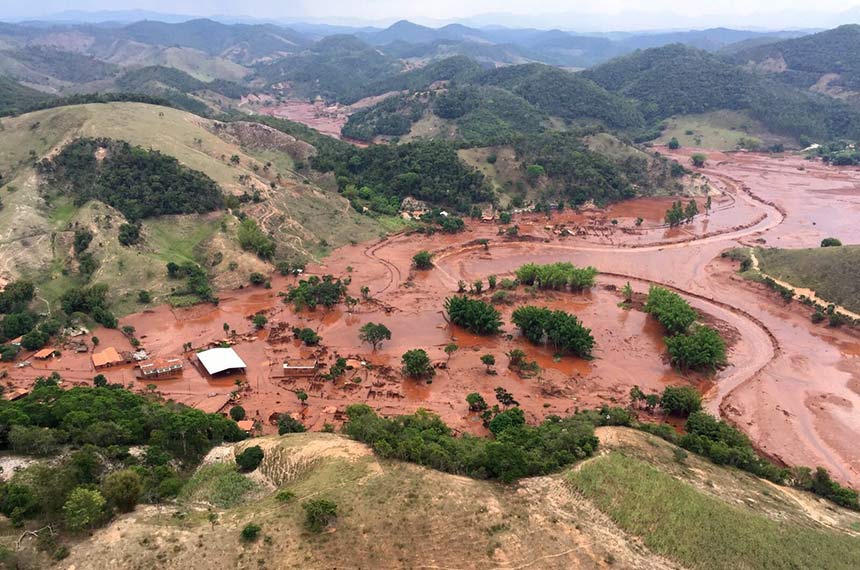
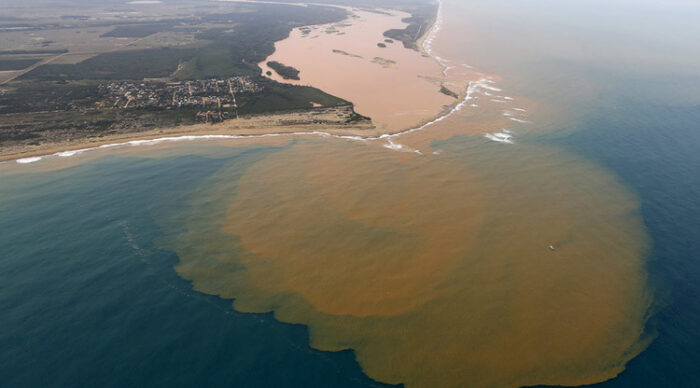
On 5 November 2015, an upstream tailings dam – a structure built to retain and store mining waste – collapsed at the Fundão complex near Mariana, in the state of Minas Gerais. The dam released roughly 44.5 million cubic metres of mining waste into the environment. Nineteen people were killed: five community members and 14 mine workers. Around 600 residents lost their homes, and the village of Bento Rodrigues was destroyed outright.
The toxic mud did not stop there. It travelled 668 kilometres down the Rio Doce, a river which more than 280,000 people across Minas Gerais and the neighbouring state of Espírito Santo depended on for drinking water, agriculture, fishing and livestock, before finally reaching the Atlantic Ocean. Effects on the river and the communities along it are still felt today.
The Fundão dam was operated by Samarco Mineração S/A, a joint venture between two mining giants: Brazil’s Vale S/A and the Anglo-Australian company BHP Billiton (now BHP). Both companies share ownership of Samarco, though the dam itself was under Samarco’s direct operational control.
A second disaster, the same pattern
Just over three years later, on 25 January 2019, tragedy struck again, this time in Brumadinho, also in Minas Gerais. Another upstream tailings dam collapsed, this one owned outright by Vale. It killed 272 people, including two unborn babies, and released 12 million cubic metres of waste into the Paraopeba River basin, affecting 26 municipalities over more than 250 kilometres.
Two disasters, one recurring corporate name, and no one held criminally responsible for years. Communities and their advocates describe this as a ‘cycle of impunity’ that allowed both Vale and BHP to negotiate reparations and compensation agreements with Brazilian authorities. This process was bitterly criticised by affected communities and their supporters, given they were often excluded from negotiations, compensation was woefully inadequate when set against such devastating losses, and reconstruction of the affected villages were subject to repeated delays – Samarco only announced completion of the main works in September 2025, nearly ten years after the disaster. Meanwhile, criminal accountability remained elusive.
A long pursuit for justice in Brazil and abroad
The fight to hold Samarco, Vale and BHP accountable has played out on multiple fronts simultaneously. A massive class action lawsuit brought in the UK on behalf of more than 600,000 plaintiffs affected by the Mariana disaster reached a landmark outcome in November 2025, when the High Court found BHP liable. An appeal by BHP was rejected in May 2026, and a second-stage trial to determine damages is set for October 2026 to March 2027. Another civil lawsuit was filed in the Netherlands in 2024 against Vale S.A. Netherlands and Samarco Iron Ore Europe BV, European subsidiaries of the Brazilian parent companies, whose headquarters remain in Rio de Janeiro.
In Brazil, the lawyers at Instituto Cordilheira (IC) have provided vital legal representation for victims of the disaster. When a first-instance decision acquitted all Samarco defendants of criminal charges relating to the disaster in November 2024, IC lawyers representing four women who lost family in the disaster quickly filed an appeal, as did Brazil’s Federal Public Prosecutor’s Office. These appeals helped lead to the historic September 2026 verdict by the Federal Regional Court.
They are also representing victims in the ongoing criminal case regarding the Brumadinho collapse. Hearings began in February 2026 and are expected to continue until September 2027, with 183 witnesses scheduled to testify.
Even before the disasters, IC had been working for many years on joint advocacy with the environmental justice organisation Both ENDS, based in the Netherlands – with Both ENDS providing support for local action. When the shocking events of the Brumadinho collapse directly affected IC staff, Both ENDS was quick to respond.
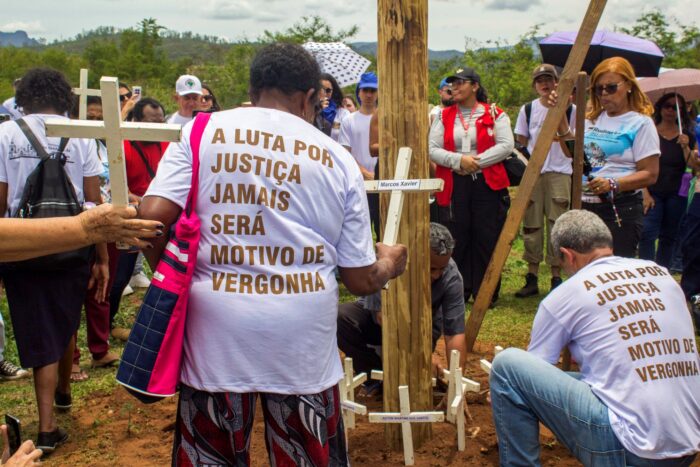
Using their decades of experience of holding companies and investors to account, Both ENDS, together with IC, started a campaign to urge Dutch investors – including pension funds, banks, and insurance companies – to divest from Vale. This campaign has involved direct meetings with investors, sharing testimony from local partners, and screening the documentary ‘The Illusion of Abundance’, which addresses the aftermath of the disasters. The Financial Exclusions Tracker – an initiative to which Both ENDS contributed, which lists companies excluded by institutional investors over human rights and sustainability concerns – has now included Vale for two years running.
Despite this sustained pressure, investors have so far been hesitant to divest, and at Vale’s annual shareholder meetings, critical questions from affected communities and civil society remain largely unanswered.
The verdict
On 3 September 2026, Federal Regional Court TRF-6 convicted Samarco and three of its former engineers Germano Silva Lopes, Daviély Rodrigues Silva and Wagner Milagres Alves over the Fundão dam collapse. Samarco was barred from contracting with public authorities for ten years and ordered to pay roughly R$7.2 million (about €1.2 million) in fines. The two lead engineers were sentenced to eight years and nine months in prison; the third, found to have played a smaller role, received seven years, three months and 15 days.
‘The Mariana verdict is an important precedent, showing that Brazil’s justice system can and should hold mining companies accountable for devastating harm to people and the environment. But justice needs to be sustained beyond the courtroom. It is also our responsibility to call on Vale’s investors to take action by divesting from companies involved in activities that pose serious risks to human rights and the environment. And, of course, justice is sustained through the persistent work of organisations like Instituto Cordilheira, whom we are proud to support, not only in their pursuit of justice for these communities, but also in shaping a fairer future for all,’ said Ana Luiza Alves, project coordinator at Both ENDS.
Six other defendants including Vale, BHP Billiton and engineering firm VogBR remain acquitted, a decision the Federal Public Prosecutor’s Office says it will study closely with a view to appealing. The victims’ lawyers expressed the same commitment.
Voices from the courthouse
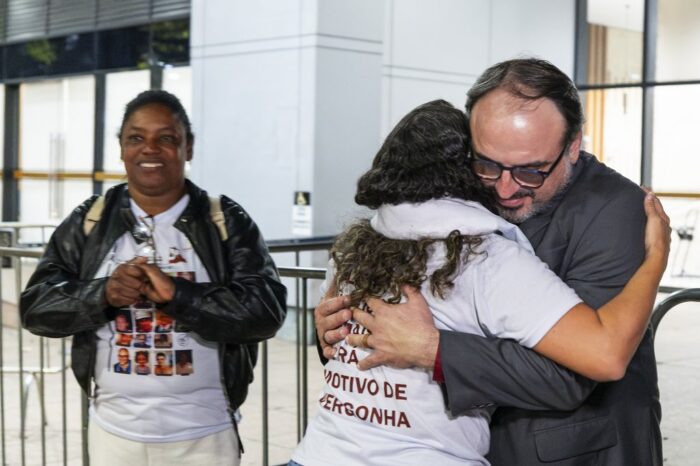
More than 100 people affected by the disaster travelled to Belo Horizonte for the hearing, among them residents of Bento Rodrigues, families of victims, and members of the quilombola community of Gesteira. They gathered outside the courthouse afterwards, fists raised, to mark what they described as a partial but hard-won victory.
‘We have broken the cycle of impunity . By recognising that Samarco and three of its managers knew the risk, ignored warnings and chose to look away, the judiciary has finally confirmed that this was not an accident.
–Danilo Chammas, one of the victims’ attorneys and a member of Instituto Cordilheira’s Human Rights Litigation Team
For Mônica dos Santos, who lost her home in the disaster, the moment carried both grief and resolve.
Today is a day of joy, a day to look at our country’s justice system and start believing in it again. We know this is only a first step, and that they will appeal, but we’re prepared. If we have to go to Brasília, or to another country, wherever this fight for justice takes us, we will go.
She drew a direct line between Mariana and the disaster that followed it in Brumadinho: ‘If what happened here [in court] today had happened back in 2015, when the Mariana dam collapsed, I’m certain Brumadinho would never have broken, and 272 lives could have been spared.’
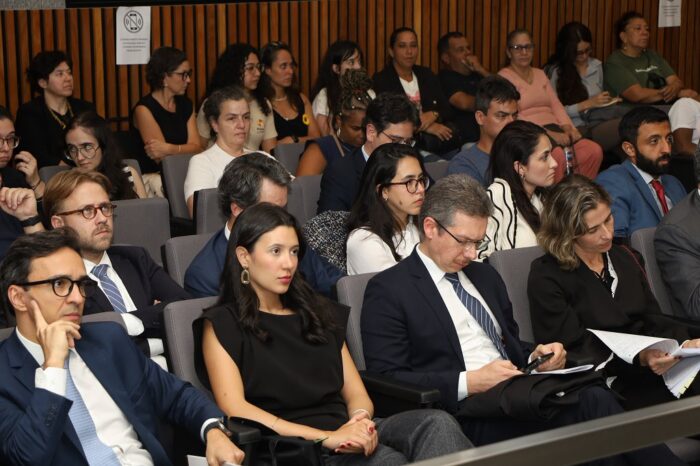
Audience follows the TRF-6 court session in Belo Horizonte where Samarco and three former managers were convicted over the 2015 Fundão dam collapse in Mariana, 3 September 2026. Credit: Kailan Lima/TRF6
What comes next
The ruling overturns the November 2024 acquittal and stands as the first criminal conviction of a mining company in either the Mariana or Brumadinho cases, but it is not the end of the story. An appeal from the convicted defendants is expected, and the parallel criminal case over the Brumadinho disaster continues, with hearings scheduled well into 2027.
For the communities of Mariana, Bento Rodrigues and Gesteira, as well as those still awaiting a verdict over Brumadinho, the September ruling is being treated as vindication of an argument they have made for over a decade: that what happened was not an accident, but the result of choices made and warnings ignored by those responsible. Instituto Cordilheira, together with Both ENDS and the wider network of partners and allies involved in this case, continues to stand with them.
Main image: Aerial view of the mud-devastated landscape after the Fundão dam collapse in Mariana, 16 November 2015. Credit: Corpo de Bombeiros/MG
Mona Monzer is Communications Specialist at BothENDS, a Dutch NGO working on Environmental and Climate Justice