A Canadian-owned mining company is moving on Maya Chorti communities in Western Honduras. The community is resisting, and courts have intervened, but the future of Cerro Los Hornillos remains unclear. This is the first of two linked articles by Anna Ortiz on indigenous communities in Honduras defending their rights. You can read the other article here.
Cerro Los Hornillos, a Maya Chorti territory within the municipality of La Union, Honduras, is being targeted as a Canadian-owned mining operation threatens to expand their decades-long open pit mining project to an area that is sacred to the Maya-Chorti Indigenous group that still inhabits the land.
According to the Honduran News Outlet Contra Corriente, the San Andres Mine, located in Western Honduras, has had a long history of financial investment and ownership from different Honduran, British, American, and Canadian companies since the mine began modern industrial operations in 1983. Today, the San Andrés mine is operated by MINOSA (Minerales de Occidente S.A. de C.V.), a Honduran subsidiary of Canadian mining company Aura Minerals, which acquired the company in 2009.
Since the mine has been opened, CESPAD (Center for the Study of Democracy, a Honduran civil-society research and analysis organization) has reported that many communities within the municipality of La Union, including San Andres Minas, San Miguel, Azacualpa, and Platanares, have been relocated, partially displaced, or completely disappeared under the continued pressure of the mining company. In addition to displacing campesino and Indigenous Maya Chorti communities, MINOSA has also excavated centuries-old cemeteries in La Union, exhuming the bodies of ancestors and family members of La Union Communities to make way for mine expansion.
The Mountain Wounded – San Andres mine, Honduras: Film shot by a visiting group of journalists from Honduras, El Salvador and Guatemala. Watch from 3.00 minutes onwards. Video: Alfredo ‘Chino’ Carías.
Community resistance to and support for mining
Though communities around La Union have historically lost much to MINOSA, resistance to and support for the mining company have been mixed, as the company has historically offered to locals contracts, jobs, compensation for land loss, and financial support for community health centers, schools, and municipal projects. These investments have contributed to mixed community responses to mining, with some residents benefiting from its employment and services while others oppose the environmental and social costs.
Investing in the community where they plan extraction in order to win local loyalty is a practice traditionally used by foreign and extractivist projects, such as MINOSA, who can afford to put a small percentage of their annual revenue back into the community (Contra Corriente reports that MINOSA earned one-hundred and ninety-two million dollars (USD) in revenue from the San Andres Mine in 2025 alone).
Despite local support of the mine due to its lucrative investment in La Union, resistance to the presence and expansion of the extractivist project has also grown in recent years. One of the main reasons for alarm is the environmental degradation and growing health concerns that community members are voicing.
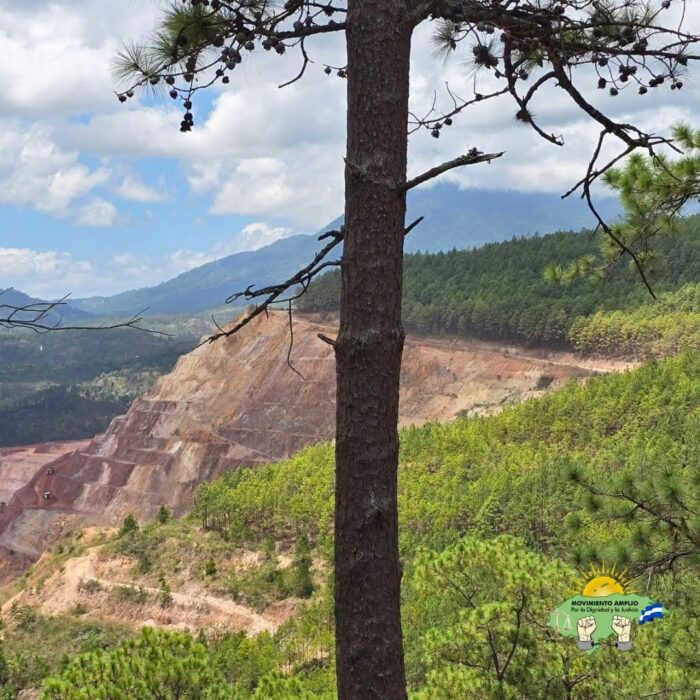
A 2017 CESPAD report documented concerns that wastewater discharges from mining and blasting operations in San Andres were pouring into local rivers. Many campesinos and Indigenous communities are materially dependent on clean water for drinking, bathing, and food subsistence. With severe water contamination that has included multiple reported cyanide spills, the mine threatens human, but also non-human life that depends on clean, fresh water as a life-giving resource (ScienceDirect). Locals living near both the mine and areas of the contaminated waters have also reported health concerns including skin lesions, dizziness, and fainting (CESPAD). A recent OACNUDH investigation documented concerns regarding water contamination and possible health consequences of those living near open-pit mining and recommended that the Honduran state guarantee communities’ rights to health and a clean environment.
The resistance at Cerro Los Hornillos
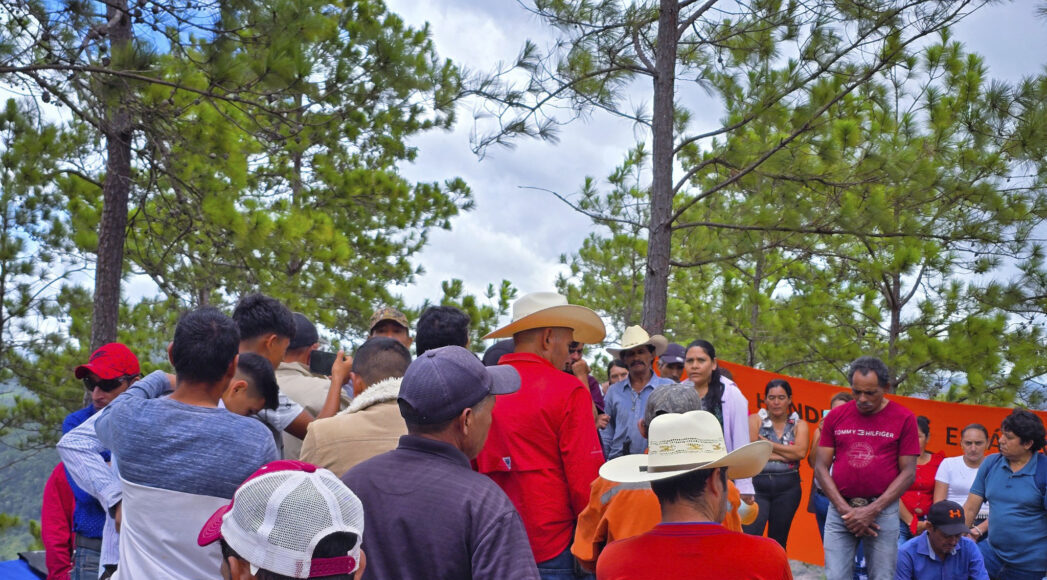
Cerro Los Hornillos, the latest community of conquest for MINOSA, has heavily opposed the company’s extractive encroachment. Indigenous Rights Groups and community members themselves have documented the mounting conflict since 2025.
The community of Los Hornillos itself is an important ancestral territory of the Maya Chorti, and there cultural and territorial practices have been documented to establish the continuity of Maya Chorti presence in the area (Criterio.hn). Although Los Hornillos is an ancestral territory, that status doesn’t automatically qualify it for legal recognition as an ejido (communal title). Without state recognition or documented titles, the Chorti of Los Hornillos have little protection when they come up against well-funded and extractivist projects like MINOSA’s.
Honduran human rights and environmental advocacy organization Movimiento Amplio por la Dignidad y la Justicia (Broad Movement for Dignity and Justice, MADJ) reported on 1 August 2026 that MINOSA had been extracting gold from the area, emphasized the community’s resistance to mining, and demanded that ‘the company leave the territory and stop the contamination and destruction of local water sources’ (MADJ).
By 17 August, MADJ reported that MINOSA was cutting trees in Maya Chorti territories, and that locals could not enter the area, as a contingent of National Police and Armed forces were blocking access. Eventually Honduran police and military forces set up an outpost to establish a permanent presence in the area and ‘intimidated residents and prevented community opposition to MINOSA’s activities’ (MADJ). While this was happening, reports of tree-cutting continued, and the fencing-off of the area continued.
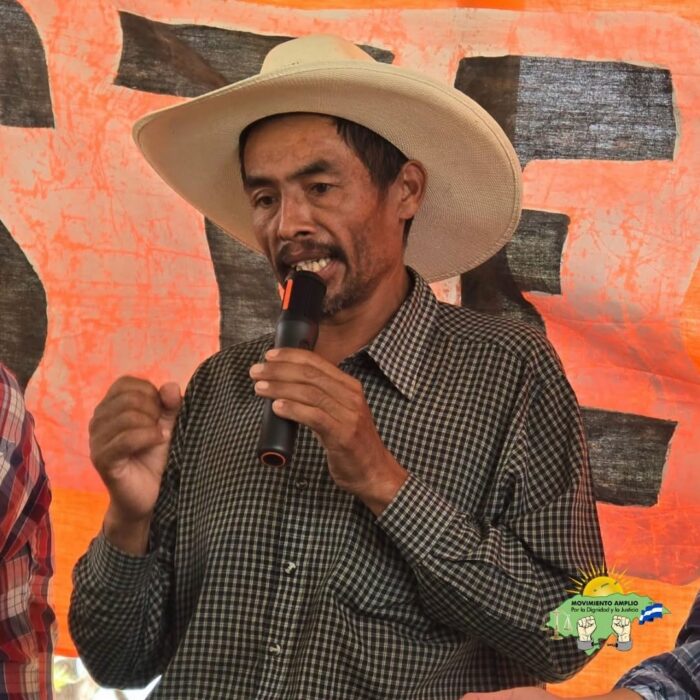
By 26 August, ‘more than 40 hectares of pine forest at Cerro Los Hornillos had been felled and burned as a part of MINOSA’s planned expansion, with more than 200 military police installed in the military outpost deployed to protect the area’ (MADJ). By 27 August, MADJ reported that a court order issued the previous day by the Administrative Litigation Court had suspended forest clearing at Cerro Los Hornillos and adjacent areas. The order also prohibited the La Unión municipal government and state security forces from facilitating or protecting further tree cutting. MADJ said it had formally notified local authorities and called for the order to be enforced.
By 5 September, MADJ reported that the Maya Chorti community in Los Hornillos and nearby communities within La Union voted in a popular assembly to publicly defend the territory of Los Hornillos and would continue legal action and campaigns against MINOSA, defining the company’s activities as illegal, and the Hornillos territory Indigenous. On 26 September, the Office of the UN High Commissioner for Human Rights in Honduras (OACNUDH) visited the area and met with community members following complaints about the conflict.
By 1 October, the human rights law office Bufete Estudios para la Dignidad (BED) announced that the Supreme Court had issued a ruling favorable to communities in La Unión. According to BED, the ruling overturned earlier decisions from 2018 and 2019 over alleged rights violations linked to mining activities. BED reported that the ruling directed the Municipal Corporation of La Unión and the Ministry of Health to take action regarding the alleged violations.
Though recent court rulings have favored the community of Los Hornillos, their fight is far from over as the defense of their ancestral lands and water sources against MINOSA remains an ongoing struggle.
Video posted by Movimiento Amplio which illustrates this story
Main image: Maya Chorti meet to defend their rights. Photo: Criterio.hn
Anna Ortiz is a PhD Student and Instructor in Literary and Cultural Studies, Postcolonial and Ecofeminist Studies at the University of Arizona