Prior to delivering a guest lecture, ‘Does Nature Have Rights? Latin America’s Contribution to Radically Rethinking the Notion of Rights’ for Reading University’s Latin America and Caribbean Network (RLAC) in March 2026, Mónica Feria Tinta spoke to LAB correspondent Linda Etchart.
LAB: Can you explain why the law is so important for environmental protection?
MFT: I think there is a lack of understanding of the role of the law, particularly when it comes to activism and environment. The idea behind the book was to show how crucial the law is in ensuring the future of the world. I’m saying this as a person that has experienced real lacunae and absence of the rule of law in Latin America. This is precisely why I believe in a strong legal system which, ultimately, is serving a function to enable life on earth, not just for human beings, but for the entire planet.
LAB: Can you tell us about the importance of intergovernmental organizations and of relations among states and governments, for example, how they do or don’t succeed in communicating to their populations with regard to the environment…in the context of a lack of funding for the United Nations, the US pulling out of the Paris Climate Agreement, and a retrenchment, including in Europe, from ESG [ethical] investment on the part of private companies?
IMG_0523.JPG,
CC BY 2.0
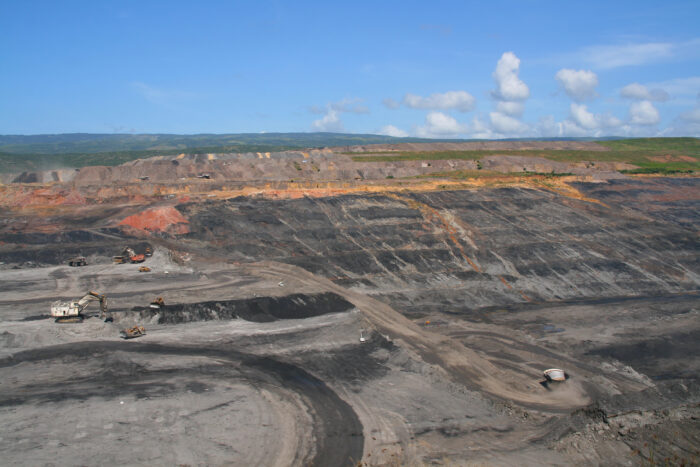
MFT: I don’t think that the key issue of the book is about investment. I think the key issue in the book is about a role model. I didn’t realize this until I worked on the Colombian case concerning the [Cerrejón] coal mine, the Wayúu case. [Until that moment] I had wanted to believe that the environmental problems and issues that I found in my practice were anomalies, so I approached them as something to be corrected. That particular case taught me that I had been concentrating on understanding what went wrong there, the violations, so I could address them and seek a remedy for my clients.
But increasingly, I started developing an interest into where all the coal was going. This is not a question that, as a lawyer, you would normally be concerned with, but I wanted to know. We’re talking about the biggest coal mine in Latin America, active and expanding at a rapid pace post the Paris agreement [on Climate Change]. I wanted to understand, where is the demand for the coal? I realized the coal was going to Europe, to Ireland, Germany, Turkey. I had lived in Germany. That made me deeply uncomfortable. The end of the chapter shows how after winning the case, in the hope of stabilising the situation, to change the model of exploitation in La Guajira, Colombia, the Ukraine war erupted, causing a huge demand for coal that could no longer be bought from Russia. All of a sudden, the mines were back in business. What I learned was that our system actually requires those hell holes that I witnessed as a lawyer acting for the Wayúu people. This was not an anomaly: this was to produce coal for the rest of the world, for our civilized world, and that was deeply disturbing for me…
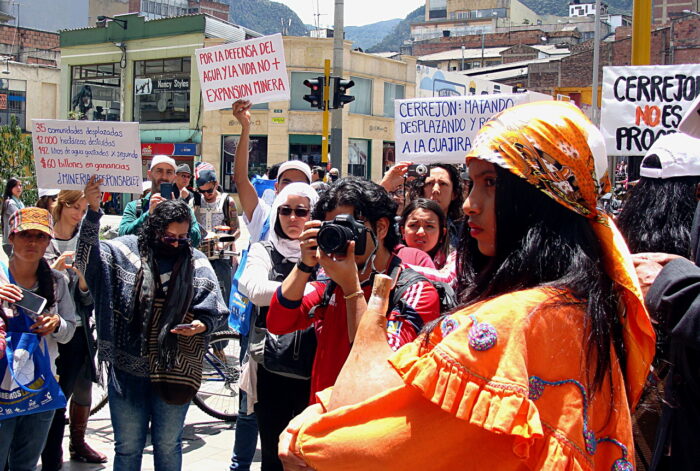
It’s not about just institutions, it’s about a model that is wrong. I wanted to take people with me through that journey of discovering unsavoury truths, because it implicated me, knowing that I was one of those benefiting from that model, then discovering my own bank in that list. This is what made me angry, made me realize that there was something wrong with the system. I stopped looking at a crisis of this type as an anomaly. It is a bigger picture than just looking at institutions [like the United Nations], and whether they have enough funding to do their job.
LAB: In terms of consumers, ethical consumers, or all of us as non-ethical consumers, how do you see the way forward in terms of communicating with children, with adults? What is the role of the media, the role of social media in reaching all people, but especially young people, so that they are able to persuade their representatives to take action?
MFT: there’s a difference between what the world was some decades ago, when information was controlled in a different way to today. The first stop, obviously, is to be aware. One of the reasons I wrote the book was because I myself used to look at the world from a narrow perspective. I think that young people, and people in general, are becoming more aware of environmental issues, because environmental awareness is no longer a luxury. When I studied law originally in Peru, I remember that there was some environmental law being taught in the faculty. The people that were interested in that had plenty of other resources.
Back then, recycling was a luxury, because the notion of recycling didn’t exist among social classes that just had enough to eat, because you re-purposed everything, you re-used everything, nothing was wasted.
People were dying, for protesting at a lack of essential needs. Today, the difference is that this topic [environmental protection] has become a matter of life or death. It’s critical from climate to biodiversity loss. And people are realising it, even those who never previously thought about it, from how deeply polluted the rivers are to all kinds of contamination and pollution, whether it’s the air, or the earth, PFAs, plastics, microplastics. It’s inescapable.
In answer to your question, yes, there’s a lack of coherent speech. We’re talking at a very scary moment. I don’t think that the current [US-Iran] conflict that started two weeks ago, or what we’re going to have, is to be taken lightly, and we have seen that the most important democracy in the hemisphere of the Americas has started an illegal war in bombarding a country. Those images we have seen of bombing an oil site are unbelievable. Putting aside an analysis of the rules of the war, this is an environmental disaster of unspeakable proportions.
LAB: What is the role of Environmental Impact Assessments (EIAs) in protecting the environment?
MFT: Environmental Impact Assessments have been the rule in the way that companies have operated in Latin America, such as Canadian companies who, until recently, were responsible for about 60 per cent of mining in Latin America. And my understanding is that in many of these cases where these companies were operating, there was a need to actually work in such a way that was completely disrespectful for the environment. I’m talking about dropping lead, just leaving poisonous heavy-metal contamination everywhere. It was a matter of making the operation cheap for the company at the expense of nature and at the expense of the local people. This is a template that has been used by the West. Now, there are new actors, new states. I mean, China was not really active in Latin America some decades ago, and now we are seeing that they are in Latin America as well as in Africa.
I think what I could say about China in terms of accountability, probably, is that at present, at least, I feel that whereas we have avenues, albeit expensive ones, to bring companies to account if they are breaching laws – in the places where they are being incorporated – it is not the same with China, which is not part of the OECD system.
LAB: Where do we go from here?
MFT:We need to develop mechanisms for arbitration and dispute resolution, where there are violations of environmental law. There has to be greater transparency: we have to know whether the coal is clean, and the companies or states that are buying coal have a duty to know. The information is public, the violations are not hidden. For example, in the case of the Nahua-Nanti in the Peruvian Amazon, on which I was working, the information was on the web about how the people living in voluntary isolation were removed from their land for permission to be granted for gas exploration. This was not something surprising or hidden. Shell was shipping that gas to the UK.
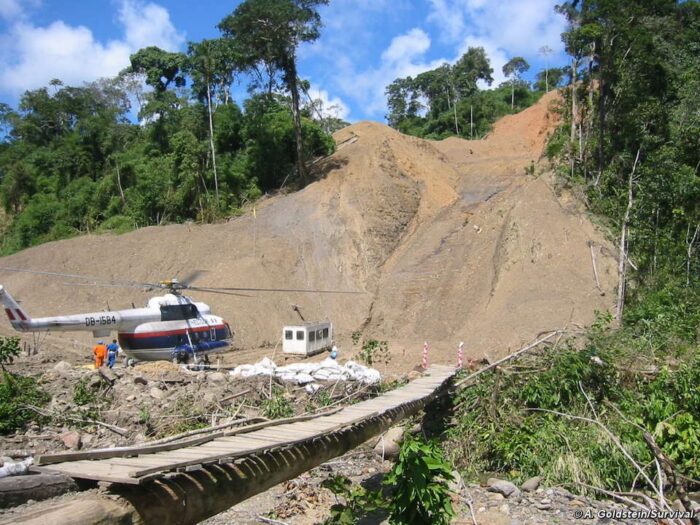
The issues of supply chains are beginning to be understood in the business community: this comes only when there are consequences. By that I mean legal consequences, because before [now] people got away with how they did business. They didn’t care about the cost. This is now changing. In the UK there are important developments in that context: those companies that are incorporated here have certain responsibilities. The courts are establishing what those responsibilities are. It doesn’t matter whether companies are operating abroad, those responsibilities can be ruled under [English] common law and can be judged in this country.
We live in a globalized world, which means that there are deep connections between what we believe, here, in England, and what is somewhere else. That is key. The interconnectedness that I speak about in the book is about how nature itself connects, but also how the economy connects. I can no longer think in an isolated, localized way, because you go to the market, buy something, and you will see that everything we eat comes from somewhere else. It becomes our business because of that.
LAB: In terms of the environmental and social impact of the supply chains that you mention, can you comment on our supplies of meat, timber, and gold, those that are supposedly certified as being ethically sourced?
MFT: We are implicated in all kinds of ways. But that doesn’t mean that it’s right. That’s why, when we started this conversation, I told you, there is something fundamentally wrong with the model. To give an example, these rivers that we are looking at, the River Wye [in the UK], for example. Why is the River Wye polluted? That was here, locally, a result of the poultry farms. Why do we have so many of them? Is it for consumption here in the UK? No, it is to sell them somewhere else. And what do the chickens eat? Well, soya that comes from Brazil to supply the poultry business. The demand is important: that is the question.
With regard to gold, I’ve been working on that recently. It’s worrisome how our economy is set, because, you know, you cannot eat gold: gold is just stored somewhere as a value. But when you look at gold mines and how they operate, it’s concerning. I’m talking about what you would call legal gold mining, meaning operations with a state permit.
We are going full circle, because when you started asking me questions, you mentioned development. I’ve been given a lot of thought to that notion. I started thinking about ‘development’ when I worked on the case of the Ch’orti’ people in Guatemala, and the challenges they faced.
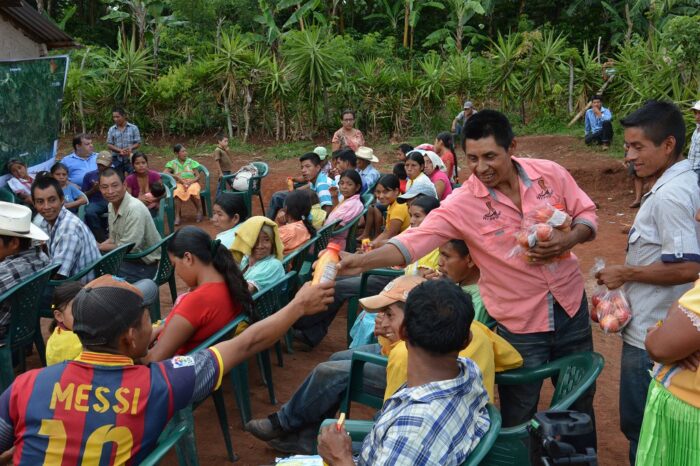
They told me that in the Maya Ch’orti’ language, there isn’t a word for ‘development’. It made me reflect, because I had assumed that development is a term that exists in all kinds of human civilization. Instead, for the Maya Ch’orti’, the concept of Buen Vivir is central. When I asked what that meant, they said it means that you are healthy, people have enough to eat and you are surrounded by what you consider important – trees, and nature all around. You have water, you can swim. All the things that you would expect to find in an environment that you call civilised. I reflected on what is going on right now. The scale of destruction in our current world is such that I have come to agree with the Maya Ch’orti’, that we are working under the wrong premise, that the possibility of endless production is a myth.

One of the areas that I was working on towards the end of the book was on deep-sea mining. It is precisely after you have polluted most areas in the world when it comes to extraction, because that is the key industry when it comes to minerals, and you’re extracting all of that in the region, Latin America. If you could get rid of people and just extract, that’s what would you do, I think, according to this model. We have reached a point where even that is being exhausted. There is now a rush to go to the sea-bed to extract rare minerals and whatever else we need to power the new moment, which is this technological moment. The question is whether this is the way we should go.
What is clear, after having worked on all the climate cases that you read about, is that this is only leading to destruction. There’s no viability for life. First of all, you know the impacts that we are seeing, but eventually also with [global] warming, the disappearance of species at sea and on earth, this model is not viable. If as a community we intend to live a world that is liveable for future generations, for our children, for our relatives that are to come, then we have to explore a different model. Urgently.
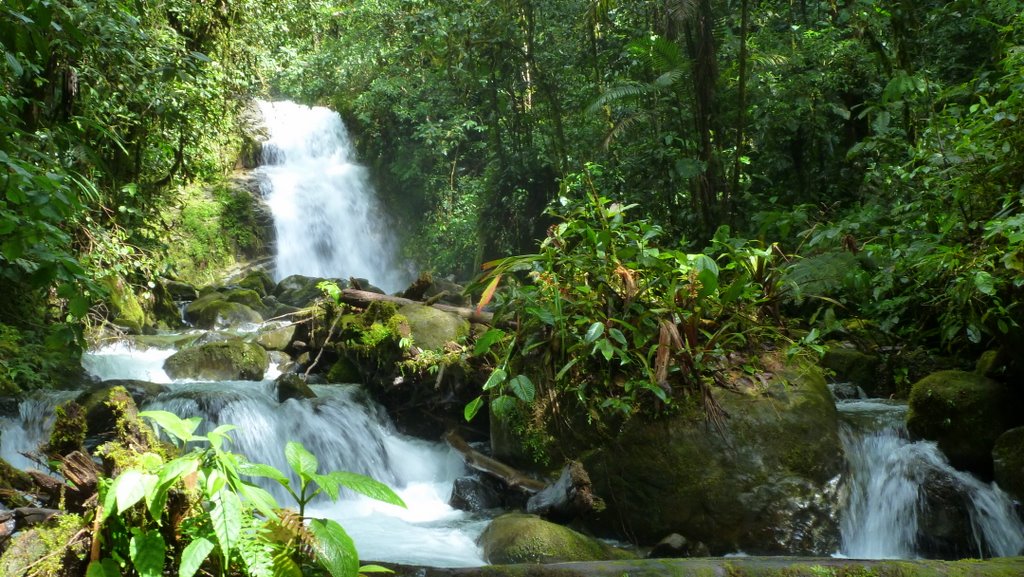
Main Image: Waterfall at Los Cedros Photo: Andreas Kay / Flickr (CC BY-NC-SA 2.0)
Mónica Feria Tinta is a barrister at: Twenty Essex chambers. Her extraordinary career in environmental cases, and championing the cause of numerous environmental defenders is described in a separate, portrait article for LAB.
Dr Linda Etchart is an associate lecturer in human geography at Kingston University. She is author of Global Governance of the Environment, Indigenous Peoples and the Rights of Nature: Extractive Industries in the Ecuadorian Amazon (Palgrave Macmillan 2022).
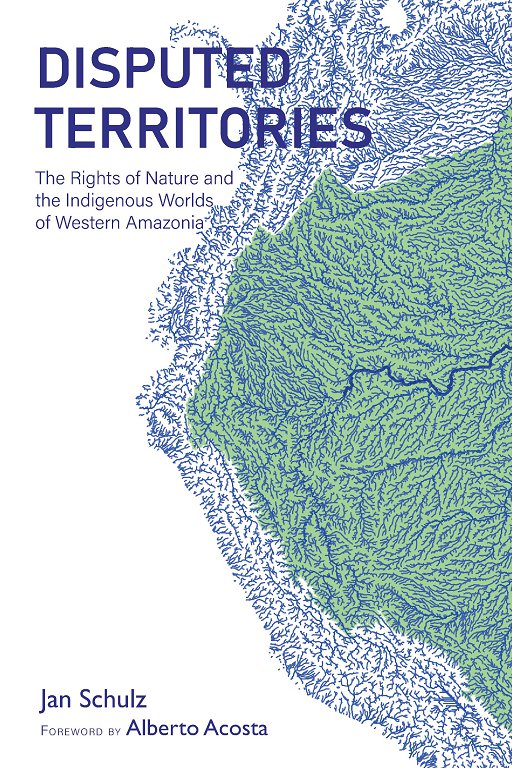
Latin America Bureau’s new title Disputed Territories: The Rights of Nature and the Indigenous Worlds of Western Amazon, by Jan Schulz, with an introduction by Alberto Acosta, will be published by LAB-Practical Action on 17 November 2026.
‘This timely LAB book by anthropologist and environmental rights researcher Jan Schulz, examines the importance of The Rights of Nature in the battle to defend Indigenous territories in Ecuador, Colombia, and Peru. It explains the origins of this concept, its profound challenge to the ‘resources to be exploited by humans’ approach to nature, and documents the ways it is being used today with growing success by Indigenous and other rural communities.’
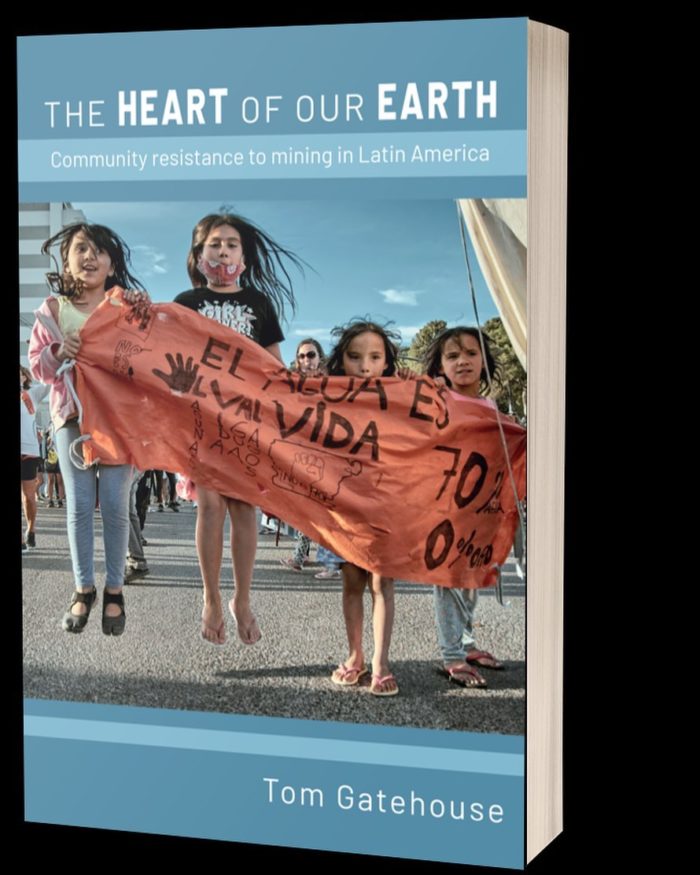
The Heart of Our Earth: Community resistance to mining in Latin America by Tom Gatehouse, was published by Latin America Bureau and Practical Action in 2022.