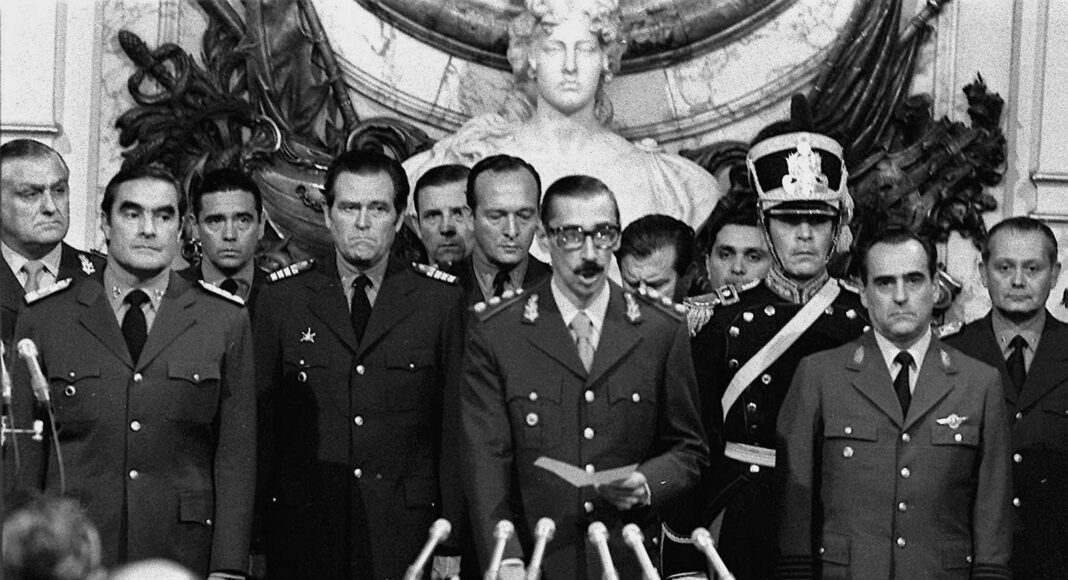
As far-right governments ramp up denialist narrative, film directors in Argentina, Chile and Brazil often set their stories in the period of the dictatorships
Alicia, a private-school teacher, and her husband, a businessman, adopt a baby during the height of Argentina’s 1976-83 junta. When a fragile democracy returns, stories emerge of babies snatched from their kidnapped mothers in concentration camps and handed over for adoption. A lingering suspicion takes over Alicia: could her much-longed for daughter be one of those stolen children?
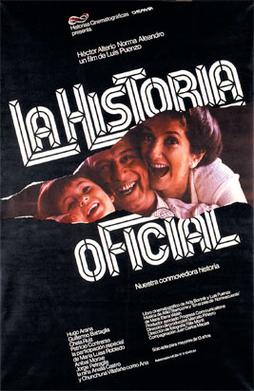
Should she delve deeper or turn a blind eye? Alicia’s dilemma forms the core of Luis Puenzo’s La Historia Oficial (The Official Version). Based on real facts, the film hit a chord with audiences worldwide, garnering Argentina its first Oscar for Best Foreign Feature film in 1986. ‘This award will be a special challenge…to achieve [an] Argentina of peace, justice and freedom,’ President Raúl Alfonsín said on the filmmakers’ return from Hollywood.
In his accolade, Alfonsín, a former human rights lawyer, was acknowledging cinema’s power to reflect, perhaps even drive, social change. Forty years on, filmmakers from Argentina, Chile and Brazil continue to explore their bloody past – and are doing so to international acclaim. So why this persistent interest in the military dictatorships which took over Southern Cone countries – Brazil, Paraguay, Uruguay, Argentina and Chile – from the 1960s until the early 1980s? And is it a coincidence that this focus comes at the precise moment when Far-Right movements in these countries are trying to deny or whitewash human rights atrocities committed by past military regimes in order to legitimise them (and by extension their own repressive ambitions).
Open Wounds: Argentina
The most recent Argentine film to receive global recognition was Santiago Mitre’s Argentina, 1985, based on the ‘Trial of the Juntas’ which Alfonsín set in process to put the nine military leaders of the junta on trial for kidnapping, torture and disappearance of thousands of citizens. The courtroom drama picked up a Golden Globe for Best International Feature Film (2023), nominations by the Academy of Motions Arts and the British Academy Film Awards, and major Spanish and Latin American prizes.
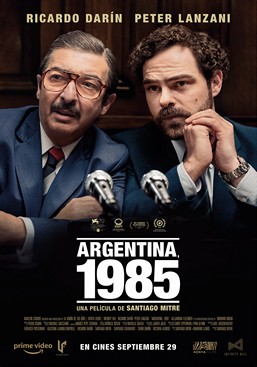
The film’s box office and critical success seemed to mirror the notable progress Argentina had made in human rights policies by April 2023: courts had convicted 1,146 officials for human rights crimes; the rights group Abuelas (Grandmothers) of Plaza de Mayo had recovered over 130 of the babies stolen by the military – up from just 20 when La Historia Oficial premiered; and former concentration camps had been converted into memory spaces.
And yet by December 2023, Argentina had a new far-right president, Javier Milei, intent on reversing human rights policies that a former president, Nestor Kirchner, began to introduce from 2003. Milei also openly questioned the widely accepted figure of 30,000 disappeared by the military. ‘We had reached a consensus that the dictatorship had been a catastrophe,’ said Agustina Llambí-Campbell, producer of Argentina 1985. ‘The new authorities are trying to rewrite the historical narrative.’
The trend, described as negacionismo (denialism), has emboldened junta apologists. When video streamer Netflix announced in early 2026 that a new dictatorship-era feature film was in the works, one of Milei’s deputies tweeted: ‘That lemon has been squeezed dry.’
Rejecting this view, Llambí-Campbell said ‘the reason we keep making films about the dictatorship is simple: the wound is still very much open. Many Argentinians are still searching for the remains of their relatives and the truth about what happened to their loved ones.’ She stressed that ‘the military could tell us where the mass graves are, what happened to all the people. But they don’t. Not a single one has broken the pact of silence, not through pressure, not through justice, not through anything.’
That’s where filmmakers step in, to break the silence. Villaflor, the Netflix film Llambí-Campbell is producing in a renewed collaboration with director Mitre, is based on the real story of Azucena Villaflor, the founder of the Madres (Mothers) of the Plaza de Mayo, who in 1977 began a weekly march around the main square of Buenos Aires to ask the military rulers: ‘Where are our children?’. ‘Many people might know Azucena Villaflor as the name of a street somewhere, that she was important, but uncertain whether she was the one who founded Madres or was a heroine of the May Revolution of 1810,’ said Llambí-Campbell. In the film, to be released in 2027, young, naval officer Alfredo Astiz (now in prison) infiltrates the group to betray the leaders including Villaflor.
While some factions of Argentine society continue to insist that ‘it’s time to turn the page because so much time has passed’, Llambí-Campbell asked: ‘How many films are still being made about Vietnam? About the Second World War? The First World War? Europe continues to make these films because they are necessary. Wounds don’t heal simply because we decide they should, or because society reaches a consensus. I don’t know when they heal. But it takes a very, very long time. Several generations have to pass.’
Delayed Justice: Chile
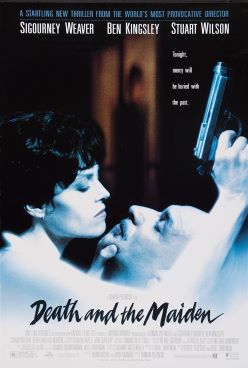
What happens when the penal system fails society’s victims? Writer Ariel Dorfman explores this theme in his play La Muerte y la Doncella, adapted in 1994 by Roman Polanski into the film Death and the Maiden. Dorfman wrote the play in 1990 when democracy was restored in Chile but the outgoing dictator, General Augusto Pinochet, remained head of the Armed Forces, safe from prosecution due to a 1978 Amnesty law. In the film, the middle-aged Paulina, wants to kill a man she is convinced raped and tortured her 14 years earlier but she ends up letting him go. The film concludes with her attending the same concert as her torturer – a metaphor for how Chile’s dictatorship victims were forced to co-exist with human rights violators.
Chilean judges only began the process of prosecuting dictatorship crimes after 1998 when Pinochet was arrested in London. By 2023, Chile’s Supreme Court had processed more than 530 cases for Pinochet-era crimes; former detention centres became museums of memory; and the then leftwing president Gabriel Boric launched a Truth and Justice Search Plan to find more than a thousand disappeared whose fate remained unaccounted for. But as in Argentina, progress in memory and justice is not linear. In March 2026, the far-right José Antonio Kast became president, the first since the restoration of democracy to openly defend Pinochet’s record.
During this transition period, Chilean filmmakers have mined the dictatorship for stories. Films of international acclaim include Andrés Wood’s Machuca about two young boys’ experience of the 1973 coup; Pablo Larrain’s Oscar-nominated No about the 1988 referendum on Pinochet and Manuela’s Martelli’s 1976 about a middle-class woman confronting the realities of the military regime. ‘How much longer are they going to keep making these kinds of films?’ is a common complaint among supporters of Kast and Pinochet, according to film producer and director Juan Pablo Sallato.
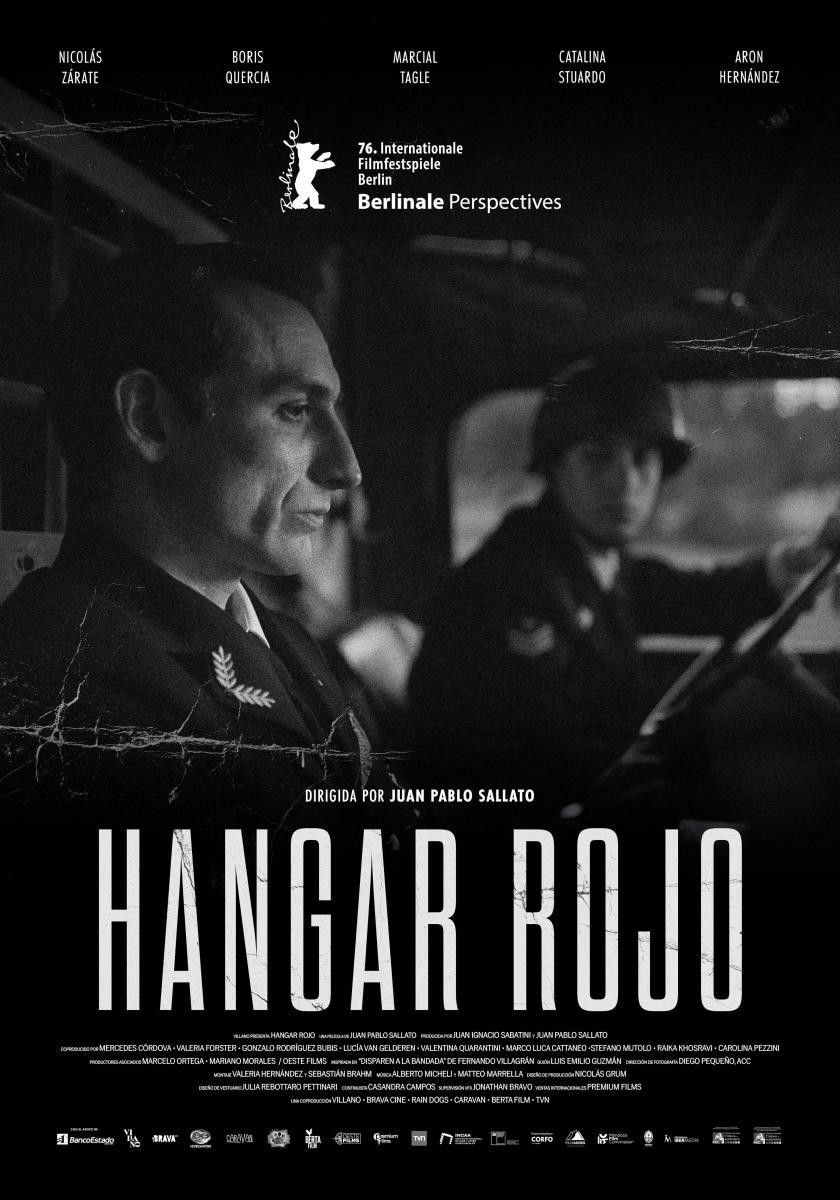
Sallato chose as his first feature film- Hangar Rojo (Red Hangar), a true story about ‘air force officers who refused to take part in the coup.’ Set during the first three days of the coup, Captain Jorge Silva receives an order to transform an aviation hangar into a detention and torture centre. How will he respond? ‘We felt it was a moral dilemma that is human and universal.’
Set to premiere in Chile in October, the film has received accolades in international film festivals including the Berlinale. ‘We want the audience to be broad, not just our own friends,’ he said. ‘I’d love young military personnel to see the film’ and to consider ‘what happens when we stop thinking. That’s the heart of the film.’ Sallato said the theme isn’t just relevant to Chile. ‘It’s a global issue. Looking at what is happening with ICE officers in the U.S…What is that officer doing? Separating families. Maybe there’s a young officer, the son of immigrants themselves, who has to stop and think before he acts.’
When Kast won the presidency last December, Dorfman said: ‘An African proverb says, “The axe forgets, but the tree remembers.” … I think the survivors of Pinochet remember… the Kast presidency will be haunted by what it tries to suppress. It will come out from all the trees of Chile.’
Certainly, ‘Red Hangar’ won’t be the last of ‘Pinochet-era’ films. Production is set to begin in the second half of 2026 on Larrain’s new Netflix film Once (Eleven), featuring 11 stories told across 18 hours leading to the ousting of President Salvador Allende on September 11.
Filling the Void: Brazil
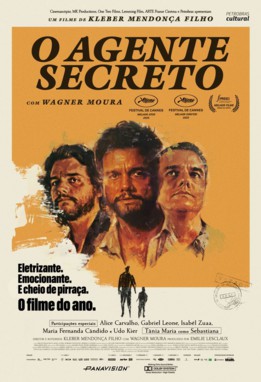
Brazil scored two recent box office and critical hits worldwide, both set during the country’s dictatorship (1964-85): Walter Salles’ Ainda Estou Aqui (I’m Still Here)[1], is a real-life story of how middle-class wife Eunice Paiva, after her politician husband is disappeared, reinvents herself as a human rights lawyer. The film won Brazil’s first Oscar for a foreign feature film in 2025; Kleber Mendonça Filho’s political thriller O Agente Secreto (The Secret Agent), nominated for an Oscar in 2026 and winner of many international awards, follows ex-professor and widowed Armando in search of his mother’s identity while evading political prosecution.
Why did both films resonate so deeply with audiences? Brazil ‘took decades … to reckon with its [dictatorship] past,’ historian Dr. Julia Martins said. The National Truth Commission report came out at the end of 2014 and was less ‘about punishing people and more about finding out what actually happened’. As a 1979 Amnesty law protected the military, there was ‘a sense of paralysis, that we [the citizens] couldn’t really do anything,’ she said.
‘Maybe because of this lack of accountability,’ Martins suggests, ‘filmmakers are feeling compelled to tell [dictatorship] stories … filling the void, doing through culture and art what we can’t do through the law or through trials.’
The timing of the films’ release was also significant. I’m Still Here came out after former far-right President Jair Bolsonaro, was accused of trying to overturn the 2022 election won by leftist opponent Luiz Inacio Lula da Silva. The Secret Agent, was released one year later, after Bolsonaro, a former Army Captain, was found guilty and jailed for coup plotting. ‘All of that brought history back into people’s minds,’ said Martins. Bolsonaro’s son Flávio, who is also pro-military, will contest this October’s presidential election against Lula.
Martins believes ‘there’s also a global appetite for these stories. We’re all having to contend with the rise of the far right … and examining how it was dealt with, or not dealt with … There’s also an interest in revisiting this subject through different angles, said Martins. I’m Still Here ‘offered a gendered view on the dictatorship’, recalling Zuzu Angel, based on the true story of a famous Brazilian fashion designer’s search for her disappeared son.
The Secret Agent offered a rare regional lens, away from the traditional settings of Rio de Janeiro or Sao Paulo. Filmed in Recife, in the north, the film includes scenes of Perna Cabeluda (Hairy Leg), a popular local urban legend, ‘through which you get a glimpse of the queer scene’, she said.
‘I hope more stories like this will emerge, that focus perhaps on marginalized people, black people,’ Martins said. ‘We need more stories from the periphery.’
Further Reading and Viewing
Argentina
The Night of the Pencils (1986) – IMDb
The Secret in Their Eyes (2009) – IMDb
Chile
Brazil
Lilia Moritz Schwarcz, Brazilian Authoritarianism: Past and Present (2022).
Rebecca Atencio, Memory’s Turn: Reckoning with Dictatorship in Brazil (2014).
Michel-Rolph Trouillot, Silencing the Past: Power and the Production of History (1995).
Films:
Go Ahead, Brazil! (1982) – IMDb
Baptism of Blood (2006) – IMDb
The Day That Lasted 21 Years (2012) – IMDb