What does it truly mean to be a feminist? La Lucha is more than just a recounting of suffering at the hands of misogyny. It is a pledge to fight, an act of struggle in the long and varied feminist canon that continues to flourish across the world and that is so often under attack.
It’s been fourteen years since Nigerian author Chimamanda Ngozi Adichie delivered her infamous speech ‘We Should All Be Feminists’ at TEDxEuston. The speech, published in book form in 2014, came at a time when “feminism” was still in the process of shedding its skin in the public eye.
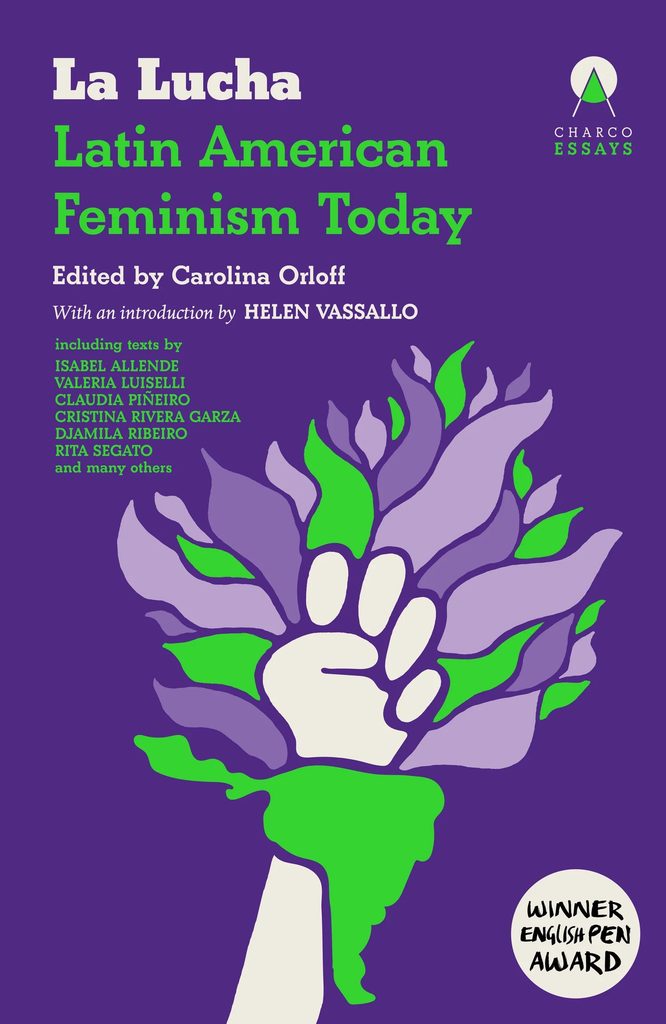
No longer the subject of sneers and hairy armpit jokes, it was finally a mainstream social movement that was asserting its right to be taken seriously. But what does it truly mean to be a feminist? Charco Press’s most recent anthology, La Lucha: Latin American Feminism Today, asks precisely that question, as it problematises the idea of the ‘feminist’ as a united subject. The variety of perspectives compiled in this edition proposes the idea of not only one, but multiple, feminisms. These are social theories, political movements, and personal perspectives from Mexico to Brazil that exist not so much in harmony with each other, but rather as a discordant choir of passionate voices. This is an ambitious new volume that offers an extensive look at a whole kaleidoscope of perspectives.
As editor Carolina Orloff notes in the preface, these Latin American feminisms are brought together in ‘disobedient brilliance’, melding a plethora of genres and geographies across the immensely diverse sphere of Latin America. La Lucha is divided into three main parts: ‘La Lucha is Intersectional’, ‘La Lucha is Territorial’, and ‘La Lucha is Personal’.
The writers who make up each of these chapters speak with a rich prowess on the many complexities of life for girls, women, and those of marginalized genders in the region. For a European or ‘Western’ audience, this can be shocking. The volume opens with testimony from Bertita Zúñiga Cáceres, a feminist and Indigenous activist from southwestern Honduras, who recounts her mother’s advocacy for indigenous land rights before her assassination in 2016 by anonymous gunmen.
Her determination to continue this struggle for sovereignty reveals the uncomfortable truth of violent extractivism in Latin America. Likewise, Carolina Escobar Sarti’s essay on child pregnancy in Guatemala, where the practice of sexual assault still proliferates in rural communities alongside punitive abortion laws, sheds light on the lasting legacy of colonial practices still enshrined in cultural norms today.
Brazilian academic Jackeline Romio’s focus on Latin American masculinity and male experiences – and with them, the dangerous narrative of the victim versus victimizer dichotomy – critiques binary notions of culpability and punishment, instead proposing new ways of imagining, framing, and discussing the extremely sensitive topic of femicide in the region. These efforts to recount what is often peripheral to public consciousness in the Global North are uncomfortable to read. Yet, in a world where misogynistic ‘manosphere’ rhetoric increasingly denies and reinforces women’s inequality in the mainstream, there is no question of looking away.
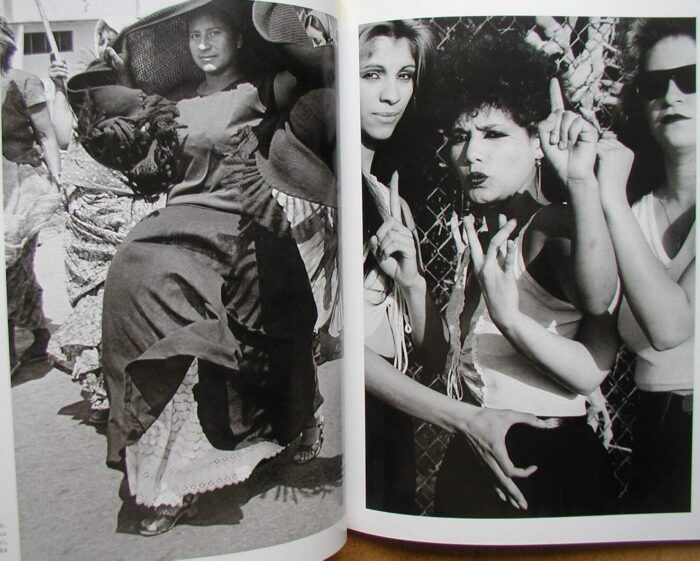
Throughout the volume, the idea of what it means to be a ‘feminist’ slips and slides through its many contexts. Alba Carosio attempts to classify the many networks of Latin American feminism under different labels, from the ‘Autonomous feminism’ that prioritizes feminist struggle outside of the constraints of political institutions, to branches such as ‘Ecofeminism’ (concerned with the ‘intersection of gender and environmental oppression’), ‘Afro/Black feminism’, and ‘LGBTI feminism’. As Yásnaya Elena A. Gil recounts, her relationship to the word ‘feminism’ is far from straightforward. Her identity as an Indigenous Mixed woman complicates the idea of a purely ‘horizontal’ connection to White feminists: any form of feminism that ignores the colonial re-structuring of Indigenous life, her essay asserts, ultimately falls flat in the face of Indigenous women’s experiences. The same goes for those of cis- and transgender women, as Bianka Rodríguez traces the history and existence of trans-inclusive feminism in El Salvador, where LGBTQ+ individuals are often subjected to violent discrimination and erasure from public life. With each contribution winding through the specificities of womanhood in the region, from Colombia’s Quilombo communities to the industrial border cities of northern Mexico, and intellectual circles of urban Brazil, they each add another layer to the never-ending collage of feminist struggle that La Lucha aims to capture.
It is also telling that La Lucha instrumentalizes a range of literary fiction writers in its arsenal of voices. While Chilean author Isabel Allende, known for her seminal novel “La casa de los espíritus”, ruminates on generational experiences of patriarchy, gender roles, and the constraints of womanhood within the family, Cristina Rivera Garza’s contribution draws on the importance of personal archives in the process of remembering her late sister, Liliana, a tragic victim of femicide, and the additional subject of her Pulitzer Prize-winning work, El verano invencible de Liliana. In this mix of autobiography, historical writing, anthropological study, and literary prose, the cacophony of forms touches on colonial legacies, past dictatorships, economic crises, and the insidiousness of patriarchal structures embedded deep within one’s very home.
Still, La Lucha’s word count is ultimately finite: though queer perspectives on girl- and womanhood are certainly present, they could have been granted more space within the collection. Another difficulty is the slight ambiguity with which the essays of each section do not so much abide by their respective titles but, instead, bleed with abandon into the labels of ‘territorial’, ‘intersectional’, and ‘personal’, sometimes all at once. This is, obviously, the difficulty with trying to fit the inherent plurality of feminist experience into separate boxes, something of which the anthology itself seems to be well aware.
As its name suggests, La Lucha is more than just a recounting of suffering at the hands of misogyny. It is a pledge to fight, an act of struggle in the long and varied feminist canon that continues to flourish across the world and that is so often under attack. The voices in these pages refuse the blind label of ‘victim’, instead asserting themselves as agents, subjects, and actors on a hostile stage that dearly wishes they would be quiet. As words erupt from the pages to question, applaud, interrogate, and unsettle the world around them, they speak with a furious determination to be heard. It is now as important as ever to sit down and listen.
La Lucha: Latin American Feminism Today, by Carolina Orloff, is published by Charco Press, £14.99