
LAB’s Stella Horrell talks to the General Secretary of Mexico’s Morena party, Carolina Rangel Gracida, and asks: can President Claudia Sheinbaum promote substantive change via intersectional gender policy in Mexico?
Sheinbaum’s Grito de Independencia:
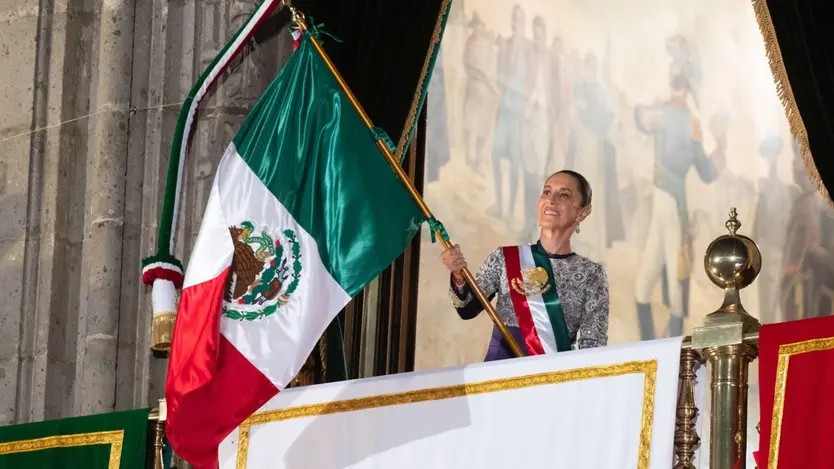
Claudia Sheinbaum made history on 16 September 2025 when she delivered the traditional Grito de Independencia from the National Palace balcony to a rejoicing crowd filling the Zócalo, Mexico City’s main square, as the first Mexican female Presidenta.
Video: La República, September 2025
Sheinbaum promised to continue Andrés Manuel López Obrador’s (AMLO’s) Fourth Transformation but departed from tradition by placing a unique emphasis on ‘the new history of Mexico’, centered on the role of women as historical actors and insurgents, not mere historical participants.
Her inaugural address or Grito expressed an intersectional gender policy for Mexico, intended for indigenous women, migrants and anonymous and named Mexican heroines.
Simultaneously, Sheinbaum has embarked on constitutional changes to enshrine the position of women. The Constitution formerly alluded to women a mere total of six times, but in the spirit of ‘what isn’t named, is not brought into existence’, outlined by the General Secretary during our conversation, references to women have been added.
Sheinbaum has acted on this sentiment by naming and creating the very first Secretaría de las Mujeres to promote gender equality and provide resources for the prevention of violence against women.
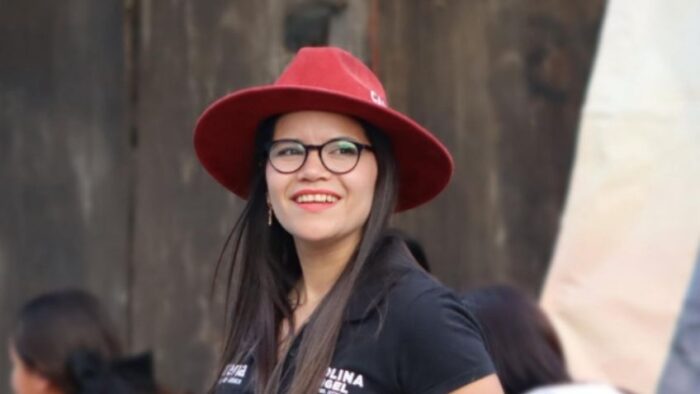
This action aims to challenge criticism coming from across Mexico and even her own party. The often-asked question of whether the country is ‘ready’ to be led by a woman was and still is on many peoples’ lips, according to Carolina. It is one example of the many pernicious stereotypes in Mexico that the Morena Party is combatting in a series of social programmes, campaigns and via institutional reforms.
Many reflections arise from Sheinbaum’s Grito and Morena’s relationship with feminist causes, which span radical, historical, popular, indigenous, liberal and socialist.
How does the Grito impact the feminist moment?
The Grito is a defining aspect of Mexican political culture which stems from the country’s revolutionary political discourse which tends to historicise the moment, binding it to a wider ‘revolution’, in this instance, the feminist revolution.
It appears that the Morena Party has seized upon the feminist movement in which it plays a paradoxical and transcendent role as both a mechanism of and motor for the cause.
Is it significant that constitutional reforms are inaugurated by a female President?
From conversations with Mexicans, the consensus appears to be sí.
Many women across Mexico have lived experience of machismo, or misogyny, Carolina included. She felt emboldened to pursue a political career because of her single mother’s journey in overcoming adverse circumstances.
The General Secretary placed an emphasis on lo vivido or women’s subjective experiences as essential to informing the Mexican feminist cause. The country’s gender policy is at once victim-led and empowering: a movement led by and for women.
Has the Grito given rise to the notion that the Left will safeguard feminism in Mexico?
Carolina maintains that the Morena Party represents and drives true substantive change for all Mexican women and that right-wing feminists tend to be mere ‘feministas falsas’, or fake feminists.
This clash is indicative of a historical, paradigmatic contest between intersectional and liberal feminism in Mexico.
Tension is evident from the criticism Sheinbaum faced as Mayor of Ciudad de México (CDMX), where she was accused of restraining feminist marches. As Presidenta, by highlighting her promotion of an inclusive agenda for all women, Sheinbaum has managed to subdue lingering opposition as well as the criticism directed against Morena for its previous claim that Mexican feminist movements were being co-opted by middle classes.
From AMLO to Sheinbaum
When talking with Carolina, who served in both AMLO’s and Sheinbaum’s governments, the continuity between administrations and Morena’s unity were key to discussion.
She stressed that AMLO had laid essential foundations for Sheinbaum: his gender policy culminated in his cabinet achieving gender parity for the first time in 2023. This was part of a top-down, evolutionary approach which AMLO promised to bring to the wider population.
At its roots, Morena has regarded feminism as one of its central tenets. This is best exemplified by the General Secretary’s initial relationship with the Party: accompanying her mamá to a meeting in Michoacán, Carolina, then a young 16-year-old woman, began contributing to the nascent Morena Party by distributing pamphlets and the satirical paper El Chamuco – a degree of female participation which was revolutionary for its time.
Morena’s Intersectional, Concrete Programmes
In Mexico, intersectional gender policy covers an exhaustive range with its promise to cater to all classes, linguistic and ethnic backgrounds, indigenous communities, age groups and its pledge to focus on supporting poor women. An emphasis derivative of AMLO’s aphorism:
‘For the wellbeing of all, but first and foremost, for the wellbeing of the poor’.
Sheinbaum’s holistic approach incorporates future-looking and retroactive intersectional policy to advance women’s rights, which the General Secretary highlighted should ‘impact all women’.
Sheinbaum’s Women’s Wellbeing Pension Scheme, for example, provides women between the ages of 60 and 64, who have contributed significantly to their families and society, with a tangible, economic income. This scheme aims to make women’s previous roles in forging the Mexican nation seen and valued. For Mexico’s future, Sheinbaum has encouraged educational programmes to empower young women and girls from all backgrounds.
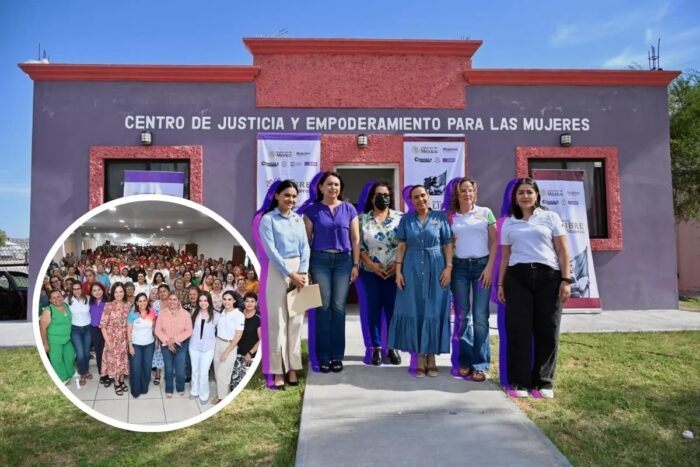
The Centros Libres are multi-faceted in their approach. These are female-only spaces which offer potential for female solidarity and networking, as well as refuge from economic, psychological or physical abuse. In this way, Sheinbaum restores women’s and society’s faith in State institutions by characterising its presence as local and communal.
These Centros Libres operate alongside other programmes as Morena seeks to nurture cultural change. While the positioning of female role models in the public eye is essential in the transformation of Mexico’s social fabric, it highlights the need for further inquiry into how gender perspectives can be instilled in the country’s male population.
Given that feminism across Mexico is regarded as a movement led by and for women, there remains a consensus ‘that men cannot be feminists themselves, though they can be allies of feminism’, according to Morena’s General Secretary.
Some argue that this is due to the intricate distinctions and even competition between various feminist discourses in Mexico, but it is due to something far simpler: until equality is achieved, men should not be able to claim the subjective experience of women as one with which they can identify.
Programmes Directed Towards Men
The 2023 campaign ‘Más hombres, menos machos’ marked a milestone in feminist programmes which aimed to solicit the participation of the Mexican male population in the advancement of women’s rights in Michoacán.
‘Hurtful catcalls and comments’ – video from Government of Michoacán, Mexico, 2024
The campaign was largely conveyed through official communications via posters, media platforms and certain programmes. All communications were gradually translated into indigenous languages, reaching every corner of the State. A policy which hopes to honour Mexico’s very first Year of Indigenous Women (2025).
One scheme included the delivery of workshops at secondary schools on the subjects of menstruation and the demystification of romantic love, with the goal of altering harmful taboos and stereotypes. Attendance of these programmes insisted on the presence of both female and male students to normalise dialogue about these topics.
Another scheme focused on the treatment of women in public spaces, specifically on public transport. The campaign outlined that catcalls are an inherent example of harassment towards women which will no longer be tolerated.
Inherited stereotypes are being challenged, sowing the seeds of cultural change and planting hope for a future where CDMX public transport no longer requires female-only carriages.
The Future of Feminism in Mexico
The Morena party’s emphasis on the importance of history, whether evident in the Pension Scheme or Sheinbaum’s Grito, demonstrates the consistency of its intersectional gender policy.
The evolution of Mexican feminist movements has a unique character. Granted, given that Mexico faces a unique history of colonialism, neo-colonialism, the PRI dictatorship, and now faces a set of current distinct challenges, this fact is unsurprising.
Mexico’s complex history upends distinct feminist discourses which have gained traction since the Morena Party’s time in power. Sheinbaum does well to attempt to prioritise a range of discourses in this new era for Mexican women.