
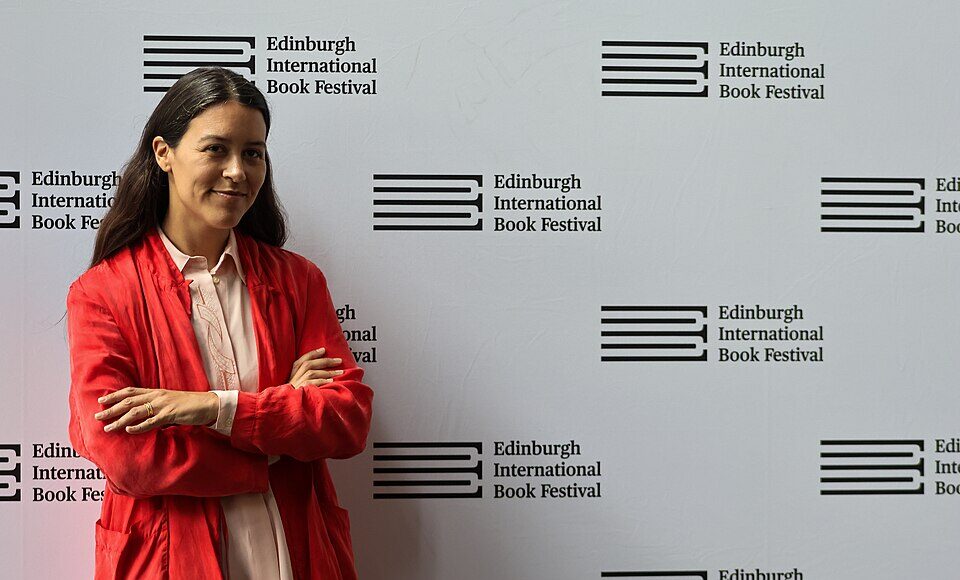
A writer navigating her mother’s death while falling into a new love affair. Sara Torres’s autofiction questions how we mourn and love.
Texts almost always demand an end against their beginning. At the same time, as anyone who has been privy to grief well knows, very rarely does the process of coming to terms with a loss obey the laws of a tidy three-act structure. It is amid this tension between beginnings and ends that Sara Torres’s X Is Where I Am starts with its twofold preoccupations: sex and death. Sara, a writer who has recently moved to Barcelona as a lecturer at the local university, is torn between three pressure points: her mother, who is dying of cancer in Sara’s hometown on the Cantabrian coast; her partner, D., who waits eagerly back in London to join her in Barcelona; and, finally, the mysterious Girl, with whom she cannot help but fall into a seductive yet devastatingly fragile love affair.
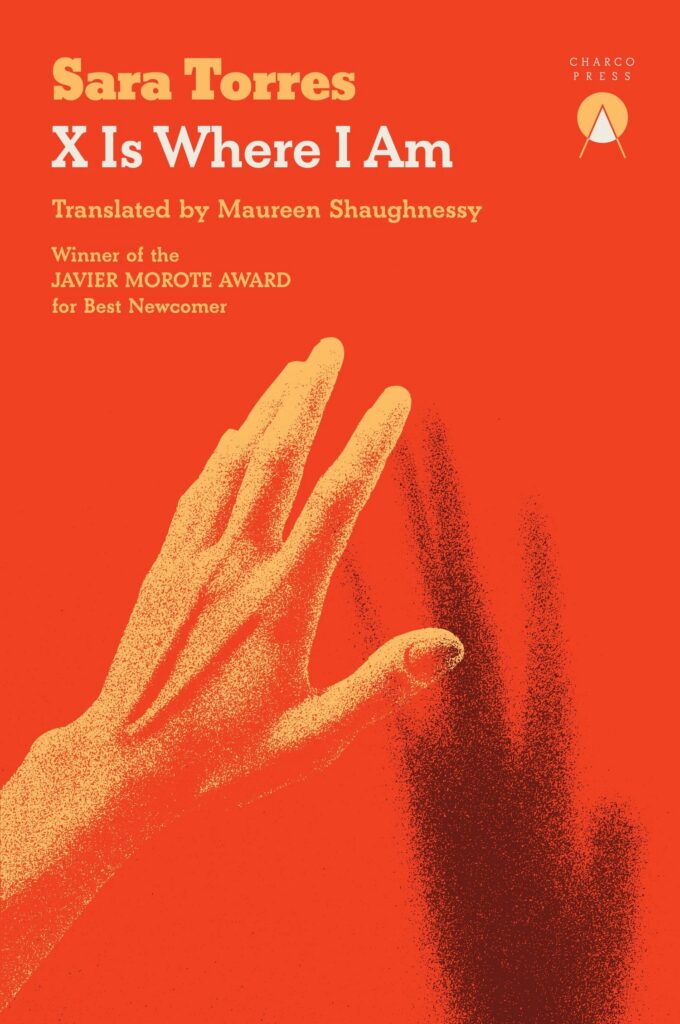
The oceanic pull and push of these three loves is what drives Torres’s novel beyond the limits of what the reader might naively believe a novel on grief should focus on. Yet, straightforward themes of death, destruction, and misery, though ever-present throughout the narrative, are not allowed to choke the text: ‘As Mum lay dying I was making love’, the novel begins; ‘The image shocks and disturbs me’. The tragicomic absurdity of Sara’s ravenous sexual and romantic lives, as she navigates her mother’s decline and passing, soon spirals into the narrator’s fatal flaw: she cannot stop herself from falling in love intensely, unbearably, and even somewhat flippantly.
Already a distinguished poet, Torres’s prose drips with a sensuality that continually complicates and interrupts any pretence of tackling grief ‘rationally’, whatever that might mean. Maureen Shaughnessy’s translation artfully maintains a narrative voice that oscillates between the seductive and the childlike, painting a picture of a woman who, confronted with the looming threat of absence, struggles to inhabit a world where her desire for passionate intimacy cannot always be met. It is only by turning these intense feelings into text, inviting the reader to share in the deeply visual, tactile, and olfactory modes of experience that structure her life, that some semblance of ‘sense’ can be made of this cruel reality.
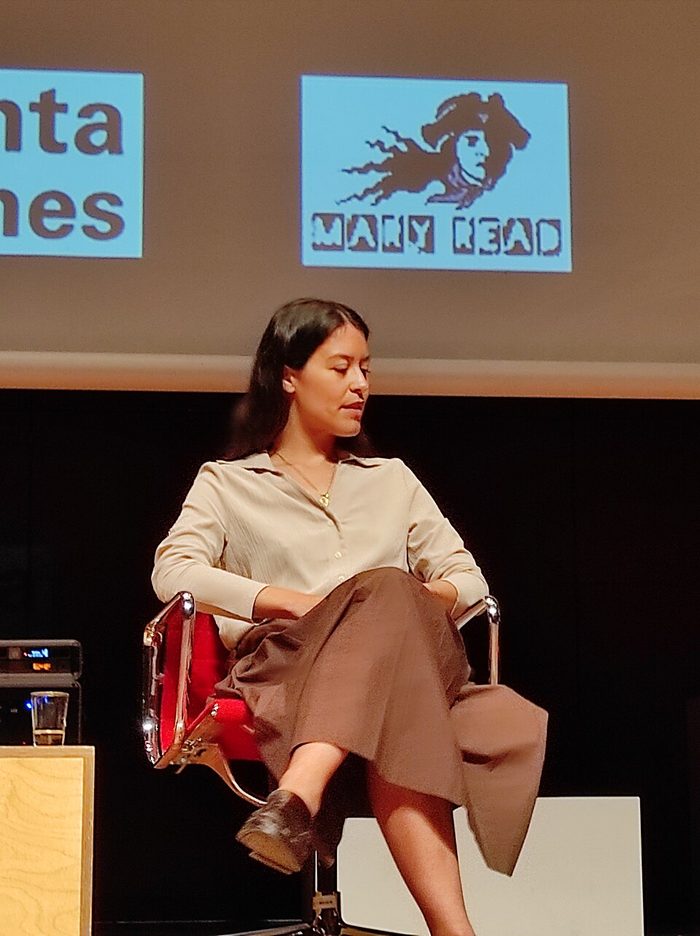
Still, though the veil between writing and reality is always played with throughout the novel, Torres’s narrator is never slow to remind the reader of her right to withdrawal. As a work of autofiction, X Is Where I Am reflects the real life of its author: her mother’s breast cancer diagnosis when she was only 18; the decade spent at home in Asturias, then studying abroad in London before landing in Barcelona; and, of course, her recurring meditations on gender, sexuality, and queerness, which attempt to ascribe some semblance of rationalisation to the haphazard world Sara navigates (Torres completed her doctoral thesis on critical studies of queer fetish, fantasy and ‘becoming’ at Queen Mary University). The Torres that writes and the ‘Sara’ that speaks hover on different sides of the page. Although the latter reaches out to us, the former reminds us intermittently of her capacity to obscure, to recede, to never tell the whole, ‘objective’ story, whatever that might be. The novel is not interested in inviting judgement from its reader, much less anything as invasive as forgiveness for the complicated emotions that reign in the wake of such a monumental loss. Rather, Torres writes it as a plea for connection.
Though her novel must come to an end, the strength of feeling that courses through each chapter refuses to be contained, least of all by the oppression of the page. Why must we feel the same as everyone else? How can we find the space to love and be loved in the ways that we need for ourselves – by holding our hands up in surrender, she asks, or by carving it out for ourselves? X Is Where I Am is a quest for freedom, for understanding, and, most of all, for reciprocation. As it flaunts the norms of grief, love, and selfhood that hope to oppress its characters, betraying the spectral moulds of the perfect lover or daughter, the novel begs us to share in its desperate pursuit of connection. Beyond fiction, beyond the final page and, most of all, beyond ourselves.