Chile’s Mapuche people hoped for better things after the election of Gabriel Boric in 2021. The government’s failure to win backing for a new Constitution (which would have granted Indigenous recognition, representation in government, and an expansion of land rights) was a huge disappointment. The extension of the Estado de Excepción has signalled a return ‘to the old discourse of the internal enemy’. Mapuche people may vote for Jeanette Jara as ‘the lesser of two evils’, but they feel that they have to work on their own unity.
The election of Gabriel Boric in 2021 came with great expectations for Mapuche communities in Chile. Expectations of expanded social rights following the estadillo social which erupted 2019. And even more significantly, an expectation of constitutional reform. Four years on, Chile is set to vote for a new president. With Boric’s approval rating at just 31 per cent, the results on November 16 will be pivotal in deciding Chile’s future.
Crime, immigration and the economy have been at the forefront of candidates’ campaigns. And with far-right candidate José Antonio Kast polling at 23 per cent, just two points behind Jeanette Jara, Boric’s left-wing coalition successor, a sharp tack to the right is anticipated in the second round runoff.
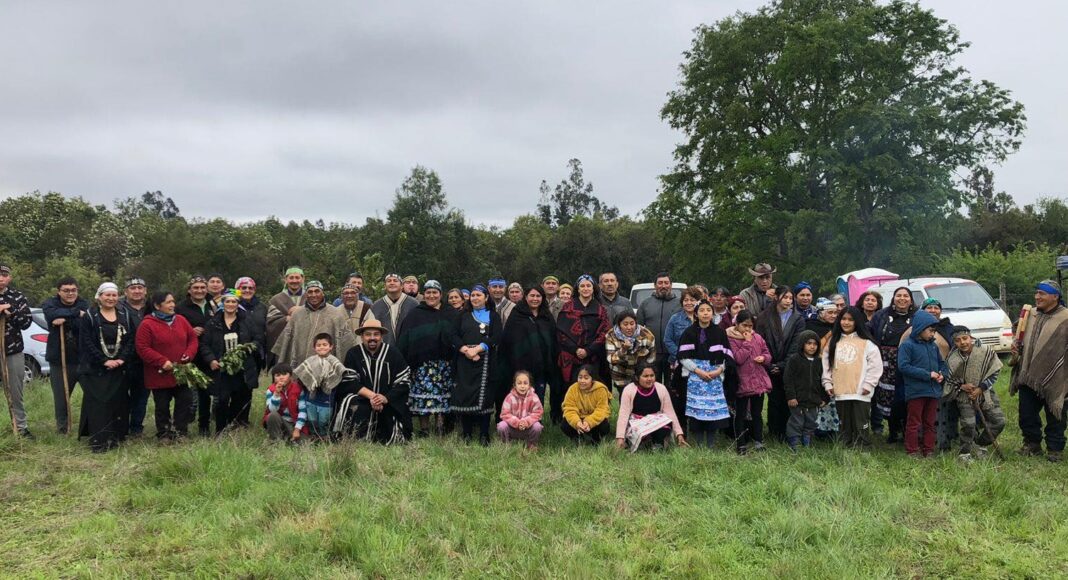
Despite Mapuche communities in Chile making up 10 per cent of the population, discussion of Indigenous rights has been noticeably absent from presidential debates in the run up to the November elections.
So how do Mapuche communities feel about Boric’s presidency? And how will this play a part in the upcoming elections?
Boric’s presidency: ‘A great disappointment’
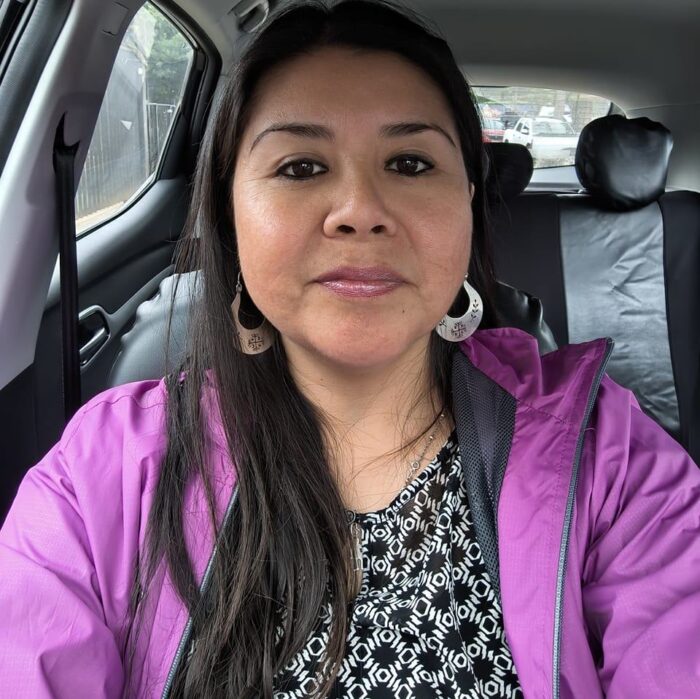
‘I think there was a lot of expectation at the beginning. It was the fact that he came from a left-wing party, and also because of his youth,’ says Isabel Cañet Caniulen, a Mapuche leader from Freire, in the region of Araucanía. Cañet is the former director of the Chile Indígena programme under CONADI (the National Corporation for Indigenous Development) during Boric’s presidency.
‘He visited Freire during the [2021] election and we got to meet him. But support for him within [Mapuche] communities has diminished because of the actions of his government. It’s affected his image,’ she continues, ‘which is why he now has a more distant relationship with Mapuche communities.’
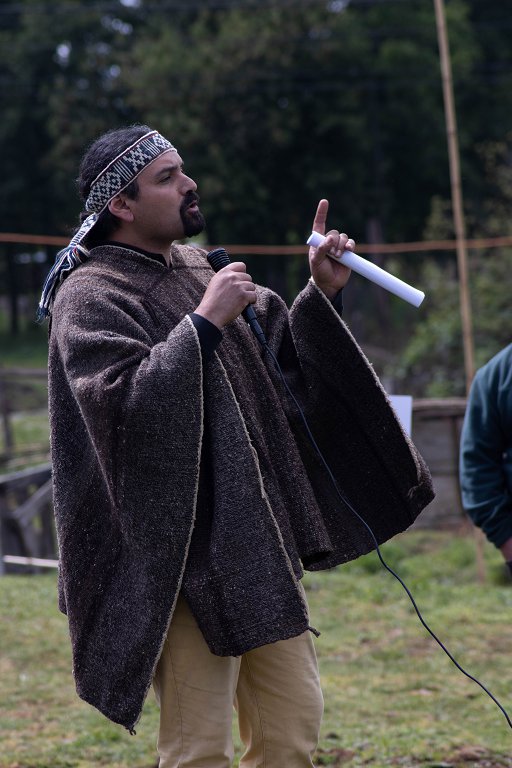
For Danko Marimán, Coordinator of the Txawün Indigenous communities in Temuco, Boric’s presidency was ‘more of the same, and above all a great disappointment because of everything we hoped might happen.’
One of the critical failures of Boric’s presidency for Mapuche communities was the rejection of the new constitution. In 2020, 78 per cent of Chileans voted in favour of redrafting the Pinochet-era constitution. It was one of Boric’s key pledges during his election, promising to draft a new, socially progressive constitution. Yet, when the draft was put to vote in September 2022, 62 per cent opted to reject it.
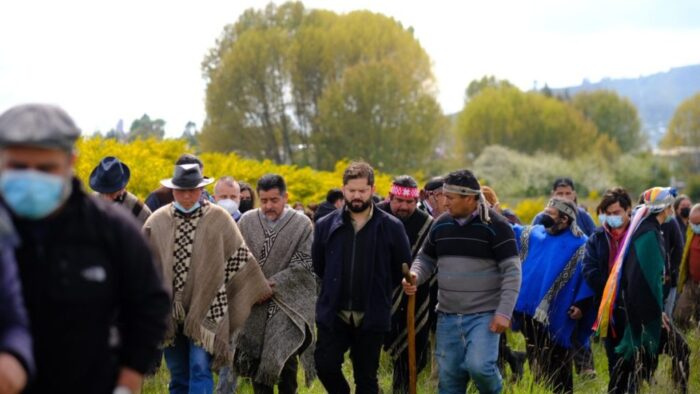
The failure to obtain a new constitution
Had the new constitution passed, it would have granted Indigenous recognition, guaranteed representation in government and an expansion of Mapuche land rights.
‘[That loss] still weighs heavily,’ says Cañet. ‘A large part of the social uprising and the proposals of the social movement were associated with the Mapuche world … So when that process failed, [that failure] was associated with the Mapuche people.’

Yohana Coñuecar Llancapani, an advisor for Indigenous Peoples in coastal regions, from Isla Llanchid, Los Lagos, believes that ‘no presidential candidate will want to take up the mantle of constitutional change again.’
‘The government has closed the door on this issue, and none of the current candidates in the upcoming election have engaged with that conversation.’
In May 2025, Chile’s Commission for Peace and Understanding published its final recommendations to the government on how to improve its relationship with Indigenous communities.
Boric has since put forward a proposal for constitutional recognition, as well as a new framework for negotiating land rights.
However, with the next elections round the corner and little tangible progress made, it is unlikely these changes will materialise under this parliament.
The Estado de excepción… ‘exceptional no more‘
Another contentious issue for Mapuche communities is the extension of the Estado de Excepción in Araucanía and Bío Bío. The two states are home to the majority of Mapuche communities in Chile.
During his electoral campaign Boric criticised his predecessor’s heavy-handed approach to tackling the conflict between guerrilla Mapuche groups and the state. Yet, in May 2022, Boric reinstated the State of Emergency, citing increased violence. This has allowed for militarization of the region.
In April 2024, three carabineros were killed on the P-72 highway in the Bío Bío region where radical Mapuche groups are using violent tactics as a method for land recovery.
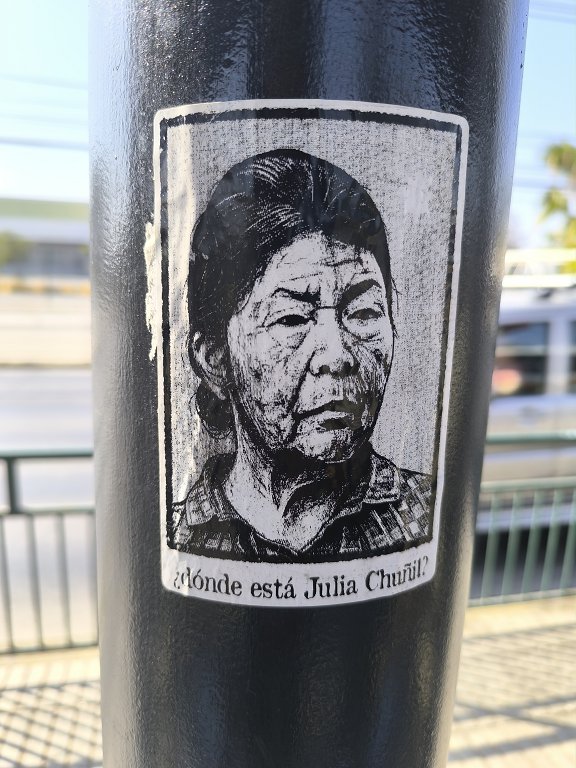
Meanwhile, in November 2024, Mapuche activist Julia Chuñil disappeared whilst on a hike having resisted eviction from her land. Her land had been bought by CONADI as part of its territorial recovery programme for Indigenous communities, but was subject to interest from forestry businesses, according to her family.
With presidential candidates focusing on internal security, there is a fear amongst Mapuche communities of being tarred with the same brush as militant Mapuche groups, like the Coordinadora Arauco-Malleco (CAM), who carry out the attacks.
The extension of the Estado de Excepción signaled the return ‘to the old discourse of the internal enemy’, says Marimán.
It has now become the longest standing Estado de Excepción in the region since the military dictatorship. According to Marimán, ‘[in Chile] there is a law for those on the inside and there is a law for those outside. Our territory seems to be on the outside. It’s a territory that is still undergoing a process of colonization and domination.’
For Luisa Viviana Nahuel Tripailao, President of the Txawün Indigenous communities in Temuco, the Estado de Excepción highlights the hypocrisy of Boric’s government.
Decreto 66 in Chile emphasizes the need for Indigenous consultation. Yet, engaging with these conversations against a backdrop of militarization and violence is ‘like saying, “come on, sit down and talk whilst I hold a gun to your head”’, she says.
The irony for Cañet is that the Estado de Excepción ‘has ceased to be exceptional,’ given it has become a permanent feature of Boric’s presidency. ‘We are treated as a thorn in the side of a society that refuses to recognize its own diversity.’
‘The Communist Party is the lesser of two evils’
So what does this mean for the upcoming elections in Chile?
‘This country is taking a turn to the right,’ suggest Marimán. Although he says he will vote for Jara, in order to block far-right candidates, he does not have much hope: ‘The left constantly promises progressivism for Mapuche communities in terms of constitutional recognition, but it never follows through, it never keeps its promise… And on the other hand, the right promises a heavy-handed approach and a rollback of our rights… From a Mapuche perspective, both the left and the right are equally colonizing.’
Nahuel too hopes that Jara will win but insists that the Communist Party is ‘the lesser of two evils.’
‘Everything will continue exactly as it is now … we’re not interested in political parties because there aren’t any political parties that are really for the Mapuche people. Instead we have to work on our own unity,’ she says.
For Coñuecar, the question of Indigenous rights is not yet part of the conversation in the upcoming elections.
‘Chile is a racist country, a classist country, and a country of denial,’ she says. ‘There’s a historical denialism which places Indigenous people at the bottom of society … so the truth is that incorporating Indigenous thought into public affairs, economic development and culture will always be a constant struggle.’
‘But we are stubborn,’ says Nahuel. ‘We’ve been here 500 years, and we’ll still be here. If someone falls, we all get back up … We are the people of the land: there will always be new growth, and we will always be reborn.’