This article was based on an investigation by Revistazo, the independent media outlet of Transparency International’s chapter in Honduras, Asociación para una Sociedad más Justa (ASJ – Association for a More Just Society).
I don’t want to tell my children and grandchildren that this land used to belong to us, but now it’s all been taken. […] If we don’t do something now, there’ll be nothing left.
Cristales y Río Negro community member, speaking to Revistazo.
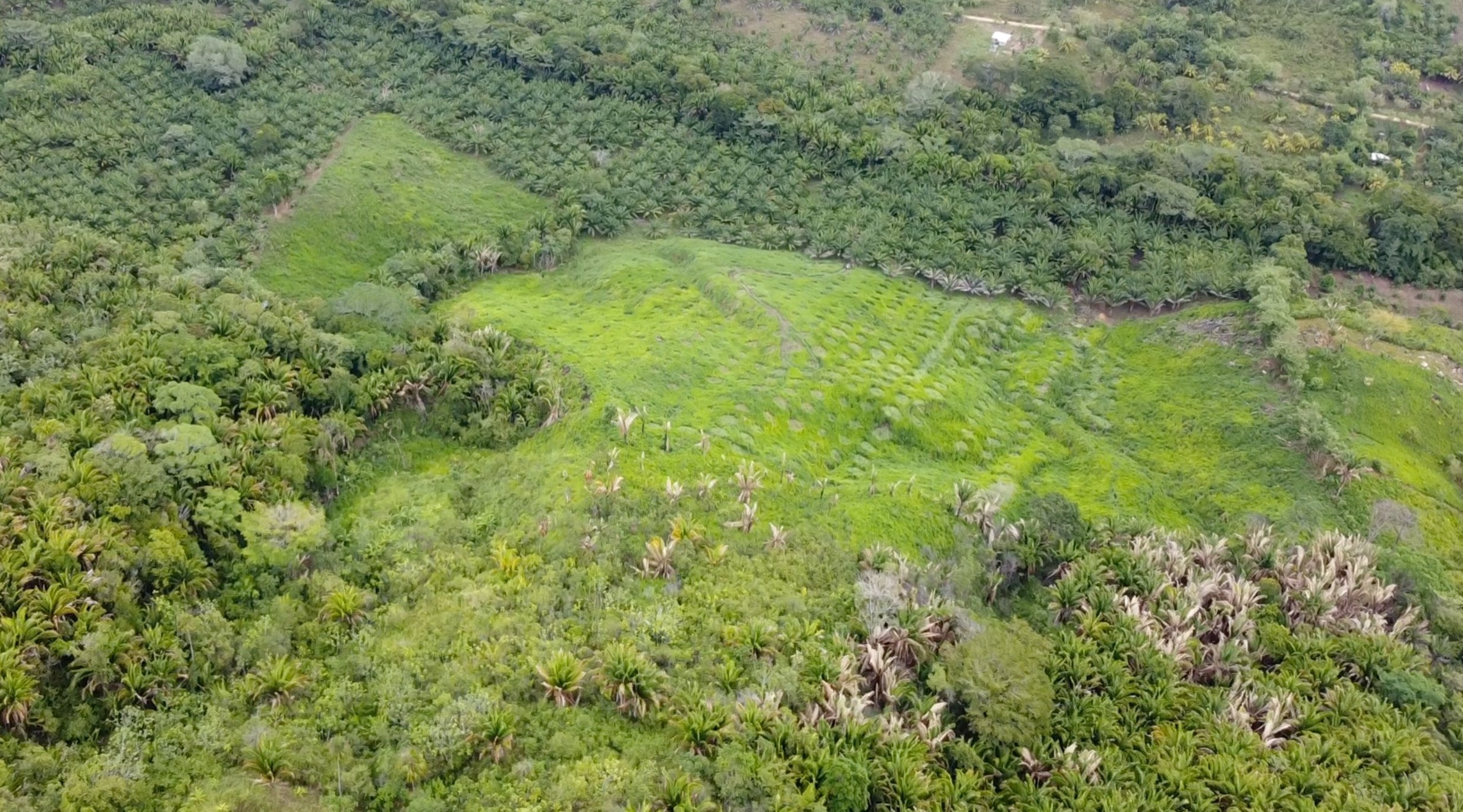
On the night of 25 September 2023, police responded to an emergency call reporting gunshots in Barranco Blanco, a piece of Garífuna land near the northern Honduran port of Trujillo. The area had been illegally appropriated in 2021 by two individuals who had burned down the forest and built a house there, supposedly with the intention of planting oil palm. Tired of waiting for justice, on 25 September, a group of Garífuna returned to their land and attempted to reclaim it.
The land-grabbers retaliated with violence, leaving nine Garífuna injured, including two children aged 11 and 14. They were arrested, but later that night, another individual claiming to be the landowner arrived in Barranco Blanco with two vehicles and 20 armed men, prompting the Garífuna to flee and make a second call to the police. The latter said they found nothing on their arrival but admitted that paramilitaries were active in the region, adding that ‘there are many deaths.’
For the Garífuna, such confrontations are becoming increasingly commonplace, and the community are having to take extraordinary measures to safeguard their territory in the absence of state intervention. One community leader in Barranco Blanco said that, while they would prefer to keep the land as it is, the plan is to build homes for Garífuna families there: ‘We don’t want to live here. But if we don’t do something with the land, it will be stolen from us.’
Ancestral lands under threat
The Garífuna, descendants of African-Carib populations exiled from the island of St Vincent in the 18th century, have inhabited this region since before the State of Honduras existed. Despite the community holding land titles for over a hundred years, the ecosystems they have traditionally cared for are now threatened by the expansion of the commercial palm oil industry, while the Garífuna themselves face displacement, intimidation, and violence.
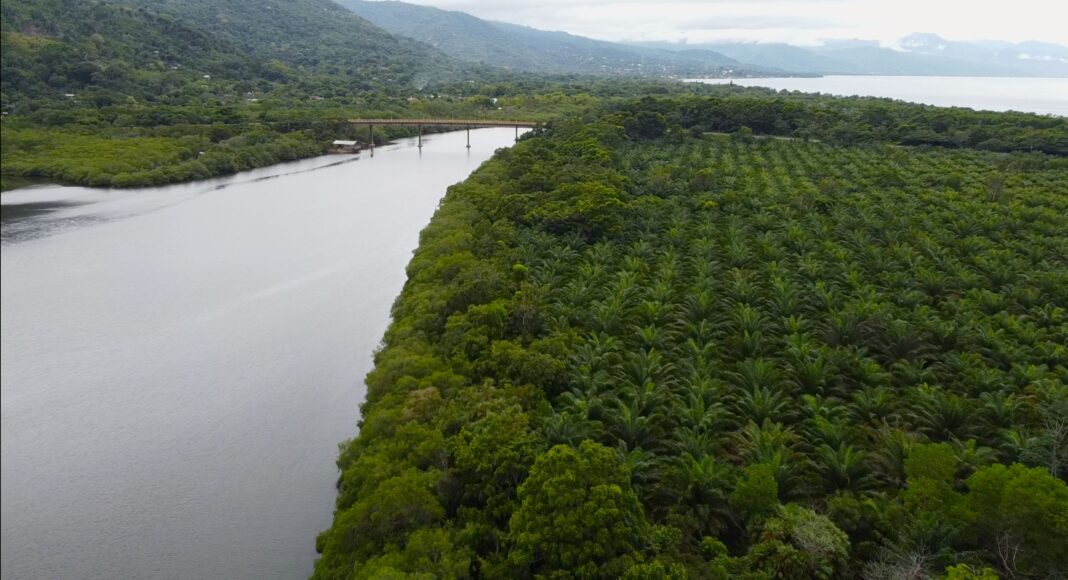
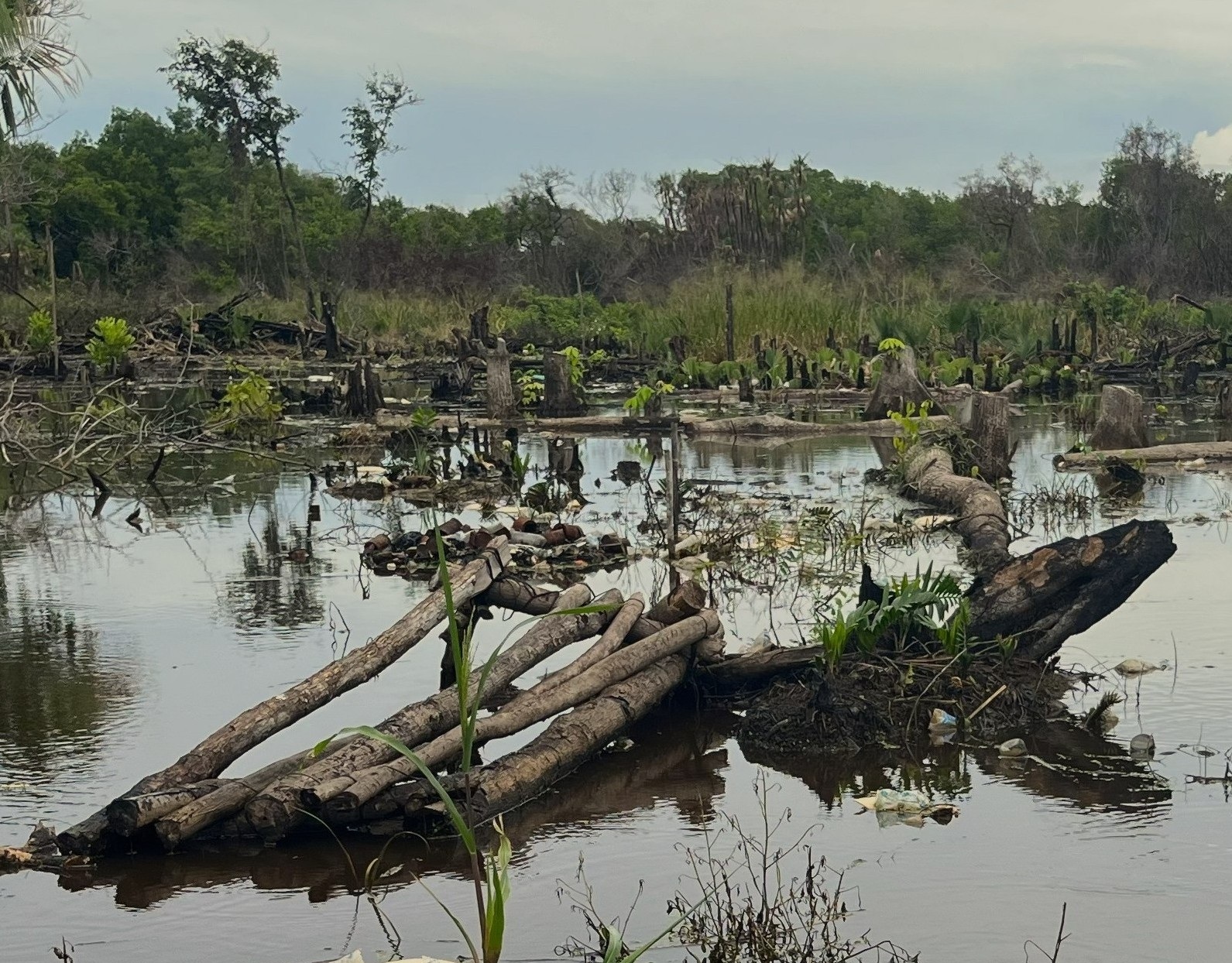
What were once lush forests and vibrant wetlands have been contaminated with oil and agrochemicals, as corporate land-grabbers fence off land and clear trees to make room for plantations. The industry is exacerbating the effects of the climate crisis in this already vulnerable region: while the crop is hugely water intensive — a single oil palm consumes between 150 and 200 litres of water a day — the community’s main water source, the Río Bravo, has been clogged with sediment due to deforestation and erosion upstream.
Today, oil palm covers over 200,000 hectares of land in Honduras, primarily on the country’s northern coast, the Garífuna’s ancestral home. First planted there in the 1960s, production exploded in the 2000s thanks to the West’s apparently insatiable demand for this multipurpose crop. Palm oil’s main use is in the food industry, but it is also widely used in cosmetics, pharmaceuticals, and biofuels.
Environmental defenders targeted
Between 2019 and 2022, the value of palm oil exported from Honduras doubled to $667 million (£508 million), due in part to a price increase caused by COVID-19 and the war in Ukraine. This spike in value was accompanied by outbreaks of violence in Honduras: in the Department of Colón, where Garífuna territory and palm cultivation are concentrated, the murder rate peaked at 64.9 murders per 100,000 people in 2021.
The region continues to be the most violent in the country and the Garífuna are the most targeted population, according to local media outlet Contracorriente. Attacks against the Garífuna made national headlines in 2020, when armed men in police uniforms abducted four environmental defenders in the community of Triunfo de la Cruz. Their bodies were never found.
Tourism is also a threat to Garífuna autonomy. In the early 2000s, Garífuna communal lands, traditionally used for planting and hunting, were acquired by Canadian developers to build retirement home properties for North Americans. With the support of the Organización Fraternal Negra de Honduras (OFRANEH – Black Fraternal Organization of Honduras), the community have challenged these developments, but ultimately their complaints have been unsuccessful. Instead of receiving recognition of their legal land titles, Garífuna defenders have been criminalised, intimidated, and even shot.
Government inaction
‘When the land-grabbing started, we went through the whole process,’ said one member of the leadership council of Cristales y Río Negro. ‘We made a complaint, we asked, “why are these people doing this?”, we went to the public prosecutor’s office, and we showed them evidence. But no one came. Why? Because we [the Garífuna] are not important.’
Another local leader said the government plans to displace the community by creating a protected area: ‘They think we’re idiots. They think we don’t know that a protected area will mean they’ll take our land from us.’ For the Garífuna elder, ‘The environment wasn’t threatened when it was under Garífuna control. […] The problems only started after the land-grabbers came.’
Community leaders have met numerous times with government officials, to little effect: ‘When land-grabbers want to do something with our land, the government doesn’t do anything. When we want to do something with our land, the government intervenes. We can’t rely on a government that says it will help us but then does absolutely nothing [for our community].’
Corruption and impunity
In 2015 and again in 2023, the Inter-American Court of Human Rights (IACHR) determined that the Honduran Government had violated the rights of Garífuna communities and not respected their sovereignty. The impunity rate for environmental crimes in the country, including attacks against defenders, reached 94 per cent in 2024, with only 56 out of 966 reports resulting in a conviction.
The issue of Indigenous autonomy came under intense scrutiny at COP30, as Transparency International, one of the organisations calling for more inclusive climate governance, warned of the threats of corruption and impunity. Their recent report shows that the case of the Garífuna in Honduras is just one example of how a lack of protections and corporate accountability affects frontline communities in global supply chains.
Brice Böhmer, the organisation’s Climate and Environment Lead, said: ‘When it comes to attacks on environmental defenders, corruption is the glue that holds a vicious circle together. It is corruption that enables destructive activities in the first place, facilitates retaliation against those who resist them, and finally ensures impunity for the perpetrators.’
COP30: power to the people
The Brazilian Presidency promised that frontline communities would be central to COP30 negotiations, but despite efforts to broaden participation, with initiatives such as the People’s Circle and the Global Ethical Stocktake, civil society and Indigenous Peoples were largely excluded from decision making at the conference.
Human rights organisation Global Witness reports how demonstrators outside the venue were met with police brutality, while defenders inside faced structural obstacles, including lack of representation in national delegations, little institutional support for participation, and limited avenues to influence discussions directly affecting their communities.
Gregoria Jimenez, a Garífuna leader and director of the Honduras-based Organización de Desarrollo Étnico Comunitario (ODECO – Community Ethnic Development Organization), told Mongabay Latam that while Honduras sent a large delegation to COP30, most of it consisted of government officials who did not adequately represent the community.
Nevertheless, frontline communities took advantage of the opportunity to come together, not only demonstrating on the streets but also sharing knowledge, debating just transition principles and putting forward local solutions at the COP do Povo (People’s COP), embodying an inclusivity and leadership that was starkly lacking at the official event.
As Global Witness asserts: ‘Taken as a whole, COP30 exposed the persistent challenges that defenders and communities continue to face, while also revealing the growing strength of grassroots movements in pushing global climate governance towards justice.’