
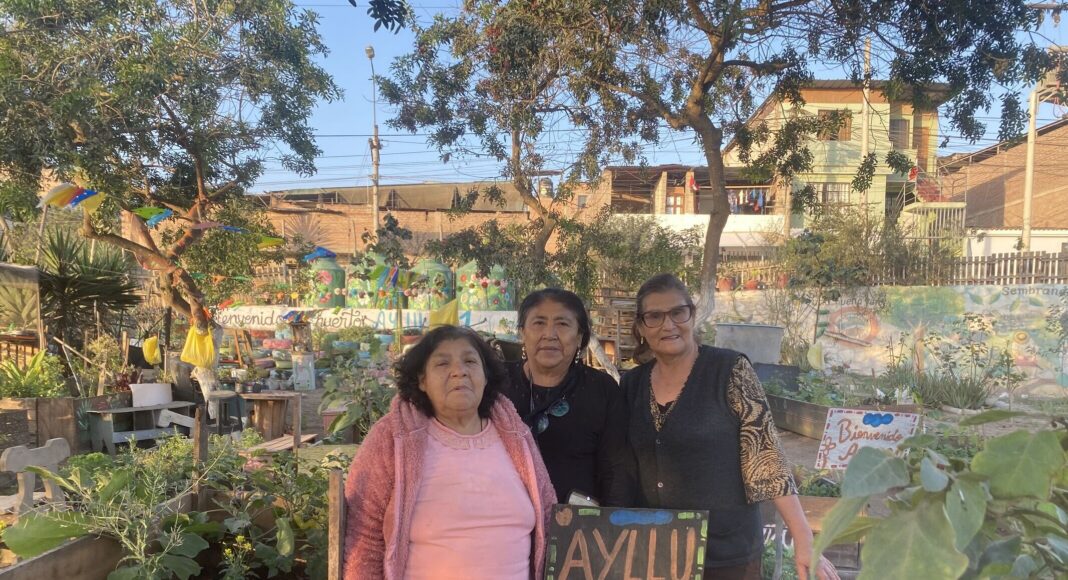
Where there was once rubbish, dead animals and seemingly infertile land, lettuce, aubergines, medicinal herbs and fruit trees now grow. In the gardens of Villa El Salvador and Comas, women from different regions of the country preserve knowledge and spaces to produce food in a Lima that faces increasing heat, scarcer water supplies and the effects of the El Niño Costero storm.
‘Can you grow food on sand?’
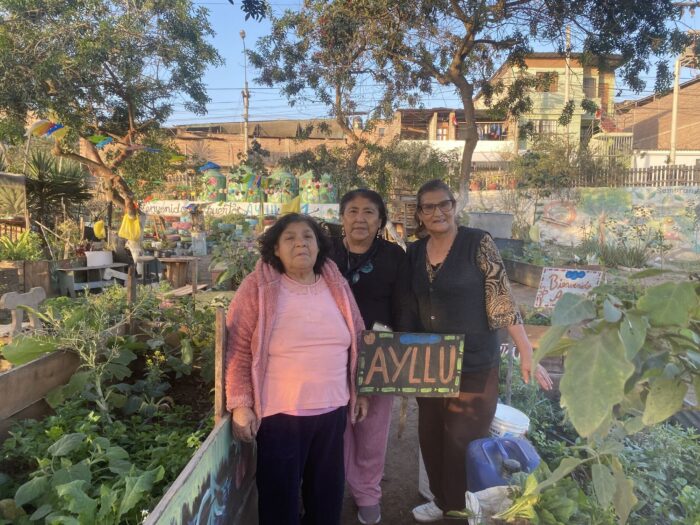
‘We have proved it is possible. We started with this garden during the pandemic, when this place was a landfill, with dead animals and medical waste. It was very challenging to make it clean and to organize ourselves. And we have accomplished it, we have created a garden that has flourished. Because that is what Earth is like, she knows when we need her,’ says Paula Gómez, president of the garden Ayllu 21.
In Villa El Salvador, Lima, where the soil is sandy and there are almost no green areas, 20 older women transformed abandoned terrain into a food-production space. As temperatures rose, they faced a significant challenge. In a desert-like city where water is scarce and heat is a growing obstacle, growing food also means adapting to a changing climate.
In June 2026, the Servicio Nacional de Meteorología e Hidrología del Perú (SENAMHI) advised that temperatures in winter would reach up to five degrees celsius above the average temperature in most of the Peruvian coast due to the persistence of warm waters off the coast, caused by the El Niño Costero (coastal El Niño event).
Liliana Mirada, an urbanism specialist and IPCC researcher, says climate change is exacerbating climate extremes. ‘Not only is the sea getting warmer, but the effects of El Niño are getting amplified, because from the baseline we are already facing a scenario of rising temperatures around the world,’ she affirmed.
Lima faces a structural water-scarcity challenge: a large part of the city’s water supply depends on sources in the high-Andean region. In fact, the Instituto Nacional de Investigación en Glaciares y Ecosistemas de Montañas (INAIGEM) warned that during the last decades, glacier retreat reached 56.2 percent, thus affecting the availability of fresh water. In a city built on top of a desert which is facing the effects of climate change, producing food implies finding ways of making the most of each drop of water, and recovering soil that for years was considered unproductive.
Before the garden Ayllu 21, people believed the soil in Villa El Salvador was infertile. The terrain was destined to become a park, but the local municipality never maintained it, and it was abandoned for years, becoming a potentially dangerous area. Consequently, in 2017, local women organized themselves to manage a community vegetable garden. They looked for support from social organizations, but the hardest part, according to Paula Gómez, was getting permission from the municipality, who ultimately agreed to give them space for the garden. That is how it all began: the women brought compost and inputs to nurture the earth, and the desert began to flourish.
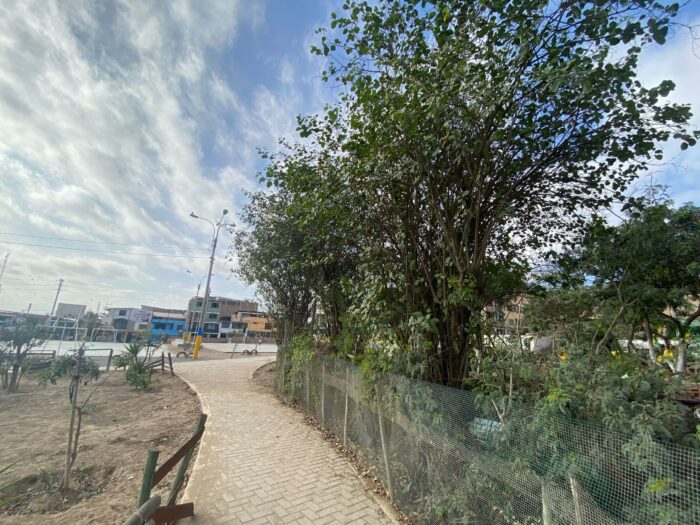
‘The first year we harvested enormous pumpkins, fruits, lettuce – the garden would not stop producing. We used an irrigation system to ensure the plants received water. Our crops are free of pesticides and chemicals. We prepare our own mixture of chilli and herbs to ward off pests,’ comments Paula.
Ayllu 21 is part of a wider network of urban and periurban agriculture in Lima. The Plataforma de Agricultura Urbana en Lima (PAUL) brings together organizations that produce food in public and communal spaces and periurban areas. Amongst them, there are Ayllu 21, Maná Mi Hermosa Huerta, Huertos en Línea, La Lombriz Feliz and Ambientalistas al Rescate.
Currently, Ayllu 21 extends to approximately 1,400 square meters. Project members work long days to prepare the cultivation area and gradually restore the soil. They established plots for producing vegetables, aromatic plants, and medicinal plants. Over time, Ayllu 21 became ‘a kind of mother,’ as Inés Quispe noted. ‘This community garden is a mother; it has children in other areas of Villa El Salvador, because people started gaining confidence and say, “I also want that in my area,” and now there are approximately five more that originated from here. We even gave them seedlings and training,’ she continues.
In community gardens like Ayllu 21, production is not necessarily oriented towards large commercial volumes. In various community gardens, food is grown for personal consumption and for the food security of families, although there are also organizations that produce food to sell it on. Therefore, urban agriculture becomes an alternative for healthy and local consumption, as well as a way to reclaim public spaces and strengthen community organization, as affirmed by Freire Pedraza, environmental engineer and consultant of Lima’s Network of Community Gardens.
No dependency on artificial fertilizers
Community gardens contribute to a just energy transition in cities because they don’t use pesticides derived from hydrocarbons, such as urea. Paul Maquet, specialist in energy transition from CooperAcción, explains that one of the main food supply issues in many countries (including Peru) is the dependency on the use of artificial fertilizers. Urea, for instance, is made from natural gas derivatives, a fossil fuel, so increases in hydrocarbon prices directly affect Peruvian agriculture.
‘Increases in oil prices and its derivatives have a direct relationship with the increase of prices of pesticides and urea, which are made from hydrocarbons, as well as increases in the price of transporting the products, creating a domino effect in the cost of the supply chain that affects families and the consumer,’ Paul comments.
Peruvian agriculture’s dependence on hydrocarbons became evident by the international crisis ignited by the war between Russia and Ukraine, and the increase in oil prices between 2021 and 2022. In Peru, the increase in the cost of fertilizers hit small food producers especially hard. For example, the Central Bank of Reserve registered a strong increase in import prices of urea during those two years.
In 2026, Mincetur released a report that points out that, between January and April, fertilizer imports represented 205 million dollars, and presented an increase of 16.9 per cent in its value compared to the previous semester. All extensive crop production and a significant portion of the food supply of Peruvian cities are made with these fertilizers.
Without fossil fuels, there are no fertilizers like urea, whose production depends on natural gas and requires high energy consumption. This dependency also has an impact on climate change: the IPCC points out that the use of nitrogen fertilizers is a main source of nitrous oxide emissions, a potent greenhouse gas.
The United Nations Food and Agriculture Organization (FAO) warns that nitrogen fertilizer production depends on fossil fuels and is intensive in carbon gas emissions. Therefore, reducing reliance on fossil fuels has become part of international efforts to combat climate change. During COP28, member states agreed to start towards a transition that reduces dependency on fossil fuels in a just, orderly and equitable manner.
Agroecology to the rescue
In this context, sustainable alternative agriculture practices such as agroecology are needed. As explained by Freire Pedraza, environmental engineer at CENCA organisation and agriculture consultant in Lima: ‘Agroecology is conceived as a just, local and sustainable system of production during which inputs derived from hydrocarbons or pesticides that could damage the soil are not used. Instead, natural soil fertilizers are produced from domestic animals’ excrement, or compost derived from organic waste.
In Ayllu 21, Inés Quispe approaches a one-and-a-half metre wooden box and inspects it. She takes a gardening fork and diligently turns the soil over. She opens the box to reveal dry branches, orange peels and eggshells. This box contains agroecology’s best-kept secret: compost and earthworms transform waste into natural fertilizer.
Inés closes the lid and adds some vegetables and leaves. Nothing goes to waste; everything follows a cycle of transformation in the vegetable garden. ‘It doesn’t even smell. We keep adding leaves, stirring and hoping that, with time, the earth transforms it, so our plants become pretty with that fertilizer,’ Inés says excitedly.
The logic is simple: the city’s rubbish can become nutrients that produce food while reducing the waste that ends up in landfills. In the case of Ayllu 21, they have even created alliances with other fertilizer-producing organizations, such as La Lombriz Feliz, which donate compost produced from organic waste.
Grow local, eat local
Local consumption is also encouraged, as long as it remains feasible, to reduce the transportation of food across large distances with cargo transportation that uses fuel. Local food production does not replace the complex sustenance chain of a city like Lima, but it reduces the distance between the location of production and consumption. Ines and Paula take chard, aubergines, dragon fruit, basil and spinach to their homes, which are just a couple of blocks away. Whatever is left, they exchange or share with their neighbours.
For the founders of Ayllu 21, the garden is also a contribution to their economy and a way to empower older women. The community space produces not only vegetables, but also organization, knowledge, and a way to reclaim experiences the women brought from rural communities, as explained by Mari Carmen, an engineer who accompanies the project.
Replanting the City
In another area of Comas’ periphery, a gathering in the community shop begins with the daily agenda. ‘What do we do regarding the phenomenon of El Niño? Will it affect our plants?’ ask numerous women gardeners. There is concern, as the phenomenon has already reached Peru and will last until early 2027, and the impacts on people’s daily lives will intensify.
Maná, Mi Hermosa Huerta is an organization that has succeeded in building an urban vegetable garden of approximately 2,000 square metres, located in a community space in the Parque Ecológico La Alborada. It was founded in 2014, with a municipal initiative for establishing urban vegetable gardens. Local women eagerly got involved and carried out the necessary tasks to prepare the land. Currently, its products are grown for the consumption of families, and local commercialization in some markets. They have obtained an agroecological stamp, which allows them to sell at better prices and recognize their work’s value.
During the gathering, the engineer explains that the community should prepare for the effects of El Niño, which will bring more rain and raise groundwater levels in coastal areas. ‘In this area, we will have more groundwater because we are also close to the reservoirs of Sedapal (the company that manages the water supply). It’s possible that water levels could rise further and overflow; the biggest risk is flooding, but we need to be attentive to prevent it,’ he comments.
Freire Pedraza also believes that women gardeners are learning to adapt to climate change. ‘We have found certain plants that are more resilient, adapting to increased heat or varying winter temperatures, and we are constantly evaluating them. In this way, we have managed to keep the garden producing year-round.’
The women who participate in this space have a similar story: many arrived in Lima from different regions of the country, leaving behind the farms where they grew up. Yet, they learned from a young age what it is to work the land, harvest and care for plants. Bertha Prieto, from Cajamarca, recounts that she arrived in Lima very young, found employment, got married and had to dedicate her time to raising her children. Once her children grew up, she started having more free time and at 65, she recalled her knowledge of the land and put her efforts into cultivating plots in the community garden.
‘My husband used to help me with the garden, but he passed away during the pandemic. I was left all alone, but I have my plants. I dedicate time to them every afternoon, I come, water them, make my chilli mixture to ward off pests,’ Bertha recounts.
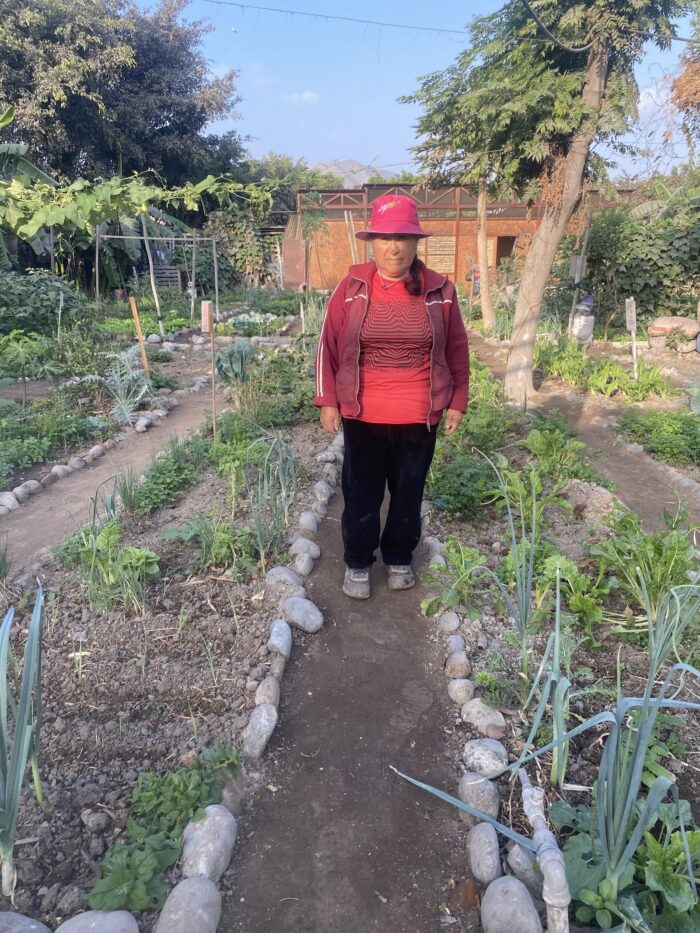
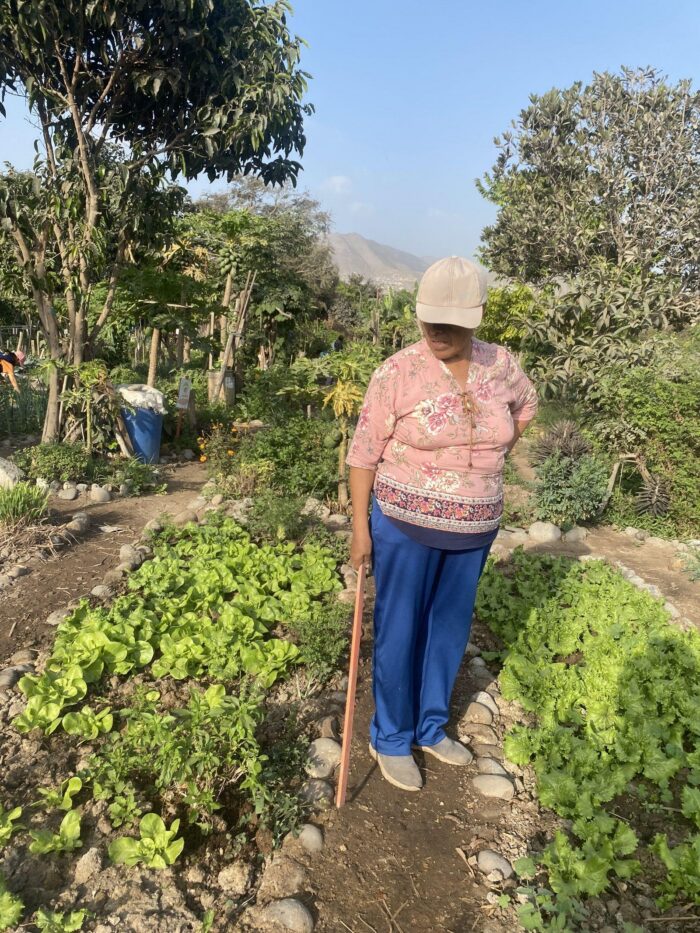
As Freire Pedraza explains, the soil of Maná, Mi Hermosa Huerta, is very good for cultivation. The garden is located in a good area where plants grow quickly. Curly and iceberg lettuce are arranged in rows and there are also aubergines, medicinal herbs, beetroot and fruit trees. The project has been sustained for almost 15 years thanks to an organization that supports collective labour, led by the president Bernardina Pocco, with the support of the secretary Yolanda Bazan, the treasurer Nancy Noa and the auditor Rosa Rodríguez. ‘We take care of supervising partnerships, organizing workshops, supporting members and making sure that everything runs smoothly,’ assured Bernardina.
The network of urban agriculture in Lima has managed to consolidate the organization of spaces like Maná, Mi Hermosa Huerta, where the majority of associated members are women. Through collaborative efforts, they have facilitated knowledge exchange with gardens in other districts of Lima, such as Villa El Salvador, San Juan de Lurigancho, and Villa María del Triunfo. For all these community vegetable gardens, El Niño can bring problems, and cultivating in Lima also means facing a changing climate.
Virginia Zevallos, a retired teacher and gardener, recounts that it rained in Lima the previous week, but so much water wasn’t good for the plants. She has a great fondness for her vegetables, ‘I have made them grow, making the most of every inch of space in my plots,’ she says, holding an aubergine in her hands.
‘I always harvest plants or gardens wherever I go. For example, in the school where I used to work I also managed to start a green space. Now that I am retired, this space has become my job, but also my hobby,’ she continues.
Virginia is one of the members of Maná who is worried about what could happen in the coming months with El Niño.
Although it is not yet known how this will affect the gardens’ production, the women have been preparing. The vegetable garden has water reserves. Additionally, the engineers Freire and Yeffel are constantly monitoring the wellbeing of the plants. As part of the Agriculture Network in Lima, they have been organizing exchanges between vegetable gardens and creating integration spaces.
The biggest problem, explains Freire, is that it rains too much and floods occur, or acid rain falls. These fears are justified: the SENAMHI maintains warnings about El Niño Costero, and foresees that the phenomenon could be prolonged until the summer of 2026-2027 (December to January in Peru). Lima and other areas of the central coast are expected to experience above-average temperatures.
For those who grow vegetables in the city, this means adapting to greater uncertainty: better management of the water supply, protecting crops from extreme temperatures, and responding to unusual rainfall events in a dry city.
Gardening Against the Heat
Liliana Miranda, president of Ciudades para la Vida and researcher for the Grupo Intergubernamental de Expertos sobre el Cambio Climático (IPCC), says one of cities’ biggest upcoming challenges is concentrated heat. She comments that with El Niño, Lima will face an extremely hot summer, during which temperatures will rise five or six degrees celsius above the norm. ‘It was a scenario that was already considered in the IPCC reports regarding climate change, above all, because the sea’s temperature is also currently high. Now, we must prepare,’ Liliana stresses.
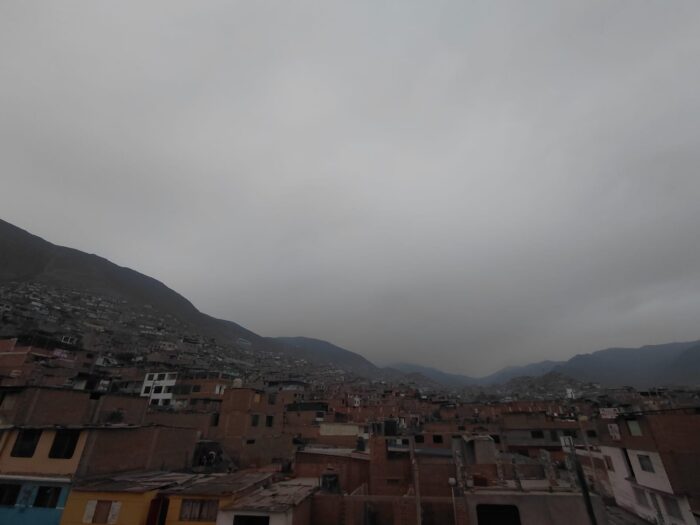
In areas of human settlements and working-class neighbourhoods, where houses have roofs made of materials like corrugated metal sheets, indoor temperatures rise significantly during the summer, creating a risk of heat strokes, Liliana explains. This situation is common in many districts of Lima.
In a city where cement and asphalt reign, green spaces play an important role in keeping the city cool. They provide shade, restore soil, retain humidity, and create small communal spaces that help regulate temperature within densely built neighbourhoods.
In Ayllu 21, the heatwave that has hit Lima has affected the plants a little, comments Inés: ‘We water the plants and the next day they are dry; some plants have turned yellow, the sun is super strong.’ Additionally, she observed that the sandy soil is not retaining water properly. Therefore, the women have to turn the soil every time they water the plants. ‘Everything is a daily effort, but it is also a fondness for the plants that give us their fruits,’ she assures.
Due to the heat, some lettuce started to dry up in Maná, Mi Hermosa Huerta. The women gardeners wear hats and cover their faces, because the weather has changed in Lima. If they are not careful, they could suffer from heat stroke. This is already a reality in other high-temperature cities, where people suffer from fainting or dehydration.
Ayllu 21 and Maná, Mi Hermosa Huerta cannot address the climate crisis or Lima’s water scarcity on their own. That is why they are building a women-led community. Agroecology is the way community vegetable gardens have found to search for alternative food subsistence, generating economic opportunities and constructing a fairer sustainable transition.
Even in a city where water is scarce, people can recover soil, produce food, and transform wastelands and terrains no one wants into gardens where fruit trees and vegetables grow.
This article was produced with the support of Climate Tracker América Latina and Oxfam.